You're on La Mode à l’Envers, a blog run by the clothing brand Loom. The textile industry is in a bad way, and the planet is paying the price. We try to explain everything we learn about the sector right here. Because making sustainable clothing is good, but revealing, sharing, and inspiring is even more powerful.
If you like what we write and want more, subscribe to our newsletter by clicking here. We promise: we don't write often and we never spam.
Quand on a commencé à travailler sur notre boxer, en mars 2018, on était jeunes et insouciants. Ce qu’on ne savait pas à l’époque, c’est que cette recherche durerait... plus de deux ans et demi.
Comme d’habitude, pour commencer notre recherche, on vous a envoyé un questionnaire et vous avez été plus de 300 à y répondre.
Après plusieurs heures de travail, notre data analyst spécialisé en blockchain et machine learning tirait la conclusion suivante :
Un bon boxer, c'est ça.
Puis, après retravail :
Un bon boxer, c'est ça.
On avait notre cahier des charges : on voulait faire un boxer qui ne se détende pas, qui ne fasse pas de trous à l’entrejambe, avec un élastique solide.
À la recherche de la bonne usine
On ne pouvait pas s’embarquer seuls dans l’aventure, il nous fallait un compagnon de cordée : une usine qui soit prête à travailler sur ce projet avec nous.
Mais n’en déplaise à nos parents, nous étions (et sommes) encore une toute petite marque avec de tout petits volumes… Alors forcément, quand on contacte les usines pour faire un projet compliqué, ça donne ça :
Heureusement, après quelques temps, on a fini par trouver quelqu’un au Portugal qui a accepté notre projet – sans se douter qu’il en prenait pour plus de deux ans.
À la recherche de la bonne matière
Un tissu qui ne se détend pas
Un tissu finit presque toujours par se détendre quand on le porte, surtout quand c’est de la maille un peu élastique… Techniquement, on dit qu’il “poche”. Et pour les boxers, qu’on étire toute la journée en marchant, ça peut devenir particulièrement embêtant.
Pour minimiser cette déformation, on a décidé de jouer sur deux tableaux :
Ajouter de l’élasthanne de bonne qualité, ce que font d’ailleurs la plupart des fabricants de boxers aujourd’hui.
Surtout, faire en sorte que la structure-même du tissu reprenne plus facilement sa forme grâce à une maille plus dense et plus serrée (ce que montrent les études ici ou là). La plupart des boxers tournent entre 150g et 180g/m2, on a décidé de partir au moins sur du 200g/m2.
Mais avant de choisir un tissu, il fallait aussi résoudre le deuxième problème que vous nous aviez remonté. Et ça nous pris beaucoup de temps.
Retarder les trous à l'entrejambes
Quand vous marchez toute la journée avec un boxer, vos cuisses frottent l’une contre l’autre en permanence… Et au bout d’un certain temps, il finit par y avoir des trous. La seule manière de les éviter, c’est d’augmenter la résistance à l’abrasion du tissu. Mais elle dépend de plein de facteurs : longueur des fibres de coton, finesse du fil, densité de la matière…
Alors pour être sûr de ne pas se planter, le mieux c’est prendre un tissu qu’on sait résistant, puis de le comparer à d’autres sur une machine comme ça :
Une machine martindale au travail.
Le truc, c’est qu’on a commencé ce travail avec un sacré handicap : notre fil de coton devait être bio (si vous vous demandez encore pourquoi, lisez notre article sur le sujet). Or, trouver un fil de coton bio de qualité, avec une fibre suffisamment longue et résistante, c’est loin d’être évident.
Alors forcément, le premier tissu bio qu’on a testé n’était pas à la hauteur :
Échantillon de référence (non bio) : Trou qui apparaît au bout de 40000 - 45000 cycles
1er échantillon Loom en coton bio : Trou qui apparaît au bout de 30000 - 35000 cycles
C’est alors qu’on nous a parlé d’un fil supposé incroyable, d’un coton non seulement bio, mais en plus d’une qualité exceptionnelle : le coton égyptien de Gizeh, habituellement réservé au marché du luxe. Sa particularité : des fibres très longues (plus de 3,6 cm quand la moyenne est de 2,5 cm) pour la résistance et très fines pour la douceur. Avec ce coton, on était à peu près certain qu’on allait casser la baraque… Alors on a fait produire un rouleau de 50 mètres, la quantité minimum.
2e échantillon Loom en coton de Gizeh bio : 20 000 - 25 000 cycles
Moins bien que le premier ! C’est en analysant les résultats qu’on a compris notre erreur : les fibres de ce coton égyptien sont si longues et fines qu’elles permettent de faire des fils très fins… Et le fil qu’on a choisi l’était beaucoup trop. Fin de l’histoire ?
Au contraire : cette finesse s’est transformée en avantage. Avec un fil fin comme ça, il est possible d’en prendre deux et les retordre l’un sur l’autre en “double-retors”. Ce côté “câblé” lui donne une solidité bien supérieure, tout en maintenant le même niveau de douceur !
On a donc décidé de refaire produire un rouleau de 50 mètres en double-retors, puis de relancer un test. Puis on a demandé à notre laboratoire de nous envoyer les échantillons testés par courrier. Résultat en image :
Certes, le premier vrai trou est apparu 5000 cycles plus tôt sur le Loom, mais sans s’affiner du tout avant et sans laisser apparaître aucune transparence. Autrement dit, il reste portable beaucoup plus longtemps.
Bref : bingo ! On avait un tissu :
très doux, grâce à la finesse du coton de Gizeh
qui résiste bien à l’abrasion, grâce au fil double-retors
bien dense (220g/m2) pour ne pas trop se détendre au fil des porters
et surtout, un tissu bio, qui n'abîme pas la biodiversité ou les travailleurs du coton
Un élastique qui ne se détend pas
Vous le savez probablement : en France, on a énormément délocalisé notre industrie textile depuis les années 80 et perdu beaucoup de savoirs-faire. Mais ce qu’on sait parfois moins, c’est qu’on a aussi su se ré-inventer et se développer sur le textile technique (on est le 4e pays producteur mondial !).
Donc pour cette ceinture, pas question d’aller voir ailleurs : nous sommes allés chez Berthéas, une entreprise française basée dans la Loire et spécialiste des rubans élastiques (notamment pour le secteur médical). On leur a demandé une ceinture résistante, pourvu qu’elle soit douce.
Ils nous ont proposé un fil de polyamide texturé par jet d’air pour reproduire le côté duveteux du coton. Pour s'assurer de la résistance, on a simulé un vieillissement accéléré de la ceinture en l’enfermant pendant un mois là-dedans :
Une étuve de vieillissement accéléré (le contraire d’une crème anti-âge quoi).
Résultat avec les mots poétiques de notre laboratoire : “il n'a pas été constaté d'altération de la ceinture élastique à l'issue du vieillissement”.
Re-Bingo.
On avait la matière du boxer et un bon élastique, il fallait maintenant passer à la confection.
Faire une confection idéale
Pour décider comment assembler ce boxer, vos réponses nous ont bien aidé :
Les coutures gênent ? On a mis des coutures plates partout dites “flatlock”.
L’étiquette gratte ? On a supprimé cette @*#! d’étiquette qui gène toujours pile en bas du dos, et on l’a imprimée directement sur l’intérieur du boxer.
Les cuisses remontent ? On a travaillé sur l’ourlet du bas des jambes pour qu’il serre bien.
Ça serre trop dans la zone stratégique ? Nous avons ajouté un gousset à l’entrejambe : une pièce rectangulaire qui permet de diminuer la tension à cet endroit. Effet bonus de ce gousset : en minimisant les frottements liés aux coutures habituellement placées ici, on pense que cela retardera également l’apparition de trous.
Un dernier test pour la route
Sur le papier, notre boxer n’avait pas l’air mal. Mais l’expérience nous a montré que rien ne remplace un test en conditions réelles. Pour les baskets, c’est nous (l’équipe Loom) qui les avions portées non-stop pendant plus d’un an. Pour le boxer, on a voulu voir les choses en plus grand. On a proposé à nos actionnaires de tester la V0 de notre boxer.
Sauf que voilà : des actionnaires, on en a 600 et des boxer génération 0, on en avait 70. Donc ce qui devait arriver arriva :
Après quelques semaines d’utilisation, on leur a demandé leur avis. Et visiblement, ils en étaient plutôt contents :
Oui, mais cette prévente, c’était surtout pour comprendre ce qu’on pouvait améliorer. Voilà les problèmes qui ont été remontés :
1/ La ceinture élastique finit par s’enrouler sur elle-même dans la journée.
On s’est rendu compte qu’elle manquait en effet de rigidité. Notre fournisseur nous a proposé d’y intégrer une proportion de polyester, plus rigide que son cousin le polyamide. Problème résolu.
2/ La couture arrière est un peu gênante.
Oui, c’était la seule qui n’était pas plate. Maintenant, elle l’est.
3/ Des peluches se déposent sur le corps à la première utilisation.
On a demandé à notre usine de désormais prélaver les boxers – sur l’envers.
4/ Il n’est pas très fun.
Désolé, mais...
Nous refusons de prendre des parts de marché à Desigual.
5/ Il brille un peu
C’est vrai qu’il brille un peu avant les 2 ou 3 premiers lavages, mais c’est aussi pour ça qu’il est doux. Comme les fils sont très fins, le tissu reflète particulièrement la lumière. En fait, c’est même un gage de grande qualité (comme pour notre pull en coton qui est fait du même fil). Tiens, vous savez ce qui ne brille pas ? Ça :
Vous voulez le porter sur vos fesses ? Non ? C’est bien ce qu’on pensait. Alors on reprend.
Durable, thanks to its high density, double-twisted yarn, and a sturdy elastic waistband,
Soft, thanks to the fineness of Giza cotton,
Comfortable, thanks to its flat seams and gusset,
Made from organic cotton,
Not made on the other side of the world: the cotton is Egyptian, the manufacturing and knitting are done in Portugal, and the waistband is made in France.
Plus, don't you think it looks great?
This boxer brief, we sell for €18. We know, that’s much more expensive than fast-fashion boxer briefs, which sell for €5 or even less. That’s normal: it costs us 5 to 10 times more to produce. And that comes down to two things:
1/ The country of manufacture. Fast-fashion boxer briefs are made in countries where the minimum wage is not enough to cover a living wage for workers and where the law does not sufficiently protect the environment and working conditions – the current scandal involving Uyghur workers is a stark reminder of this. In Portugal and France, no factory can dump chemicals into a river with impunity, working hours are regulated, and minimum wages are sufficient to cover workers' basic needs.
2/ The material. Our fabric is made from high-quality organic cotton, which is extremely rare and drives prices up. To give you an idea, high-quality conventional cotton (meaning cotton grown with pesticides) with long fibers accounts for only 2-3% of global production. Since organic cotton represents 0.5% of cultivated land, theoretically, high-quality organic cotton accounts for just 2% * 0.5% = 0.01% of global production!
Ultimately, this boxer brief costs us 8 euros at the factory gate, to which we must add logistics, shipping, research and development, and VAT. If you are familiar with the industry, you might be surprised that our margin is so low. It’s true that it’s not much to cover two years of testing and development. But we can afford it because:
We don’t do collections. Yes, it was expensive to develop this boxer brief, but we intend to sell it for years to come, which means we only incur those costs once. Conversely, if we did collections, we would have to start from scratch every season.
We don’t do advertising. It is common for ready-to-wear brands to spend 10 to 20% of their revenue on various forms of advertising (Instagram, Facebook, subway ads, as well as affiliate marketing, promo codes, referral codes, sponsored posts, influencers, etc.). We do none of that, which is what allows us to offer such a great balance of quality, ethics, and price.
We never have sales or promotions. We don’t set high prices just to lower them periodically to encourage impulse buys.
So, if your boxer briefs have holes in them and you can’t find any you like at a thrift store, check ours out here.
Following the surge in raw material prices, particularly organic cotton, we have had to increase the price of our boxer brief to €20. More info here
Who are we to say this? You are on La Mode à l’Envers, a blog run by the clothing brand Loom. The textile industry is in a bad way, and the planet is paying the price. We’re here to share everything we’ve learned about the sector. Because while making sustainable clothing is great, revealing, sharing, and inspiring is even more powerful. If you like what we write and want more, subscribe to our newsletter by clicking here. We promise: we don't write often and we never spam.
We released the first generation of our belt in 2016, and we really thought we had done everything right: full-grain, vegetable-tanned Italian leather, an Italian buckle in Zamak (a very strong alloy of zinc, aluminium, magnesium and copper), made in Brittany. It was when we asked the people who had bought it what we could improve that we came back down to earth: on some belts, the leather was coming apart in the middle.
A few pictures of the delamination problem on our first-generation belt.
Naturally, we refunded or replaced the belt of everyone who reported the problem to us1. We also stopped selling it until we had "repaired" it, by adding a line of stitching that stops the layers coming apart.
The stitching along the edges of the belt keeps it from coming apart.
That limited the damage, but in the end the whole episode cost us dearly:
Financially: our manufacturer refused to accept responsibility (and so didn’t give us back a penny). In short, we lost money.
In terms of image: we’ll let you imagine what customers thought of us when they saw their belt split in two.
A rating of 3.9/5 and 30% of people saying our belt isn’t hard-wearing: the perfect recipe for depression at Loom.
That was also when we understood 2 things. 1/ we can’t trust our suppliers blindly. 2/ testing (in the lab and in real life) really, really matters. After this misadventure, we set up a process of systematic testing and quality control, a process we are still improving every day.
Anyway, a year later, in 2017, when we developed the second generation of our belt, we REALLY thought we had done everything properly: full-grain vegetable-tanned leather, a Zamak buckle, metal rivets, made in France, and a single layer of leather so that nothing could come apart. Oh, and we had also had the leather’s strength tested in a lab, and the results were so good that we told ourselves: this time it’s the one – we can guarantee this belt for 10 years.
The newsletter we sent in November 2017 to announce the release of the second generation of our belt.
To this day, nobody has claimed on the guarantee: the second generation of our belt is holding up well. And the rating customers give it is perfectly respectable:
Rating given by customers after 2.5 years of use.
Except that a few months after this belt was launched:
Wrong, Sherlock Guillholmes: it was the Zamak buckle, in the conservatory, with the candlestick.
Once again, we asked our factory for an explanation, and this was their reply:
If a belt that gets rubbed is a belt that is being misused, we wonder how you are supposed to wear it...
So it was time to:
1- Change factory.
2- Go looking for a buckle that really would never wear out.
In search of the indestructible buckle
This new search began in August 2018 and lasted a year. We quizzed a dozen or so suppliers about what makes a buckle last, without ever getting a satisfactory explanation. Some told us Zamak was the best quality there is, others swore by brass as the toughest, and others still assured us it made no difference. In short, there was no way to tell fact from fiction. We were about to give up when suddenly:
This customer, Anne, turned out to be a goldmine of information:
Two hours on the phone with her, and we had understood what we had spent a year searching for: a buckle that lasts is neither a Zamak buckle nor a brass one. It’s a stainless steel buckle (“inox” to its friends, as we say in French).
The scientific explanation: Zamak and brass oxidise over time and go dull. So a finish has to be added, such as nickel plating, which gives a silvery colour and protects against oxidation. On top of that goes a layer of varnish, because of potential nickel allergies. But if that finish is damaged even slightly by knocks, rubbing or the sweat of our hands, the oxygen in the air reaches the metal underneath and oxidation begins.
A fairly serious example of oxidation.
Stainless steel, on the other hand, does not rust: no finish needed. The raw metal is cast into the shape of the buckle and then polished – no risk of a finish flaking off. And to rule out any allergic reactions, we chose 316L-grade stainless steel (the same grade used in high-end watches).
So much for the theory. But as you will have gathered, these days we prefer to check everything ourselves, every time. We ran an accelerated ageing test in a lab on four different buckles: one in stainless steel, one in brass, one in Zamak from a so-called “premium” brand, and our old Zamak buckle.
The torture machine we use to test our buckles.
The results confirmed what Anne had told us: the stainless steel buckle doesn’t budge, while all the others are worn down by rubbing and time.
In reality the abrasion isn’t zero, just invisible to the naked eye. Stainless steel doesn’t rust, but it does still wear a little.
In short, this is a buckle you can hand down to your children and grandchildren.
So why doesn’t every brand make belts with stainless steel buckles?
Because they don’t know it’s better? Possibly.
Because most suppliers don’t offer them? It’s true that you have to ask for a special development (and bear the associated costs).
Because it’s much more expensive? That’s most likely the real answer: a Zamak buckle costs about €1.50, a stainless steel buckle... five times as much2, i.e. €7. The vast majority of brands aren’t willing to pay 5 times more for their buckle, even if it extends the life of a belt enormously (if not for ever).
In search of a new factory
With the right buckle in the bag, we needed a partner we could trust to assemble the belt. We contacted several workshops in France, Portugal and Spain, and then, while chatting with Atelier Joly (who make our socks)...
Oooooh, Xa-Xa(vier)!
Our second time working with a supplier from around Castres, in south-west France, and our second crush: Xavier really is friendly, hard-working, and he has a taste for neat finishing. He was the one who suggested a construction that makes it easy to change the leather strap and reuse the buckle indefinitely.
Just unscrew the metal rivet to shorten the belt or change the leather strap.
In search of the right leather
All that was left was to find a good leather. And for that, we didn’t have to look far: we went back to the same leather as our previous belts, which had scored top marks from customers and lab tests alike.
We are well aware that leather is a controversial material, especially for responsible brands. We had already tried to understand what goes on behind the scenes of this industry before launching our leather sneakers – our (long) article is available here. It’s one of the hardest questions we have ever had to deal with, because it means weighing up four factors that sometimes pull in opposite directions: our comfort, animal welfare, environmental pollution and the social question. For our sneakers, we had concluded that – for now – animal leather was the better choice.
First, leather offers a level of comfort that synthetic materials struggle to match: it’s a living material that changes shape to follow the curve of your waist3 without cracking or getting damaged.
This curve is the proof of a leather’s comfort and strength.
Second, if the leather is properly cared for and the buckle is solid, a belt can last for decades. Especially if you choose “full-grain” leather, the strongest part of an animal’s hide – where the fibres are densest.
And to minimise its negative impact on the environment and on animal welfare, we set ourselves the following rules:
The tannery must be in Europe, because the law there obliges it to protect its workers’ health and treat its polluted water: so we work with Lo Stivale, a well-known Italian tannery.
The hides must come from Europe, where practices are a priori more respectful of animal welfare and far less polluting than on other continents: ours come from farms in Brittany.
Wherever possible, choose vegetable tanning: it’s greener and, above all, it means the leather develops a “patina” over time – as the years go by, scratches and scuffs will leave their mark on the leather and its colour will darken. That isn’t a sign of poor quality, quite the opposite: the passing years will give this belt a personality of its own.
This is how it will age
Recently, we asked our customers to send us photos of the Loom belt they have been wearing for two and a half years, to get a clearer idea of how the leather of our belt ages. Here is the result:
2 and a half years of use later.
You can see that the leather is marked where the buckle presses on it.
The only way to reduce this marking would be to make a belt in three layers: a "sandwich" of two strips of leather with a stronger plastic material in the middle. But that is exactly what we did for the first generation of our belt, and as you can imagine, there is no way we are taking the risk of it coming apart again. Another option: assemble the sandwich with stitching instead of glue. It would certainly hold longer, but stitching is a weak point: one bit of thread snaps and the whole belt is ruined (and we’re also less keen on the look). So we chose to live with what is, all things considered, a minor problem.
But so you can make up your own mind, here are some more pictures of Loom belts worn for several years:
And here is what people who have been wearing it for more than 2 years say about it:
The limits of our belt
Even though this is already the third generation of this belt, it still isn’t perfect. There are two things in particular we need to improve:
The buckle is made in China. We are trying to push our (French) supplier to find a way to produce it closer to home (though they tell us we won’t get the same quality), and in parallel we are looking for other suppliers who produce in Europe and whose factories we can go and visit.
Our packaging: our belt used to come in a lovely cardboard box… made in China. We wanted to find the same box made in France… but it cost €3 (if you’re keeping count, that’s 2 times the price of a Zamak buckle made in Italy). Until we find packaging that is ethical but more affordable, we have gone with the solution Xavier suggested: sheer fabric pouches made in Romania, which he uses for his other customers.
Update, April 2021: our belts now come in a nice pouch made in Italy from recycled cotton.
And there you have it
Isn’t she lovely, this 3rd-generation belt?
Even though it was a winding road to get the 3rd generation of this belt out, we are really happy with the result: for the second time, we have managed to make a product in France that is far better quality than anything on the market, even from high-end brands. To get there, we didn’t try to cut costs (because we know that usually means lower quality or lower ethics): given all the choices described above, this belt costs 50% more to produce than the previous generation: €20.80 instead of €13.50. We did our sums and decided to sell it for €55: for our customers, that is truly unbeatable value for money, and for us it leaves a reasonable margin to live on.
we received lots of messages asking us to make a slightly wider belt for a more casual look. A promise is a promise: the wide belt is available here.
the steel we use is now 304L, because using 316L was what is known as "over-specification", in other words more performance than a belt will ever need. The advantage of 316L steel over 304L is that it withstands iodised and chlorinated atmospheres. Everything else about their performance is identical. Since we’re fairly sure nobody is going to go swimming in this belt, we now use 304L steel for its buckle.
Who are we to say this? You’re reading La Mode à l’Envers, a blog run by the clothing brand Loom. The textile industry is coming apart at the seams, and the planet is footing the bill. So whatever we manage to understand about this industry, we try to explain here. Because making clothes that last is good, but revealing, sharing and inspiring is even more powerful. If you like what we write and want more, subscribe to our newsletter by clicking here. Promise: we don’t write often, and we never spam.
Footnotes
1 By the way, if you have a belt from that generation that is coming apart too, email us at hello@loom.fr so we can refund you or send you a new one.
2 In fact, the two metals cost roughly the same, but a steel buckle costs far more to make. Zamak has very good "castability", so a buckle can be cast in a single step. Steel, on the other hand, casts less well, so after casting it has to be machined to form the inside of the buckle – a slow and relatively expensive process.
3 Incidentally, the American trouser brand Bonobos made its name with a curved waistband that fits the body better than trousers with a straight waistband.
Offsetting is no solution: if we wanted to offset all our CO2 emissions by planting trees, for example, we would have to plant forest on almost all of the world’s current farmland. Source: Jean-Marc Jancovici.
The rebound effect, more broadly, is when the energy savings a new technology was supposed to deliver are cancelled out by people consuming more. And it’s far from the only perverse effect of sustainable development.
An investment fund is a company that pools investors’ money and invests it by buying shares in companies. The “three quarters” figure comes from the white paper published by the Association Nationale des Sociétés par Actions in 2016.
Stock options: a form of variable pay tied to the share price, which has exploded since the 70s. Thanks to them, the pay of top American bosses has risen more than 10-fold in 40 years, while the average employee’s has gone up by just 12%.
Who are we to say so? You’re on La Mode à l’Envers, a blog run by the clothing brand Loom. The textile industry is spinning out of control, and the planet is paying the price. So whatever we figure out about the industry, we try to explain here. Because making clothes that last is all well and good, but revealing, sharing and inspiring is even more powerful. If you like what we write and want more, sign up to our newsletter by clicking here. Promise: we don’t write often, and we never spam.
In April 2019, in the comments under an article, you told us this:
And it got us thinking. We realised that sneakers are the item in our wardrobe that wears out fastest. Between the knocks, the rubbing and the rain, it’s hard to keep a pair going for more than a year or two. And to make matters worse, options for reusing or recycling them are almost non-existent.
So we set out to make sneakers that are truly durable:
durable as in “sturdy”: they last as long as possible
durable as in “ethical”: they have the smallest social and environmental footprint possible
durable as in “good-looking and comfortable”: sneakers you’ll still want to wear in two years’ time
Getting all three into one pair inevitably means making compromises. These sneakers aren’t perfect, but yes, they are the best we’ve managed to make.
Here’s how we went about it.
With a little help from Caroline
First, we were lucky enough to cross paths with Caroline. Long story short, Caroline is a star of the shoe world: trained at Hermès, she went on to Castelbajac, made shoes for a few obscure unknowns like Beyoncé, Lady Gaga and Michel Gondry, then launched her own brand of luxury sneakers. We also see eye to eye on environmental issues and share the same idea of what a company should be (otherwise she would never have agreed to work with us).
Quiz: spot the person in this photo whose shoes weren’t made by Caroline, and who is clearly gutted about it.
Honestly, without her, we don’t know how we would have managed. To make a garment, you generally need to find two suppliers (1. the one who makes the fabric, 2. the one who sews the garment). Shoes are a whole different story: you need a shoemaker, a last maker, and suppliers for the leather, laces, eyelets, outsole, insole, cardboard box… Caroline put us directly in touch with the right people: we were able to understand what makes a quality shoe, pick apart the processes, choose the best components and see the working conditions with our own eyes. In the end, most of the companies involved in making these sneakers are located within 50 km of Porto. Not only does that mean better quality and faster turnaround, not only does it spare the sneakers a 40,000 km journey before they reach you, but above all, it lets a network of local businesses work hand in hand. Isn’t that what the economy of the future should look like?
How did we go about it?
To be sure of making a sneaker that lasts, we ran a survey with a single question: “Why do you throw your sneakers away?” Then we went through the 1,000 answers you gave us, and here is what we learned.
The sole: the Achilles heel of the sneaker (yes, we went there)
Most of the time, the sole is the first thing to give up on you.
We took this gentleman to court because we’d patented the expression, but otherwise we agree with his analysis.
The most common choice among so-called "quality" brands is a "gum" sole (a blend of natural and synthetic rubber); several factories (Margom being the best known) offer this product, and each has its own recipe. To pick the sturdiest, we took soles from the most reputable suppliers and measured their “abrasion resistance” with a machine like this one:
We also tested a sole made from rubber recycled from the factory’s own offcuts2. It turned out to be 30% less resistant. No surprise there: recycled materials are generally less stable than virgin ones. So if the sneakers last 3 years with a standard sole, they would only last 2 years with a recycled one! We therefore decided to stick with a virgin rubber sole. Environmentally, whatever we gained with a recycled sole could never make up for that shorter lifespan. That said, the brand O.T.A. has the good idea of using material that is upcycled rather than recycled: it collects used tyres and works them into its soles. Since people are generally lighter than cars, those soles are pretty much unbeatable when it comes to abrasion resistance.
Finally, we tackled the shape of the sole itself: to slow down wear, we added a little extra material in the areas that rub the most.
These notches add material, which extends the life of the sole without changing how it feels.
Leather or not leather?
For the main material, we ruled out fabric (cotton, wool, linen, polyester and so on) from the start: to be wearable all year round, sneakers need to be waterproof. Then there’s the question of durability: with fabric, holes always appear eventually...
Although, admittedly, the holes can be used for a subtle touch of colour.
That left us with a choice between:
Animal leather (cowhide in this case, by far the most widely used leather in footwear)
Synthetic leather: faux leathers (the “plastic” leathers, such as “skai”) and so-called plant-based leathers (made from apple, pineapple or grape waste, for example).
One of the reasons we chose animal leather (cowhide in this case, by far the most widely used leather in footwear) is that it offers the best balance of quality and comfort: it is almost waterproof, it keeps you warm, it absorbs the moisture from sweat (which prevents odours and even fungal infections), it is naturally flexible and it moulds to the shape of your feet over the weeks. Above all, it is very tough: where synthetic leathers can crack and deteriorate over time3, cowhide (as long as it’s properly conditioned) holds up.
We are well aware that this material is controversial for ethical and/or sustainable brands. So we spent a lot of time trying to understand this industry before making a decision. It is one of the hardest questions we have ever had to deal with, because it means weighing up four factors that sometimes pull in opposite directions: our comfort, animal welfare, environmental pollution and the social question. We explain it all in a dedicated article you can read here, but if you’re short on time, here is a quick recap of why we chose to use leather:
Animal ethics: We know that, as things stand, there is no way to guarantee farming without animal suffering. But we believe that in the short term, the best strategy for animal welfare is to support the survival and growth of small, extensive farms with responsible practices. That means choosing leather produced in Europe and, in the medium term, pushing for a leather traceability system that lets us pick hides from the most responsible farms.
Environmental pollution: livestock farming is certainly a very big source of greenhouse gases, but much less so in Europe. So provided 1. our leather is of European origin, 2. it is tanned in Europe and 3. the leather sneaker lasts at least twice as long as the others, it can emit fewer greenhouse gases than a fabric or synthetic sneaker.
Social and societal impact: all synthetic leathers, including those made from plant waste, require a complex industrial process, largely because of the polyurethane involved (around 50% of the sole). So today they still depend heavily on the oil and/or chemical industry, a model we find less desirable than that of traditional farming and tanning, which supports a more local, more frugal economy on a more human scale. (To read the full reasoning, click here).
What we understood by digging into this subject is that, for both animal welfare and environmental impact, this leather absolutely has to be produced, tanned and assembled in Europe. So we went looking for the right European leather.
But first, we had to settle on the right colour. At the start, we thought white sneakers weren’t a great idea: they get dirty a bit too easily over time, and vegetable tanning is out of the question (white vegetable-tanned leather yellows in the sun). But we soon had to face the facts: we’re not Anna Wintour yet, and we weren’t the ones who were going to turn people away from white sneakers.
So we went looking for a quality white leather, produced and tanned in Europe. The tricky part was finding one whose layer of white pigment wasn’t too thick, so that it wouldn’t lose its breathability and flexibility, wouldn’t feel too plasticky and wouldn’t crack over time. In the end, after studying several options, we found what we were looking for at a Spanish tannery (Palomares): a European full-grain, pebbled cowhide. Full-grain, because that’s the strongest part of the animal’s hide – it’s where the fibres are densest. Pebbled, because unlike smooth leather, it shows creases less, particularly at the front of the shoe.
For the lining, we found a leather in Portugal that is hard to beat environmentally: a vegetable-tanned, naturally dyed cowhide (meaning it is free of chrome and metals, which is safer, especially for people with sensitive skin, allergies or skin conditions).
Staying in your comfort zone
We also did everything we could to make sure these sneakers don’t hurt your feet.
So we started with the shape. Our “last maker” has been working with Caroline for several years, and he developed a last for us that is both elegant and comfortable4:
It rises at the back to hold the heel in place, but not so much that it gives you blisters on the Achilles tendon.
The front of the shoe is rounded enough not to press on your big toe.
As the podiatrists5 we met also advised, the heel of our sneaker has a drop of 1.5 to 2 cm between the front and the back of the foot.
But we didn’t stop there. We then looked for ways to make the sneaker as comfortable as possible:
For maximum comfort, the entire outside of the sneaker is made from a single piece of leather (even though it costs a bit more). The more panels a shoe has, the more seams it has, which stiffens the sneaker and risks making it uncomfortable (in the small world of shoemaking, they say it reduces the “give”).
The insole (a.k.a. the “sock liner”) is made of memory-foam latex – like the mattresses you see advertised in the metro – so it’s ultra-comfortable. And it’s removable: you can swap it out when it’s too worn, or replace it with an orthopaedic insole.
On top of that, we added two thick foam pads around the ankle. We wouldn’t go so far as to say it feels like wearing slippers, but the pictures speak for themselves:
One problem = one solution
Next, we tried to find solutions to all the other problems you had reported to us:
Oh come on, you’re coming unstuck! That’s not how you make shoes. Oh djadja!
Your soles end up coming unglued? We stitched ours to the leather with a side seam6, after bonding them with a very strong glue that contains no (potentially toxic) solvents.
They wear through at the big toe? We put a hard toe cap made of resin fibre under the leather at the front, to make sure that area doesn’t sag over time.
The laces snap? We chose (recycled) polyester laces, which are tougher than cotton ones.
The tongue slides around? We added a loop so the laces hold it in place.
The lining wears through at the Achilles tendon? A panel of reversed leather reinforces that area (and stops your heel from slipping).
The heel counter gets damaged? That’s usually because people can’t be bothered to undo the laces when they put their sneakers on or take them off. So to help them slide more easily, we fitted eyelets in the lace holes (and we dipped those eyelets in a special bath so they don’t discolour like they did on our first prototypes).
Tested in real-life conditions
Even with nothing but good ingredients, a dish can still turn out inedible… The only way to make sure these sneakers are really good is to test them in real-life conditions. For almost a year now, at Loom, we have been wearing the various prototypes nearly every day. We even handed out a few pairs to testers (you can read the detailed feedback from one of them here) to make sure our opinion wasn’t biased.
With that hindsight, we can tell you that our sneakers are among the most comfortable and the toughest we have ever worn. To be honest, there is only one flaw we haven’t managed to fix: white gets dirty. So yes, you’ll have to clean them regularly. We tried it on one of our prototypes, and you’ll see that if you spend half an hour on them from time to time, you can convince everyone they’re brand new (you’ll find our care tips here).
Update, January 2021: And if white really isn’t an option for you, the sneakers are now available in black.
For every foot
Since we wanted these sneakers to fit as many people as possible, they are unisex and sizes run from 35 to 47 (going beyond that would have meant developing a new mould, and financially, we can’t afford that yet).
How much do they cost?
To make a sneaker of this standard in Portugal, you have to pay for it: they cost €49 to produce. To give you a point of comparison, a pair of big-brand sneakers like the Stan Smith is bought in China for around €5 to €10. In short, to make these sneakers, cover logistics, shipping and VAT, and feed our children and pets, the lowest price we can sell them for is €115 (as usual, delivery included, and returns/exchanges are on us).
Pre-orders are open
YES, WE KNOW, we told you we would never do pre-orders again. But Covid-19 has come along since then, and we need to be very careful about how we manage our cash and our stock. Plus, since this is a brand-new product category for us, we have no idea how many you’re going to order or what the size breakdown will be… So we would rather ask you first and manufacture accordingly.
Pre-orders open now and close on Sunday 14 June at midnight. And we’ll deliver… in early November. YES, WE KNOW, THAT’S A VERY LONG WAIT7.
More seriously, Covid has turned a lot of things upside down for our suppliers. The good news is that the factory making our shoes has a full order book: right now, those who produce well and locally are in high demand. The less good news is that if we don’t want to sacrifice either the health of the people working in that factory or the quality of our sneakers, we have to accept a 5-month wait. But given the choice, we would always rather do things well than do them fast, and we know you understand.
Update, January 2022: These sneakers are now available to buy directly.
Who are we to say this? You're reading La Mode à l'Envers, a blog run by the clothing brand Loom. The textile industry is coming apart at the seams, and the planet is footing the bill. So whatever we manage to understand about this industry, we try to explain here. Because making clothes that last is good, but revealing, sharing and inspiring is even more powerful. If you like what we write and want more, subscribe to our newsletter by clicking here. Promise: we don’t write often, and we never spam.
Sources for the notes:
The EcoTlc study stating that “The reality of recycling used shoes is fairly brutal: there are no (or hardly any) solutions for recovering them” is available here.
The 2017 study of 60 podiatrists, 83% of whom recommend a heel of 2 to 4 cm, is available here.
Notes
1 And for those in the know: yes, we tested a Margom, and yes, the Bolflex is better, although the results show they are both very good soles.
2 This is known as pre-consumer recycling. Basically, they collect defective or non-compliant soles and melt them down to make new ones. Compared with post-consumer recycling, the quality is better because the raw material is far more uniform.
3 We haven’t found any study that backs this up objectively, so we are repeating what the suppliers told us. We’ll dig into this in the future.
4 There are so many different foot shapes that no sneaker will ever be comfortable for 100% of the population. But a good last maker knows how to create a shape that suits as many people as possible.
5 The question of heel height in shoes (also known as the "drop") is hotly debated among podiatrists. But according to this 2017 study of 60 podiatrists, 83% of them recommended a heel of 2 to 4 cm.
6 It’s a construction similar to the famous Blake or Goodyear stitching on dress shoes (where the sole is stitched entirely underneath the shoe), but adapted to sneakers (where the sole rises slightly up the sides).
7 But season two of Baron Noir also took ages to come out, and it was worth the wait, wasn’t it?
When we decided to launch our sneakers, we basically had two options for the material:
Animal leather (cowhide in this case, by far the most common leather in footwear)
Synthetic leather: faux leathers (“plastic” leathers such as “skai”, for example) and so-called plant-based leathers (made from apple, pineapple or grape waste, for example).
Why animal leather seemed like a good option to us
Cowhide seemed like the best choice. Its comfort and toughness are very hard to reproduce artificially. Well, yes: it is, after all, the skin of an animal that can live outdoors all year round.
Gorgeous, aren't they?
The main advantages of animal leather over synthetic leather:
It is almost waterproof
It keeps you warm while staying breathable
It absorbs the moisture from sweat, which prevents odours
It is comfortable: in the shoe trade, they say it has “give”. Just as skin adapts to the animal as it grows, leather adapts to the shape of your foot
It is very hard-wearing: every supplier we spoke to agreed that synthetic materials crack and wear out over time, whereas leather (if it is properly nourished) holds up.
But not everyone saw things the way we did.
It all started in August 2019. We were explaining on Instagram what was so good about our leather card holder when, out of nowhere:
And more recently, under the video of our TEDx talk, in between two enthusiastic comments:
In short, we were being told that leather pollutes and kills animals, so we couldn't call ourselves an ethical brand and make leather products.
And to be completely honest, we realised we hadn't given the question enough thought. After all, if so many brands that call themselves "ethical" are simply dropping this material altogether, maybe there's a good reason. So it was time to work out, properly, whether we could consider ourselves ethical and still sell leather. That meant digging into three huge aspects of leather:
Animal ethics
Environmental pollution
The social and societal side
Animal ethics: can you wear leather and respect animal welfare?
Before we start, let's be clear about one thing: yes, buying leather does encourage livestock farming a little. We say this because it is not at all what the leather industry claims. According to them, the economic value of the hide is only a small part of the value of a cow1, so even if hides stopped being sold, cows would still be raised for milk and meat. In short, leather is supposedly just a by-product of the dairy and meat industries, and all the leather industry does is “make use of waste” that would otherwise have to be incinerated or left to rot in landfill. A kind of age-old upcycling.
That's partly true, but it's still a bit too convenient… If cowhides weren't sold, livestock farming would be slightly less profitable. It wouldn't happen overnight, but in the long run, you can imagine there would be a little less livestock farming.
So the question of animal welfare does apply to leather.
In fact, it applies far more to milk2, which accounts for most of the value of a dairy cow. There is no such thing as a cow raised for its milk that isn't then killed for its meat – dairy cows end up on your plate. So if you consider that a company isn't ethical because it uses leather, you have to pass the same judgement on every company that uses milk, butter and so on.
Butter biscuits and kouign-amann (a very buttery Breton cake): if you think leather isn't ethical, these are even less so.
We turn a blind eye to a system that makes animals suffer
Before we got called out on this, we were rather burying our heads in the sand about the ethics of livestock farming. We had seen a few horrific slaughterhouse videos filmed by L214 (a French animal rights group), but we told ourselves it was still possible to work with farmers who do things properly and respect their animals.
It has to be said that in our urban consumer society, we are pretty far removed from the realities of farming. If all you see is advertising and marketing, you get the impression everything is fine.
Move along, nothing to see here: the animals are always happy.
In fact, we've looked away for so long that today, factory farming has become the norm, even in France. You know the picture: battery chickens, pigs that never see daylight and spend their whole lives on a tiny patch of concrete…
Share of intensive farming in France according to L214: poor rabbits...
But when it comes to leather, cattle farming is what matters most. Intensification is less advanced in France and Europe (only 13% of cattle farming in France is intensive), but that's not the case in other countries. In the United States, for example, feedlots (intensive farms with more than 1,000 head of cattle) are the preferred model: animals crammed together in atrocious conditions, with growth hormones, fattening on animal meal, or antibiotics used as growth promoters.
The “Five Star Feedlot” in New Zealand: 19,000 cows.
How did we get here? Basically, because most of us don't give the interests of animals the same weight as those of humans. We tell ourselves it's “normal” or “natural” to eat meat and cheese, drink milk or wear leather. That humans have done it since the dawn of time, so there's no need to rack our brains over animal welfare.
But the more we dug into the subject, the more we had to face the obvious: we should give the interests of animals the same weight as those of humans.
We'll explain it all now. If you're not particularly interested, you don't need to read this part to understand the rest of the article: you can click here to skip it. But if the subject is completely new to you, you might find it worth a look.
A short primer on antispeciesism (or why the interests of animals deserve the same weight as those of humans)
The first antispeciesist thinker is Peter Singer. He's no lightweight: his book “Animal Liberation”, written in the 1970s, has sold more than a million copies.
Peter Singer (on the right).
According to him, “speciesists”, in other words people who treat the interests of animals differently from those of humans, follow the same patterns of thinking as racists (who treat the interests of other “races” differently) or sexists (who treat the interests of the other sex differently). He also argues that in a few decades, given the conditions we keep animals in today, our children or grandchildren will look at us the way we now look at slave owners or men who beat their wives.
Wait, what? When we first heard this, we started (mentally) reaching for a whole pile of objections to justify our lives as meat and cheese eaters and leather wearers. Here are the main arguments we came up with… and how the antispeciesists knocked each one down:
1/ “Farming animals is normal: humans have always eaten meat and worn leather.”
To which the antispeciesists reply: “True, but a practice being old doesn't make it ethical. We organised animal fights for a very long time; that's no reason to carry on. And besides, there are 7 billion of us now, which might call for a few changes compared with the Neolithic.”3
2/ “But eating meat is natural: look at animals, they eat each other."
To which the antispeciesists reply: “Natural doesn't mean moral. Some animals are cannibals or rape each other. Does that mean we should copy them? And some carnivores have to eat other animals to survive. We don't.”
3/ “OK, but we're a different species, so we're allowed. We're humans, they're ANIMALS, that's not the same thing, surely?”
To which the antispeciesists reply: “That's a completely arbitrary belief: it's no different from a slave owner discriminating against Black people because of the colour of their skin”.
4/ “But it's not the same: our abilities are far superior to those of other animals. We're more intelligent, we can talk, we use tools…”
To which the antispeciesists reply: “Imagine a society that discriminates on the basis of intelligence, say. Babies, or people with severe mental disabilities, are less able to reason than chimpanzees. Should chimpanzees therefore be given greater rights than them? Obviously not. And you could run the same argument for every other human ability: over the last few decades, we've learned that some animals can use tools, master languages, be self-aware, and so on. So discriminating between living beings on the basis of their abilities simply doesn't hold up.”
5/ “Fine, but there's still one proof that we need to eat animals: we can't survive without vitamin B12, and only they can make it”.
To which the antispeciesists reply: “It's true that some animals, such as ruminants, make vitamin B12 thanks to the bacteria in their gut. But is taking supplements really a problem? After all, we already give babies vitamin D supplements to make up for the lack of sun, and we add iodine to salt to prevent cretinism.”
6/ “But it would be a problem for our food supply: traditional farming isn't possible without animals. You have to fertilise the soil with manure (animal dung), as we've done since the dawn of time.”
To which the antispeciesists reply: “Wrong: we don't need animals to grow crops.”
Aaargh, they really are annoying. So we spent some time clearing up this question of farming. And we concluded that here too, they are (partly) right: traditional farming without animals and without chemical fertilisers is entirely possible, even if it's a bit harder. We explain why below.
A quick aside: is farming without animals possible? If you look at our history, you might think animals are essential to keeping soil fertile. From Antiquity until the dawn of industrial agriculture, all over Europe, farmers used crop rotation systems4 with one year of fallow. Nothing like today's fallow land imposed by the CAP (the EU's Common Agricultural Policy), which is just bare ground. Back then, fallow meant letting the soil rest by growing a meadow on it and letting animals graze it (in other words, the animals eat the grass all day, digest it and return it as manure, full of nutrients for the soil). Attempts to do away with fallow by replacing it with simple nitrogen-fixing crops led to a fall in yields over the long term, due to a lack of phosphorus or potash (the main nutrients plants can't do without are nitrogen, phosphorus and potash)… As the agronomist Pierre-Paul Dehérain put it in the 19th century: “for fallow to have been kept up for centuries, it must have had some advantages.” Well, yes: if a more productive farming system had been found, we would have dropped the animals long ago, wouldn't we?
Except.
Over the last few decades, our knowledge of agronomy has moved on. We now know that everything is cyclical and that animals don't “create” nutrients. In the 19th century, it became clear that what made fallow meadows so valuable was not the animals grazing on them but mainly 1- certain plants that fix nitrogen from the air 2- the activity of mycorrhizal fungi, which are particularly at home under meadows and help plants take up phosphorus and potash. So farm animals are really just unnecessary middlemen: you can perfectly well have an effective fallow without animals. And that's not all: in the 1970s, we even worked out how to fix phosphorus and potassium without rotating crops at all. For example, you can cover the soil with shredded young tree branches (ramial chipped wood) to recreate a kind of forest humus that encourages mycorrhizal fungi to develop. In short, across most of the world, it is now perfectly possible to imagine cyclical farming without animals. And there are plenty of examples around the world of people already doing it successfully.
So, goodbye calves, cows and pigs? Are animals completely useless in traditional farming? No, that would be jumping the gun.
First, manure allows “fertility transfers”. For example, you can graze animals on uncultivated grassland (40% of arable land in France) or land that can't be cultivated (mid-altitude mountains, say), then bring them into the barn at night or over winter, collect the manure there and spread it on the cultivated fields. In short, animals don't create nutrients, but they let you concentrate them on certain plots and so boost yields. It's like magic: you get more agricultural output for the same amount of human labour (even if the potential for producing calories is lower: you would get more calories by cultivating both the field and the meadow).
Second, animals do farmers plenty of favours, such as hens eating the insects that damage crops, or pigs and goats eating leftovers and clearing plots of brambles and roots.
Then there's animal power, which is still very useful (even essential in some countries) for field work, such as sowing or loosening the soil.
Finally, on so-called “marginal” land, too poor to be cultivated, livestock is the only way to feed people. In Greenland, it's just as well the Inuit can eat seals to survive. In the Sahel, it's just as well there are herds on the move to feed the population.
Conclusion: farming without animals and without chemical fertilisers is possible, but it's a bit more of a struggle. End of the aside!
In any case, antispeciesist philosophy is very robust: we read dozens and dozens of articles, watched hours of TV debates with Aymeric Caron (a French journalist and animal rights campaigner) and read all 427 comments under “is there a moral case for meat?”, and every argument we usually hear against antispeciesism belongs more in the fallacy or bad-faith drawer.
The haircut, on the other hand, we can't agree with. AND NO, IT'S NOT BECAUSE WE DON'T HAVE ENOUGH HAIR TO GET THE SAME ONE!
Once you've dug into antispeciesism, you understand that livestock farming is neither normal, nor natural, nor necessary, whatever people say. From then on, if you want to justify it, there is only one question to ask:
“Can the well-being we get from livestock farming justify the animal suffering it may cause?”
Bearing in mind that this “well-being” can cover several things. First, of course, there's the pleasure of eating meat or dairy products, or the comfort of wearing leather clothes. There's also the attachment to a certain culinary and cultural heritage, the satisfaction of supporting small farmers, the pleasure of seeing cows frolicking in meadows, the freedom of being able to eat without thinking too hard about what's in your meal… And there's a form of collective well-being too. Even if farming without animals and without fertilisers is theoretically possible, in practice, today, the vast majority of small, responsible farms use animal manure.
When you put the question of livestock farming in these terms, it becomes simply impossible to look away from farming conditions, as we too often tend to do. Who could claim that their passing pleasure is worth MORE than an animal's suffering over an entire lifetime? Factory farming becomes absolutely intolerable: you can't look away anymore.
In fact, there are only two possible answers.
First answer: livestock farming must be abolished, as some antispeciesists demand. So everyone has to go “vegan” and stop consuming any product of animal origin: leather, wool, meat, milk, cheese, eggs, fish. Animals have the right to live free and die a natural death, so nothing can justify taking that right away just for our personal pleasure. In short, nothing can justify livestock farming.
Second answer: livestock farming is acceptable, provided as much animal suffering as possible is removed from it. This is the so-called “welfarist” answer5, the one held by Peter Singer himself. In that case, the first thing to do is make sure animals can grow up without suffering, in conditions suited to their species: farm animals are sentient beings with a nervous system, so they want to avoid suffering just as much as we do. Second, they must be killed in the most respectful way possible. Unlike the abolitionists, welfarists consider that farm animals don't have the same ability as humans to anticipate and make plans, so they don't realise they are going to be killed and don't suffer from that thought throughout their lives (for cows, this is what Temple Grandin, for example, has shown; she is one of the world's leading specialists in cattle behaviour).
But is this welfarism possible in practice?
Is farming without animal suffering possible?
While we can be sure that living conditions are very bad on intensive farms, that doesn't mean small, family-run cattle farms are free of animal suffering.
In France, more than 80% of farms are small or medium-sized, with fewer than 100 animals. And it's true that among them, plenty of small farmers work every day to respect animal welfare. For example, their cattle graze outdoors most of the year, they put straw down indoors for extra comfort, they take care over pain during dehorning6, they let calves suckle from their mothers, they brush their animals, talk to them, and so on. In short, there are plenty of farmers who love their animals and take the greatest care of them, even if one day they have to send them to the slaughterhouse.
But that's not the case on all of these farms. There are still many others where dehorning is painful, castration is done without anaesthetic… And on dairy farms, calves are very often separated from their mothers, cows are artificially inseminated again and again, male calves are slaughtered... On top of that, some farmers are sometimes in such financial difficulty that focusing on animal welfare is far from easy: hard to go and cuddle your cows when you can't make ends meet (so before blaming them, we should start by redirecting CAP subsidies towards the smallest farms).
And then there are the slaughterhouses. For reasons of hygiene and public health, slaughtering animals on the farm is banned in France. So farmers have no choice but to send their animals to the slaughterhouse. The problem is that abuses are common, some of which have been exposed by L214's chilling videos. And in these places, animal suffering often goes hand in hand with human suffering, with degrading working conditions7 for the workers. Not to mention the long, stressful journeys, for farmers and animals alike. The most plausible solution for reducing animal suffering and industrial slaughter would be the development of mobile slaughterhouses that travel to the farm, as is already the case in Germany and Sweden. In recent months, the first trials have been authorised in France. But we are still a very long way from seeing them everywhere.
How can this animal suffering be reduced?
At Loom, in the long run, we would of course like to see all animal suffering disappear8. We don't all see things the same way: some of the team think we will one day have to do without livestock farming altogether, others hope for farming without animal suffering (roughly speaking: letting cows live with their calves, not systematically slaughtering the males, putting cows through fewer pregnancies even if it means less milk, and so on).
Still, if we want to improve animal welfare, we don't think giving up leather in the short term is the answer. Boycotting it would make existing farms less profitable and favour the most intensive ones, which optimise their costs. It would also put extra financial pressure on small farmers who are already struggling and often find it hard to make ends meet. Animal welfare measures that don't bring in money would tend to fade away, and that could even increase the risk of mistreatment on farms and in slaughterhouses. As Albert Schweitzer said: "In slaughterhouses, it is not human cruelty that causes animal suffering, it is economic pressure".
What we must do, on the other hand, is choose at all costs a leather that comes from the farms that treat their animals best, and encourage them to improve their practices, for instance by agreeing to pay more for their leather. Except that there is no traceability good enough to allow that kind of thing.
Leather: the untraceable world
Through what we eat, it is possible to support small-scale farming and boycott factory farming: you can choose to buy only direct from the producer or through short supply chains, from small organic or free-range farms, or from restaurants, butchers and cheese shops with responsible, transparent sourcing. Yes, it costs a lot more, but that's the true price of this food, and we need to eat less of it anyway (at a national level, it's impossible for everyone to eat a lot of animal products: there would never be enough small farms to produce that much).
With leather, it is much harder to “vote with your wallet”. Unlike milk or meat, it is almost impossible to know what kind of farm a hide comes from. Today, in slaughterhouses, hides are grouped in batches that are more or less uniform in quality and weight, without any kind of marking. Tanneries then buy hides from slaughterhouses in different countries. So even if a tannery is based in France, you can't know for certain whether the leather you buy from it comes from a French organic cow or a sacred Indian cow, let alone what kind of farm that cow was raised on… And the situation isn't about to change: there are a few traceability trials under way, pushed mainly by the luxury industry (laser-marking hides, for example), but they are still a long way from being rolled out.
At this stage, the best we can do is make sure the hides used by the tannery come from Europe, or better still, from France. And push the meat and leather industry to set up a traceability system worthy of the name.
So that's where we stand on animal ethics. And from an environmental point of view, is leather really the most polluting material?
Does leather pollute more than the alternatives?
Greenhouse gases
When people talk about leather and pollution, they are mostly talking about the greenhouse gases from cattle farming. Rightly so: livestock accounts for 14.5% of the planet's greenhouse gas emissions9, and two-thirds of that comes from cattle. That's enormous, and it's mainly down to two things:
First, cows burp methane, a gas with 28 times the warming power of CO210
To feed them, most farms use cereals (often imported). And growing cereals emits a lot of greenhouse gases, mainly because of fertiliser production, machinery and deforestation. Then there are the leftover nitrogen fertilisers: the surplus turns into nitrous oxide, a gas with a good side (it's laughing gas) and a bad side (it has 300 times the warming power of CO2).
But look a little closer and you realise that not all cows pollute in the same way. In Europe, the greenhouse gas emissions of a kilo of beef are 4 times lower than in South America or South Asia. For lots of reasons: grass in temperate regions is easier for cows to digest, so they emit less methane; deforestation stopped long ago; farms are very productive because the animals are healthy; most of the feed is grown on site, which avoids transport; and so on.
European cows are the ones that emit the least greenhouse gas.
And even then, in Europe these greenhouse gas emissions are probably overestimated: the study doesn't take into account the fact that grassland absorbs part of the methane emitted by ruminants: 20 to 60% of emissions, according to the latest studies.
Our thanks to the Ingalls family for their contribution to capturing greenhouse gases.
The question now is: does leather emit more or less greenhouse gas than its alternatives? To find out, let's look at a study by Ademe (the French government's environment agency, the reference on the subject), which compared the emissions of leather shoes with those of sports shoes and fabric shoes. And here comes the surprise:
Leather shoes emit less CO2 than the others! Odd, isn't it? Well, admittedly, there is an explanation: tanning leather takes less energy than spinning yarn, then weaving and dyeing a fabric, an industrial process that involves big machines that use a lot of electricity.
But in fact, we've just put our finger on a very touchy subject: what share of livestock farming's carbon footprint should be allocated to leather? In this study, Ademe uses a reference framework that allocates... 0% of the impact of livestock farming to leather. That can be justified by the reasoning we mentioned earlier: what determines how many cows are raised is milk and meat, so nothing would change if we stopped making leather. But we've already shown that this reasoning has its limits, so let's look at the European framework (the Product Environmental Footprint): it is based on the economic value of the hide and allocates 3.5% of the carcass's carbon footprint to leather, which seems closer to reality.
Using this figure (and the carbon emissions of European cows, which is where our leather would come from), we redid Ademe's calculations11 of the carbon emissions of shoes (we've put them at this link), and here is what we got:
That completely changes the picture: the carbon footprint of leather shoes is twice as high as the others.
So on the face of it, we should give leather up... Except that when you analyse the environmental impact of a product, you have to look at its lifespan. And leather, provided it is properly cared for, holds up over time better than most other materials...
Would the cotton version have lasted five centuries? Thought not.
So let's assume we have well-made leather shoes and we make them last twice as long as the others. The carbon footprint would then be roughly the same for all three pairs:
In short, livestock farming worldwide is a huge problem for global warming because of its sheer volume, which urgently needs to come down. But European livestock farming is (a little) less of a problem, and if its leather is used to make products that genuinely last a long time, it can even end up greener than the alternatives.
And what about the rest?
Water consumption
You sometimes read “that it takes 15,000 litres of water to produce a kilo of meat”. For leather, you can also read “thatit takes 17,000 litres of water to make a kilo of leather”. It's true that raising cattle uses water (just like raising a human, in fact): some for the animal to drink, but mostly to water the crops that will feed it.
But 93% of that water is just rain falling on the pasture (known as “green water”): it would have fallen on the meadow anyway, cows or no cows. In France, if you count only the water actually drawn and its impact on the environment, producing a kilo of meat takes just 315 litres of water (taken from groundwater or rivers, known as “blue water”).
But is 315 litres a lot or not? In fact, this blue water figure only means something when you compare it with the amount needed to produce the same number of calories from plants, and here is what you get according to this source:
You can see that beef does use quite a lot of water, but “only” twice as much as maize or soy, and far less than rice (if you've ever seen a paddy field…). So it's not nothing, but it's mainly a problem in regions under water stress: it matters more in India than in Norway, for example.
So once again, where the leather comes from is decisive. If it comes from a country with a temperate climate and little water stress, such as central or northern Europe, water is not a problem.
To be complete about the problems of livestock farming, we should also mention food security (it takes up 60% of the world's fertile land to produce only 18% of its calories), eutrophication (the infamous “green tides” of algae) and growing antibiotic resistance… They are one more reason to move away from factory farming, which is the main culprit. But let's leave livestock and look at tanning.
Pollution from tanning
Turning an animal hide into leather doesn't happen by itself: it takes a long process called “tanning”. Leather can be tanned the old-fashioned way, using vegetable tannins (in which case it's called vegetable tanning). But since that process is rather slow (and therefore expensive), the most widely used method in the industry is tanning with chromium salts.
There's a catch: chrome tanning is faster, granted, but chromium residues are hazardous to health. Fortunately, for a leather product to be sold in Europe, it must contain a sufficiently low level of chromium. So as far as the health of European consumers goes, we can more or less relax (although, well…).
The problem is more on the production side. If it isn't treated, chromium pollutes the area right around the tanneries and poisons workers and local people. That's not an issue in Europe (thanks to EU directive 2000/60/EC, which regulates these practices), but it is in every leather-producing region with no protective regulation (in Morocco, but above all in Bangladesh and India).
In short, tanning leather is not an environmental problem if it's done in a European tannery, because the law requires it to protect its employees' health and treat its wastewater. On the other hand, it's a disaster if the leather comes from an Indian tannery that dumps its chromium residues in the Ganges.
Before we can wrap up on our use of leather, there's a third, hugely important subject to look at.
The social and societal side
There is one fundamental difference between animal leather and synthetic leather: the kind of industries and jobs each one relies on today. Just as we dug into how animal leather is produced, we looked at how synthetic leather is made. As a reminder, it covers two big families: faux leathers (“plastic” leather, such as “skai”) and so-called plant-based leathers (made from apple, pineapple or grape waste, for example).
To make these materials hard-wearing and waterproof, they go through more or less the same manufacturing process:
1 - A textile backing is made, from polyamide for faux leathers or from plant waste for so-called plant-based leathers.
2- This textile is “coated” with a polyurethane resin to make it waterproof and hard-wearing.
An example of the coating process for pineapple leather.
Now of course, a textile base made from plant waste is brilliant: the best recycling imaginable, a kind of next-generation compost. The problem is that the polyurethane coating still makes up a big share of the material: 50% for Végéa (grape leather) or Apple Skin (apple leather), 42% for Pinatex (pineapple leather).
And polyurethane means petrochemicals, with oil extraction and refineries. Admittedly, you could try to “bio-source” this polyurethane by using plant biomass instead of oil. But for now, that only partly works, mainly because of cost and quality problems. Besides, bio-based or not, making polyurethane takes a complex industrial process, in big chemical plants, to transform the raw materials.
Animal leather, on the other hand, needs no high technology or very complex industrial processes: you just raise cows and tan the hides, which we've known how to do (more or less well) for thousands of years.
In short, synthetic leather (for now) requires a high-tech world, whereas animal leather allows a low-tech one. A bit like comparing the production of a Tesla with that of a bicycle. What difference does it make? Quite a lot, actually:
Low-tech favours human-scale businesses with local jobs, whereas high-tech imposes a complex, more globalised economic and industrial system. With animal leather, for example, we can choose to work with small farmers and medium-sized tanneries in France or Europe. For the polyurethane that synthetic leather needs, the world's main producers are BASF, Bayer, Dow Chemical… giant, ultra-globalised chemical companies, the same ones that feed the intensive farming system (hello, Bayer-Monsanto), and whose business models are largely responsible for the environmental crisis we're in today (we've already talked about it at length here).
Low-tech means using less energy and fewer resources. You can produce animal leather with a meadow, a few cows and a small tannery. For synthetic leather, today, you inevitably need a big factory and machines, which use electricity, rare metals and so on.
In low-tech, people are fully in control of their tools of production, whereas in high-tech, people lose their autonomy and can end up at the mercy of the technology. A farmer, for instance, can run their business from A to Z, from growing the feed to the slaughterhouse. In a highly industrial, globalised business, each person is just a small link in a much more complex chain, which can drain the meaning out of everyday work, or even be alienating in some cases.
Of course, we're not saying all high technology should go out of the window: we use it ourselves every day, starting with our computers. We just think that if you can get an acceptable level of comfort without high technology, it's better to do without it, given its downsides. In the same way that at Loom we would rather cycle to work than drive, today we prefer animal leather to synthetic leather.
There's also a very real short-term social question for livestock and arable farmers if we were to switch to synthetic leather. We saw earlier that stopping or reducing leather consumption could wipe out small family farms in favour of intensive agriculture.
And what would happen tomorrow if there were less livestock farming? Today, farming without animals is theoretically possible, granted, but it is still experimental. Almost every farm that rejects the industrial model currently uses animal manure. Without it, they would have to turn more to chemical fertilisers (made, as it happens, by the same big companies that supply the raw material for synthetic leather), which isn't desirable either. For a transition to small-scale farming without animals, such farms have to exist, set an example, spread and become the norm, and if that is going to happen, it will take a very, very long time.
So, in the end, is leather good or bad?
Here's a quick recap of what we've covered:
Performance: leather offers a toughness, comfort and water resistance that are very hard to reproduce artificially in sneakers you wear all year round.
Animal ethics: We know that, as things stand, it is impossible to guarantee livestock farming without animal suffering, but we think that in the short term, the best strategy for animal welfare is to get rid of factory farming and help small, extensive farms with responsible practices survive and grow. That means choosing leather produced in Europe and, in the medium term, pushing for a leather traceability system that would let us pick hides from the most responsible farms.
Environmental pollution: livestock farming is certainly a very big contributor to greenhouse gases, but much less so in Europe. So provided 1- our leather is European and 2- the leather sneaker lasts at least twice as long as the others, it can emit fewer greenhouse gases than a fabric or synthetic sneaker.
Social and societal side: every synthetic leather, including those made from plant waste, requires a complex industrial process, mainly because of the polyurethane. So today they are still heavily dependent on the oil and/or chemical industries, whose high-tech model strikes us as less desirable than that of traditional livestock farming and tanning, which supports an economy that is more local, more frugal and closer to human scale.
With leather, as with most of today's environmental problems, the poison is in the dose: we need to produce less, and better. For us, that means 1) making leather products that last as long as possible 2) choosing leather that is raised, tanned and assembled in Europe.
What does this mean for what comes next?
Our decision for our sneakers
For our sneakers, we have decided to use animal leather, on the following conditions:
We choose cowhide. The lining of some shoes today is pigskin, and given current farming conditions, the odds that the pig didn't suffer are about the same as winning the lottery.
We work with trusted tanneries in Portugal and Spain and use leather of European origin, which we can assume is more respectful of animal welfare and less polluting than the rest.
We have done our best to make the sneaker last as long as possible, to lower the environmental impact of producing the leather. For example, we chose a non-recycled sole rather than a recycled one (which makes almost no difference to greenhouse gas emissions) because it can extend the lifespan of the whole sneaker by 30%. To make this sneaker even more durable, we have several leads to explore: a tougher sole (the main weak point of sneakers in general), better repairability, advice on care, a change of colour (yes, everyone wears white leather sneakers, but let's admit it, they're not the easiest to keep clean…)
And after that?
We'll be keeping a close eye on plant-based synthetic leathers to see whether they move in the right direction: towards more toughness and comfort, less plastic, and more local, more low-tech production. If they get there, brilliant: we would be heading towards a less polluted world and a more resilient society, with no animal or human suffering. In that case, we'll happily give up animal leather.
But as we've seen, we're not there yet. So in the meantime, we'll do our best to overcome the two main weaknesses of animal leather:
Traceability: we will go as far back up the leather supply chain as we can, so as to guarantee that the hides come from traditional pasture-based farms with as little animal suffering as possible. Our economic clout is very limited (our turnover is laughable next to the big brands'), but by writing articles like this one and raising the subject with everyone we deal with, we hope to help move the leather industry forward on traceability.
The lifespan of our leather products12: to be able to produce less, we have to make our products last as long as possible. Which is handy, because that's what we've been trying to do since Loom began.
As for our other products that could be made of leather, we'll decide case by case. For example, it seems clear to us that a leather patch on a pair of jeans is purely decorative, and that we should drop it. For belts and card holders, we may need to run comparative resistance tests against other natural materials before we decide.
And that's that
This question of leather is one of the hardest we've ever had to deal with, because it means reconciling four factors that sometimes pull in opposite directions: our well-being, animal ethics, environmental pollution, and the social and societal question. To answer the criticism we mentioned at the start of the article, it would have been far easier for us either to give up leather or to justify using it by saying it's just farm waste being put to good use. But the aim of this article is not to convince the sceptics of our ethical and environmental commitment (we're fairly sure we won't change their minds) but to understand the subject in depth, so as to make the choices with the smallest possible impact on the planet and on people. In short, to form our own opinion, and give you everything you need to form yours.
Written by Guillaume Declair
—
PS: What can you do, at your own level, to minimise the impact of livestock farming?
If you want to be almost certain13 of causing no animal suffering at all, and you have the courage to do it, there is only one solution: go vegan, and drop leather, meat, dairy, fish and eggs. Otherwise, here is what you can do, at your own level, to minimise animal suffering and environmental pollution:
Eat MUCH, MUCH less meat and dairy. France has committed to dividing its greenhouse gas emissions by 4. Applied to livestock farming, that means each of us dividing our consumption of meat, milk, yoghurt, cheese, eggs and so on by 4. So, roughly, going from 10 meals with meat a week to 2 or 3. And it will be a lot better for our health too.
Only choose meat and dairy from small farms that respect animals and the environment. Since meat and milk make up by far the bulk of an animal's economic value, this is what will have the most impact if we want to see the end of factory farming and support small-scale farming.
Push for change, for example by signing this Greenpeace petition to reform the Common Agricultural Policy in favour of small farms. Today, 1 farmer in 5 lives below the poverty line in Europe. The petition calls for European subsidies, which currently go to the most intensive farms, to be redirected towards more traditional ones.
When it comes to leather, you also have the power to change things:
Keep your leather goods for much longer. To do that, buy good-quality leather, but above all, look after it like never before.
Choose leather for uses where its comfort and toughness really come into their own. Yes to shoes, no to glasses cases, iPad covers or car seats.
As far as possible, make sure both the leather and the tanning come from Europe. In any case, steer well clear of hides from countries such as Brazil (where cattle farming drives deforestation directly), India (where the conditions cows are raised and slaughtered in are horrific) or the United States (the specialists in factory farms and growth hormones).
Pay the price. Just as a €5 t-shirt was almost certainly made in disastrous working conditions and at a high environmental cost, leather sneakers under €100 most likely contain poor-quality leather or leather produced in poor conditions. But stay alert all the same: an expensive leather product doesn't mean it was made well: you may be paying for the brand's margin, not the raw material.
Buy second-hand leather. Better, but not perfect either: it can also open the door to more consumption of new leather (a bit like the way Vinted also drives the purchase of new clothes).
To go further, here are a few interesting resources that helped us write this article:
This long article by Michael Pollan, the American journalist behind the Netflix series Cooked, which traces his intellectual journey towards welfarism while reading Peter Singer in a steakhouse
This opinion piece in Libération, a digest of the fallacious arguments against veganism
Who are we to say this? You're reading La Mode à l'Envers, a blog run by the clothing brand Loom. The textile industry is in a sorry state, and the planet is footing the bill. So whatever we manage to understand about this industry, we try to explain here. Because making clothes that last is good, but revealing, sharing and inspiring is even more powerful. If you like what we write and want more, subscribe to our newsletter by clicking here. We promise: we write rarely and we never spam.
Footnotes
1 The “fifth quarter” (hide and offal) accounts on average for only 8% of the sale price of a large bovine carcass, according to a study by Blézat Consulting commissioned by FranceAgriMer (the French agricultural products agency).
2 What's more, animal suffering may be even greater for cows raised for their milk (dairy cows) than for those raised for meat (suckler cows), mainly because of the repeated pregnancies imposed on the cows and the separation of mother and calf.
3 And besides, eating habits changed enormously over the 20th century: before intensive farming was invented, people didn't eat meat every day. It was seen as a luxury, only within reach of the wealthiest. Granted, human life expectancy wasn't as good as it is today, but the ageing of the population owes more to hygiene measures than to meat on the menu every day.
4 If you remember your history and geography lessons, these were called two-field or three-field crop rotation systems.
5 Philosophically, welfarism is what's known as “preference utilitarianism”, which aims to maximise the satisfaction of living beings' preferences. Abolitionism, by contrast, is a “hedonistic utilitarianism”, which aims to maximise the well-being of individuals in absolute terms.
6 Removing all or part of an animal's horns: it is done so that cows don't injure each other, or the farmer.
7 See the chilling book “Steak Machine” by the journalist Geoffrey Le Guilcher, which recounts forty days working in a slaughterhouse.
8 We know this is an ideal to aim for, like a world without any human suffering or environmental pollution: there's little chance we'll get there, but that doesn't mean we should give up on the goal.
9 It is sometimes claimed that this is as much as the transport sector (14%), when in fact the two figures are obtained by different methods. The figure for livestock comes from the FAO and follows the life cycle assessment model, which includes the many facets of livestock farming. The figure for transport, which comes from the IPCC (Climate Change 2014 Synthesis Report - IPCC), only counts the greenhouse gas emissions of vehicles on the road. Using the life cycle assessment method, that figure would be much higher.
10 Even though methane stays in the atmosphere for 12 years and CO2 for 100 years.
11 In fact, Ademe also ran a sensitivity analysis based on the Product Environmental Footprint, but their result shows that it has almost no impact on the carbon footprint of the leather shoe: we really don't understand how that's possible! If anyone at Ademe would like to send us the methodology behind it, we're all ears...
12 These two subjects are closely linked, by the way: farming conditions without animal suffering can only become the norm if overall consumption falls drastically. That is the only condition under which factory farming can one day disappear.
13 Even as a vegan, it's not impossible to cause animal suffering, because there is no guarantee that no animals were used to produce any given vegetable.
The coronavirus crisis is placing staggering restrictions on our individual freedoms. These measures are entirely justified, but they would make a dictator jealous: you have to stay at home, you can’t go where you like, you can’t meet up with friends, you can’t walk in the park, and you are required to wash your hands and spend time with your children (lol).
And yet the French (and everyone else) are putting up with it almost without a word of complaint.
Yes, even the Balkanys (a French political couple not exactly famous for following the rules) are respecting the lockdown.
Faced with the looming environmental crisis, scientists’ recommendations are just as clear and unanimous: we urgently need to change the way we live. And yet we are not prepared to make those efforts.
Let’s be clear: the coronavirus crisis is extraordinarily serious. Around the world, tens of thousands of people are suffering and dying, millions of health workers are working in very difficult conditions, and tens of millions of workers may lose their jobs. But the scale is still far smaller than that of the crises climate change is likely to bring. Our food system is still running almost normally, no city has been swallowed by the sea, no mass migration or war has been set off, and this virus will never kill as many people as the ecological crisis: air pollution alone causes almost 10 million deaths a year worldwide. Above all, the epidemic is temporary, whereas climate disruption is close to permanent. As Juliette Nouel puts it: “The climate breakdown and the collapse of biodiversity already under way will last for centuries and produce an unbroken succession of crises like the one we are living through today.”
A quick comparison of the risks: coronavirus vs climate (thanks to Jancovici for the inspiration).
So, is there anything to learn from the way we are dealing with the coronavirus that could help us face the looming ecological crisis?
Yes. Because right now, we are discovering that when danger strikes, we are able to change the way we live, both individually and collectively. And in particular, that we are able to break out of the way we consume.
The problem with the way we consume: marginal comfort
We all have basic needs: drinking, eating, having a roof over our heads, getting medical care, keeping warm, getting dressed... And for most people in so-called developed countries, those needs are largely covered. So we can also satisfy more “artificial” needs: buying a pair of sneakers, going on holiday, ordering a phone, and so on. These needs are perfectly legitimate, and we all have the right to indulge them now and then.
The problem is that for some years now, our consumption has been drifting towards needs that are even more artificial, even superfluous, and created by technology, advertising and marketing: needs for “marginal comfort”. Things like buying a stylish pair of sneakers on top of the ones we already own, buying the latest iPhone when ours still works, getting a “smart speaker” to dictate our shopping list to, owning wireless earbuds, and so on. And it has got worse now that a whole section of the economy is devoted to making us give in to our biggest weakness: laziness. With a single click, we can call a driver, order a meal, book a dry-cleaning pick-up, get a massage, have someone come and clean our flat, have a bottle of whisky delivered…
A connected fridge that lets you see what’s inside with a few clicks... because who still has time to open the fridge door?
Why is this marginal comfort a problem?
First, because it doesn’t do much for us personally. As with anything we consume, the more we buy, the less pleasure we get out of each purchase. A bit like an ice-cold beer or soda: the first sip is wonderful, but the more you drink, the less you enjoy it.
But the main problem is that the social and environmental impact, on the other hand, is more or less proportional to how much we consume:
A few examples of the problems this creates:
When we buy a pair of very stylish sneakers we don’t really need, it doesn’t change our lives much, but it has produced an average of 15 kg of CO2, as much as every pair already sitting in our wardrobe
When we buy a pair of AirPods even though we already had earphones, it does spare us tangled wires, but it uses rare metals such as tungsten, lithium or cobalt, of which only a few decades or centuries of reserves remain
When we have a meal delivered with a tap on an app, it spares us the micro-effort of cooking or going downstairs to fetch our food, but the price is the sometimes appalling working conditions of the couriers
And honestly, it’s only natural that we are tempted to enjoy all this marginal comfort: companies only show us what we stand to gain and hide the downsides. They offer to deliver our parcels in under 24 hours without mentioning that this kind of delivery pollutes more than a standard one, or that it puts extra pressure on the couriers. When fashion brands boast about the style of their collections, they never mention the terrible working conditions of the people who made their clothes. Tech companies let us believe that robots do the dirty work, when they also run on millions of invisible precarious workers.
Fortunately (so to speak), the coronavirus crisis is showing us that giving up this marginal comfort is well within our reach.
The individual effort
What lockdown is making us realise is that all the things we found absolutely “necessary” a few weeks ago are not that essential after all. We are finding out that we will survive without the new iPhone, and that one more pair of sneakers won’t change our lives much. And those brands that keep trying to sell us stuff with promotions, free delivery and “x% of sales donated to this or that charity” start to look almost indecent, once we realise that people are putting their health at risk so that we can enjoy those “great deals”.
And if we accept all these restrictions, it’s because the media are all explaining the risks of the epidemic and we understand why it matters. In the same way, we need to learn as much as we can about the social and environmental impact of each thing we buy, refuse to be dazzled by brand messaging and keep thinking critically. It’s psychologically much easier to stop ordering food deliveries once you have seen what goes on behind the scenes.
The thing to keep in mind is that every purchase is necessarily a trade-off between three things: our personal comfort, the impact on other people and the impact on the planet.
The balance to strike.
Of course, right now we wouldn’t say no to a good restaurant, or even a bad concert. But lockdown is showing us what we really miss: seeing the people we love, going for a walk, being out in nature. So if in the past we were financially privileged enough to afford this marginal comfort (which is far from true for everyone), this quarantine is showing us that we can do without it. We can move towards a simpler everyday life that won’t make us any less happy:
Spending less time buying things means more time to see the people we love, to learn, to do sport…
Flying less means (re)discovering just how beautiful and varied the French countryside is
Buying only seasonal fruit and vegetables means learning to cook new things
Spending less means being able to choose a job that may pay less but suits us better
And so on.
Why bother flying when THE LORD OF THE RINGS SHOULD HAVE BEEN SHOT IN THE MASSIF CENTRAL ANYWAY, YEAH!
But let’s not kid ourselves: in the long run, it’s hard to change the way you live on your own when everyone else carries on as if nothing were happening. Why would I cycle to work if it means choking on the exhaust fumes of the cars around me? Why would I fly less when I see people coming back tanned from a week in Thailand? The truth is, when you are the only one doing the right thing, you feel like you’re losing twice over: not only is it infuriating to go without things everyone else keeps enjoying, but ON TOP OF THAT, if the others don’t change their behaviour, your sacrifices achieve nothing.
Isn’t that unfair? Leading by example is bound to wear you out in the long run.
The collective effort
If lockdown is broadly accepted, it’s because it applies to most of us. Of course, some people are living it in far more comfortable conditions than others: it’s easier to be locked down in a 200 m² home or in your holiday house than in overcrowded or substandard housing. And of course, many people still have to go to work (health workers, but also the people at supermarket checkouts, the ones collecting our rubbish, delivering our parcels, and so on). But nobody is allowed to see their friends, nobody can go out for a coffee, nobody is allowed to go clothes shopping or to the hairdresser.
Would you agree to stay locked down this long if your neighbours could go out for drinks with their mates every evening?
In 2018, the French government tried to reduce car use by raising the carbon tax on petrol. Naturally, the measure didn’t weigh on everyone equally: the tax was small change for the wealthiest but a real hit for many others (not to mention that it didn’t apply to jet fuel). It was unfair, and it gave us the gilets jaunes (the “yellow vest” protests).
Shocking, all these people standing less than 1.50 metres apart, isn’t it?
There is no chance that measures against the ecological crisis will be accepted if they widen social inequalities.
There can be no green transition without social justice.
So we need binding legislation, applied to everyone in the same way, to get us out of our current consumption model. If the state can ask the population for a collective “war effort” against the coronavirus, it should be able to impose more restraint on every citizen to fight the climate crisis. For example:
Ban certain forms of advertising (in public spaces, on video screens, aimed at children…)
Introduce progressive energy pricing1 to cut waste
Penalise planned obsolescence and require manufacturers to guarantee their products over a long period
Require brands to display an environmental score on their products that takes durability into account (including clothing brands)
Ban imports of certain superfluous products (honestly, do we need green beans flown in from Kenya or roses from Ecuador?)
Consider introducing per-person CO2 quotas (to encourage people to fly less, for instance)
Restrict certain heavily polluting industries (e.g. the roll-out of 5G) or heavily polluting vehicles (e.g. cap their weight to stop the production of ever-heavier SUVs)
Do these efforts strike you as an attack on your freedom? Does it sound like we are describing a “green dictatorship”? “Punitive environmentalism”?
Let’s not forget that plenty of restrictions once seen as attacks on our freedom now look like common sense and have saved a huge number of lives: the smoking ban in public places, compulsory seatbelts... And this time, we aren’t just talking about personal safety, but about the survival of all of us. Doesn’t our freedom end where the destruction of the environment begins?
OK, but what can we do as individuals to get such measures passed? Nothing you don’t already know: first, you can vote. But if that isn’t enough (and clearly it isn’t), there are other ways to put pressure on governments: go to demonstrations, get involved in citizens’ lobbies, join local groups that fight to protect biodiversity or support the most vulnerable. In fact, every time we get our hands on a small piece of power, we should use it to try to tip the balance towards the environment.
That said, we know perfectly well that for things to really change, citizen action isn’t enough: companies have to move too.
The corporate effort
In June 2019, Tropicana ran a study on what consumers expect, and apparently what the average customer wants is transparent bottles. And since “the customer is king”, they switched from cardboard cartons to plastic bottles without a second thought. As the company itself states in a Medium post, even though it chose partly recycled plastic, its only goal was to satisfy the consumer. In other words, carbon footprint was not among the criteria for the decision.
This dogma of “the customer is king”, of “customer first”, cannot go on. There is no room for 7 billion kings on our planet.
If a company genuinely wants to fight the ecological crisis, it has to weigh the social and environmental dimensions of every decision it makes, even when that isn’t what the customer is asking for and even when there is no financial gain in it (we have already written about this at length if the subject interests you).
And frankly, treating someone like a king rarely makes them a nicer person. People “on the front line”2 (shop assistants, cashiers, after-sales staff, call-centre agents, people behind counters, and so on) often bear the brunt of these “king” customers who think the world owes them everything. And even for brands, treating customers “like kings” isn’t really smart: being obsequious, opaque, terrified of their verdict, all while trying to sell them things they don’t need. In the end, we always prefer the people who treat us with honesty and kindness.
The good news: what the current crisis is showing us is that companies, too, are capable of mobilising, of looking beyond their financial targets and of thinking about something other than their “customer experience”. We are seeing waves of solidarity we had never seen before, like the part of the textile industry that has switched its production to making face masks.
Let’s use this crisis to change the world
The coronavirus crisis is a human catastrophe, but it has one merit: it exposes failings in our society that we can no longer ignore.
We are collectively realising (in no particular order) how important it is to fund our health system properly, that we urgently need to give certain jobs the recognition they deserve (and, for our part, how superfluous our own jobs can be), and that some social inequalities are unbearable.
But we are also realising that, for the common good, we are capable of things we thought impossible barely 10 days ago, as individuals, as a society and even inside companies. By showing us that we can break out of our current consumption model, this coronavirus is a chance (and perhaps the last one we’ll get) to change things.
Giving up our marginal comfort won’t be enough to solve the ecological crisis: it will take systemic changes that only the state can drive, such as decarbonising farming, electricity generation, construction and so on. But one thing is certain: we won’t get through this ecological crisis without giving up our marginal comfort. The good news is that it’s a lot easier than giving up our fundamental freedoms.
A few things we read while writing this article, worth a look if you want to go further:
And how do we get you to give up marginal comfort at Loom? We do of course consider the customer very important, but not a king either. For example:
we don’t offer express delivery, just standard Colissimo delivery in two or three days. It may be a little less “convenient”, but it avoids 1- sending out lorries that are less full and therefore pollute more, and 2- putting needless pressure on couriers
our packaging is kraft paper, not plastic. It sometimes reaches customers a bit torn, but its carbon footprint is better
we no longer sell “easy-care” clothes, such as non-iron shirts. It’s less convenient for our customers, but it’s better for their health and for the environment.
Footnotes
1California’s example shows that it can be done and that it can have a huge impact on electricity consumption, while protecting the poorest.
2 And this period shows more clearly than ever why it is these people who deserve to be treated with the most consideration.
Who are we to say this? You’re reading La Mode à l’Envers, a blog run by the clothing brand Loom. The textile industry is in a sorry state, and the planet is footing the bill. So whatever we manage to understand about this industry, we try to explain here. Because making clothes that last is good, but revealing, sharing and inspiring is even more powerful. If you like what we write and want more, subscribe to our newsletter by clicking here. We promise: we write rarely and we never spam.
We’re back in business: now that our warehouse and La Poste (the French postal service) are running more or less normally again, we’ve decided to start delivering orders again. Delivery may well take a little longer than usual because of the health precautions in place at the warehouse and at La Poste. Please note too that delivery to pickup points isn’t possible for now: most shops are still closed and post offices no longer offer the service. So we’re only shipping by Colissimo to your home (with no signature required, of course). As for returns, we’re accepting them up to 90 days after delivery to give you more time. Rather than taking your return parcel to the post office, we’d encourage you, where possible, to leave it in your letterbox for the postman to collect (this is explained on the return labels we’ll send you if you need one). As for orders placed since mid-March that were due to be delivered "after lockdown", they’ll be shipped in the next few days.
Article updated on 31 March 2020 at 5pm
These are strange times, and we can’t pretend everything is fine. In case you were wondering, here’s an honest account of what’s going on at Loom.
Can you still buy clothes from Loom?
Yes, you can still order our clothes on the site, but we won’t be able to deliver them until lockdown is over. Our warehouse in Troyes (east of Paris) has scaled back its activity sharply to protect its staff, and in any case Colissimo has stopped delivering to several towns in the Île-de-France (the Paris region).
What about exchanges and refunds?
All exchanges and refunds are on hold until further notice: our warehouse is running at reduced capacity and can no longer receive parcels. Every request will be dealt with once it’s back up and running.
Is everyone OK?
Yes, everyone’s fine: for now, neither we nor our loved ones have any symptoms of coronavirus. Since Friday we’ve been in lockdown at home, working remotely, and morale is holding up pretty well.
Julia’s kitten is fine, so all is well.
Will Loom survive?
Since we’re selling very few clothes and still have certain costs to pay (such as salaries), our cash reserves (in other words, the money in our bank account) are going to shrink too, which puts the financial health of the company at risk. So we’ve tried to act fast to cut our costs as much as we can (see our LinkedIn post from Friday 13 March). For example, we’ve cut our salaries, moved out of our incubator, Station F (the Paris start-up campus), so we no longer pay rent, and, after making sure it wouldn’t put them in financial difficulty, we’ve cancelled some of our orders with our factories. The support measures for businesses announced by the government should also help a lot. Under these conditions, unless there’s a full lockdown for a whole year, Loom will survive.
What are we going to do until things get back to normal?
It doesn’t feel like quite the right moment to talk to you about new clothes, so we’re postponing the launches we had planned. Instead, we’re going to focus on long-term projects. First, we’re going to work on our clothes. Even though our factories are running at a slower pace and prototypes will take longer to make, we’ll keep improving the durability of our clothes and developing new ones. In particular, we’re going to focus on womenswear. Next, we’re going to write articles, more than ever. The coronavirus crisis exposes some of the limits of today’s model of endless corporate growth, and we’d like to shine a light on them. In fact, we’ve just finished this article. Finally, we’d like to create a textile “wiki”. For almost two years now, we’ve been writing down everything we learn about making clothes that last in a single document. Several brands have asked us to share it with them, and we think that’s a great idea. We’ve realised that our blog posts sometimes change the way people shop, and that this may have more impact than making and selling our own clothes. If we want to change the textile industry, helping other brands make their clothes more durable is far more effective than keeping this knowledge to ourselves (even if it means giving up a "competitive advantage"). In fact, we think this is exactly the kind of knowledge that should be open to everyone and improved collectively by every brand.
What can we do for you?
We’re just a clothing brand. We’re well aware, right now, that making t-shirts and trousers isn’t exactly essential. But if there’s anything we can do for you, topics you’d like us to cover, information you’d like to have, or news of how this little kitten is growing up, let us know. Or if, on the contrary, you think it would be better for us to keep quiet for a while, let us know that too. Good luck to you all.
Denim Crotch Blowouts: we have finally figured them out.
Our clothes
published on
June 8, 2016
Updated on
September 14, 2026
Reading time
13
minutes
Leave a comment
comments
This article was originally written in French, our native language. Apologies in advance if anything reads a little awkwardly – you can write to us at hello@loom.fr to help us improve our translations.
After three years of research and lab tests, we have understood why denim jeans end up getting holes in the crotch area. Here is why.
May 23, 2022. We click the “send” button that releases the newsletter announcing the launch of our male denim pants. At first, nothing revolutionary for a clothing brand. Except that these pants are a little bit special: the dreaded crotch blow out should appear later than on other jeans. To get there, we have worked for three years, invented a new wear test with our laboratory and finally developed our own fabric in the Vosges mountains. Let us walk you through the process.
Crotch blow out: a denim's plague
Before starting the manufacturing of our jeans, we sent you a small questionnaire: "What is usually the problem with your jeans?” And to a simple question, a simple answer: the problem is the crotch blow out.That's right: when you walk, your thigh rubs against the other thigh (or rather: against the bottom of your buttock), which weakens the fabric of the jeans and eventually perforates them.To make our own, we first had to understand why some jeans get holes faster than others. Our first reflex: skim the hundreds of web articles dedicated to crotch blow out. But on the websites and forums we visited, nobody agreed: fabric that is too thin, presence of elastane, bad cotton quality, cut that is too tight, seams that are too thick, humidity due to perspiration...
And then one day, we had a revelation: what if the truth about holes in jeans lies... in chino pants. We've been selling our Loom chino pants since 2019, and we know one thing for sure: crotch blow out is not a thing with chino pants, and the few customers who have experienced it are heavy bike or motorcycle riders - in other words, our chinos don't have holes from the friction of walking.
So the question was simple: what are the specifics of jeans versus chinos that could explain the crotch blow out with jeans?
Looking for the explanation
This question allowed us to eliminate most of the hypotheses found online:
Jeans have holes because they are too thin: no, chinos are generally thinner than a pair of jeans.
Jeans have holes because they are too tight in the thighs: no, in the crotch area, jeans and chinos are more or less cut the same way.
Jeans have holes because of exogenous factors (moisture due to perspiration, tension when moving...): no, unless proven wrong, we do almost the same thing with jeans as with chino pants.
Jeans have holes because they have elastane: no, like most jeans, most chinos contain some percentage of elastane for comfort.
Jeans have holes because their cotton is of poor quality: no, there is no reason why the cotton fibers used in jeans should be shorter or of lower quality than those used in chinos.
Jeans have holes because their yarns are of lower quality: no, even if it is true that a part of the jeans were woven since the 70's with "open-end" yarns (cheaper and maybe less resistant to abrasion), 95% of the jeans are nowadays woven with traditional "ringspun" yarns, most probably like chinos.
We were left with only two hypotheses to test:
Hypothesis #1: The double seam. The inner leg seam of jeans is thicker than that of chinos - a double seam could cause more intense chafing than with chinos.
Suspect n°1: the jeans' double seam
Hypothesis #2: Roughness. The threads of jeans are thicker than those of chinos: their fabric is therefore rougher. When one thigh rubs against the other, it's a bit like a piece of sandpaper rubbing against the fabric.
Suspect n°2: the roughness of the jeans (not that sweet little horse)
Our lab tests
To test our hypotheses, we decided to simulate this friction in a laboratory, with a test called "Martindale": a machine rubs the fabric until a hole appears. The result is counted in number of cycles: the higher the number, the more resistant the fabric.
A Martindale machine in action.
To begin with, we wanted to check that the Martindale test simulates what happens in real life: we sent pieces of jeans fabric and of chino fabric to our lab to check that, in lab conditions, jeans get holes faster than chinos as well.But when we received the results, we were surprised: in the lab, the jean fabric had lasted twice as long as the chino fabric (100,000 vs. 50,000 cycles). The opposite of what happens in real life...So we thought for a second: this Martindale test cannot simulate what really happens to the crotch, since it uses the same standard "abrasive wool" to rub against the fabric. But when you walk, the fabric rubs against itself! We called our lab and came up with another type of test, where we replace the abrasive wool with the fabric itself. After some adjustments on the right pressure level in the machine, this test will answer to the sweet name of "Fabric abrasion resistance Martindale method modified fabric against fabric, pressure 12 kPa". A few days later, the results of the new test were in:
Bingo! We had found a laboratory test that simulates what happens in real life: chinos are (at least) three times more resistant than jeans to friction: 100,000 vs. 35,000 cycles.So we could move on to the next step: testing our two hypotheses to find the cause of these holes on your jeans.To test the first hypothesis (the double sewing of the jeans), we replaced the single fabric with a fabric with sewing on the Martindale machine... When we received the results, we realized that it did not change anything: the sewing does not weaken the fabric.
Suspect found not guilty.
No holes after 100,000 cycles.
By elimination, only one suspect remained: roughness. To check this hypothesis, we decided to have several types of jeans tested: smooth jeans and rough jeans. And all the results confirmed that the thicker and rougher the jeans, the faster they get holes:
The thinnest jeans we found (Muji brand) resist very well: they exceed 100 000 cycles.
Thicker raw jeans (Uniqlo brand) do not resist very well: 35 000 cycles. On the other hand, when we make the fabric less rough manually with sandpaper before sending it to be tested, it holds much better and also exceeds 100 000 cycles!
Jeans that are quite rough because of the use of an "open end" thread do not hold very well: only 16,000 cycles.
Raw jeans and their washed equivalent (and thus less rough): the first one holds 70 000 cycles, much less than the second one, which breaks at 100 000 cycles.
In short, after several months of testing (and a few thousand euros spent...), we had identified the culprit: roughness. Exactly the opposite of what we would have thought intuitively: thick cowboy jeans are more likely to experience crotch blowout than thin jeans.
Had they known, all the cowboys would have worn yoga pants.
Then, we just had to develop our fabric. We had two options:
Test a lot of existing fabrics from suppliers and choose the best one.
Develop our own fabric: more uncertain, slower, more expensive... but with the hope of creating a fabric perhaps more powerful than those that already exist!
You can already guess what we chose, right?
Going to Les Vosges
Finding a factory that would agree to make such a development with us was not supposed to be an easy ride. It takes time, money and we are not Levi's: at first, we hoped to order max 10,000 meters of fabric per year, that is to say a little more than 100,000 euros... Economically not very interesting for a manufacturer.However, Tissage de France, the factory in the Vosges region of France that manufactures the jeans for the brand 1083, immediately agreed to work with us on this project. The deal was: we share the development costs, and if it works, the factory will be able to reuse everything we learned together in other projects with other customers (this is what we had already done successfully when we developed our cotton socks).
Us in the Vosges with Tissage de France (six clues in this photo will help you find the year of our visit).
To develop a denim fabric that is not too rough but still keeps a nice hold, we decided to weave:
A rather thin denim (12 oz weight).
With a ringspun yarn (softer than its open-end equivalent).
And double-twisted (two threads twisted together for more resistance and hold).
All in organic cotton, of course.
But we didn't stop there: we also wanted to solve the 2nd big problem that came up in our questionnaire: the fact that jeans get loose over time. For that, instead of spinning the elastane at the same time as the cotton fibers (the classic method known as "corespun"), Denis, the director of the factory, recommended that we twist two cotton threads around a filament of elastane (the "covered" method, more expensive but seemingly more effective).
It took us a few tries to make the final adjustments (especially on the size of the elastane thread), and finally: we managed to weave a denim that holds up. If you want proof:
With the test we invented (fabric vs. fabric abrasion), our jeans exceed 200,000 cycles! That's more than any other jeans we've ever tested.
With the residual deformation test, the residual elongation after one minute is only 1.8%, which is quite honorable: on the six other jeans we tested, only one did better.
Yes, but if it's to make a solid but ugly denim, there's not much point, is there? Good news, our fabric looks like this:
A denim with just the right amount of roughness (thanks in particular to spun elastane) to give it character.
We've got it
With the development of the fabric, we had done the biggest part of the job. Because for the manufacturing part, we knew who to turn to: 5D, our Portuguese factory specialized in pants (and which manufactures for many great French brands).Compared to our fabric, our specifications were quite simple... We wanted:
A semi-slim fit.
Pockets deep enough to fit your phone and strong enough for your keys not to tear them.
A zipper fly, because it's more practical and it washes out more nicely.
A first pre-wash on the raw denim, so it doesn't shrink at home.
Reinforced belt loops.
After some back and forth on the cut, we had our jeans! Beautiful, comfortable, and solid. It was ready for production.
A satisfying fitting session.
Sidenote: Let’s talk about that price These jeans are sold for 100€. Yes, it's not cheap... but it's not that expensive: First of all, the development phase cost us a lot of money: between the lab tests, the development of weaving tests and the back and forth on the prototypes, it cost us about 10,000 euros (not counting our own work time). The fabric costs about 15 euros/meter to produce, which is almost twice as expensive as the classic made in Italy fabrics: organic cotton, ringspun, double twisted yarns, elastane yarns with a sheath rather than corespun, made in France... Our ethics and our quality choices have a cost. The confection is carefully made in Portugal, with wages much higher than 95% of the jeans on the market, mostly made in Asia or North Africa. But as we don't make any collection, nor sales, nor ads, and as our shareholders don't push us to make a big margin (more details here - if you can read French), we sell it for "only" 100 euros (for the moment - this price could change with the inflation on energy and raw materials).
Resistant, but not indestructible
It's been almost a year since we launched these jeans: we're starting to have some hindsight on how they age. First of all, the people who bought them seem very satisfied: they are rated 4.7/5 by more than 100 people, which is really great.But will these jeans resist crotch holes for eternity? No.Out of more than 2,000 jeans sold, we have already had three cases of crotch blowouts: people who regularly ride bikes or motorcycles. Now, we designed these jeans to resist well to "thigh against thigh" rubbing... but they will not be much more resistant than other jeans for "thigh against saddle" rubbing (even if, each time, the concerned customers told us that their Loom jeans pierced less quickly than the other ones they wear).And even for the rubbing related to classic walking, if they will probably resist longer than the average, it is very likely that they will also end up with a hole one day: in a nutshell, like any garment made of natural materials, these jeans will eventually wear out.
Could we make even more resistant jeans?Probably, but then we would have to use more synthetic materials: to make a stronger garment, it is often enough to replace cotton by polyester. But it is less pleasant to wear, it retains odors and especially, for the environment, we think that fashion must get rid of plastic (we talk about it here, in English).
But are these holes really that bad?
Not really. Because like all clothes, jeans can be repaired.In fact, jeans are even easier to repair than other clothes.First, their alternating blue and white threads make them visually inconsistent... so repairs can be almost invisible. To repair a crotch blowout, you can add a patch of fabric inside the jeans and then sew it with a thread of the right color... And here is the result:
Moreover, even if the repair shows a little, it's not so bad: denim experts consider that what makes the beauty of a pair of jeans is the mark of what it has been through. Washing, tears, repairs... In short, the "patina" are all scars that give it value - and that many brands try to reproduce artificially in the factory.
The A.P.C brand even sells worn jeans that are naturally more expensive than new ones.
Conclusion: let's not focus on the wrong fight
If our jeans will eventually break down and repair relatively easily, was it worth the research?We hope so: if the first holes in the crotch appear even one or two years later than with your other jeans, that’s still a win. Also, to develop these jeans, we had to understand the science behind the clothes. And that really motivates us. Finally, supporting French factories by doing R&D with them is also our most exciting and higher mission.But we have to keep a clear head: indestructible clothes don’t exist… and they never will. The most important thing to do to keep a garment for a long time is not its inner quality: it is above all how we take care of it. The clothes of our grandparents were probably much less resistant than today's. Yet they kept them much longer. Because they knew how to maintain them, repair them, mend them.We must now collectively re-learn how to take care of our clothes. Putting on a towel before eating tomato pasta, shaving the pilling from our sweaters or socks, delicately washing our woolen sweaters, sewing on our buttons, repairing tears… and mending the holes in the crotch of our jeans.In short, clothes that last a long time are above all clothes that age well.Buy less clothes, take care of them.
Lorem ipsum dolor sit amet, consectetur adipiscing elit, sed do eiusmod tempor incididunt ut labore et dolore magna aliqua. Ut enim ad minim veniam, quis nostrud exercitation ullamco laboris nisi ut aliquip ex ea commodo consequat. Duis aute irure dolor in reprehenderit in voluptate velit esse cillum dolore eu fugiat nulla pariatur.


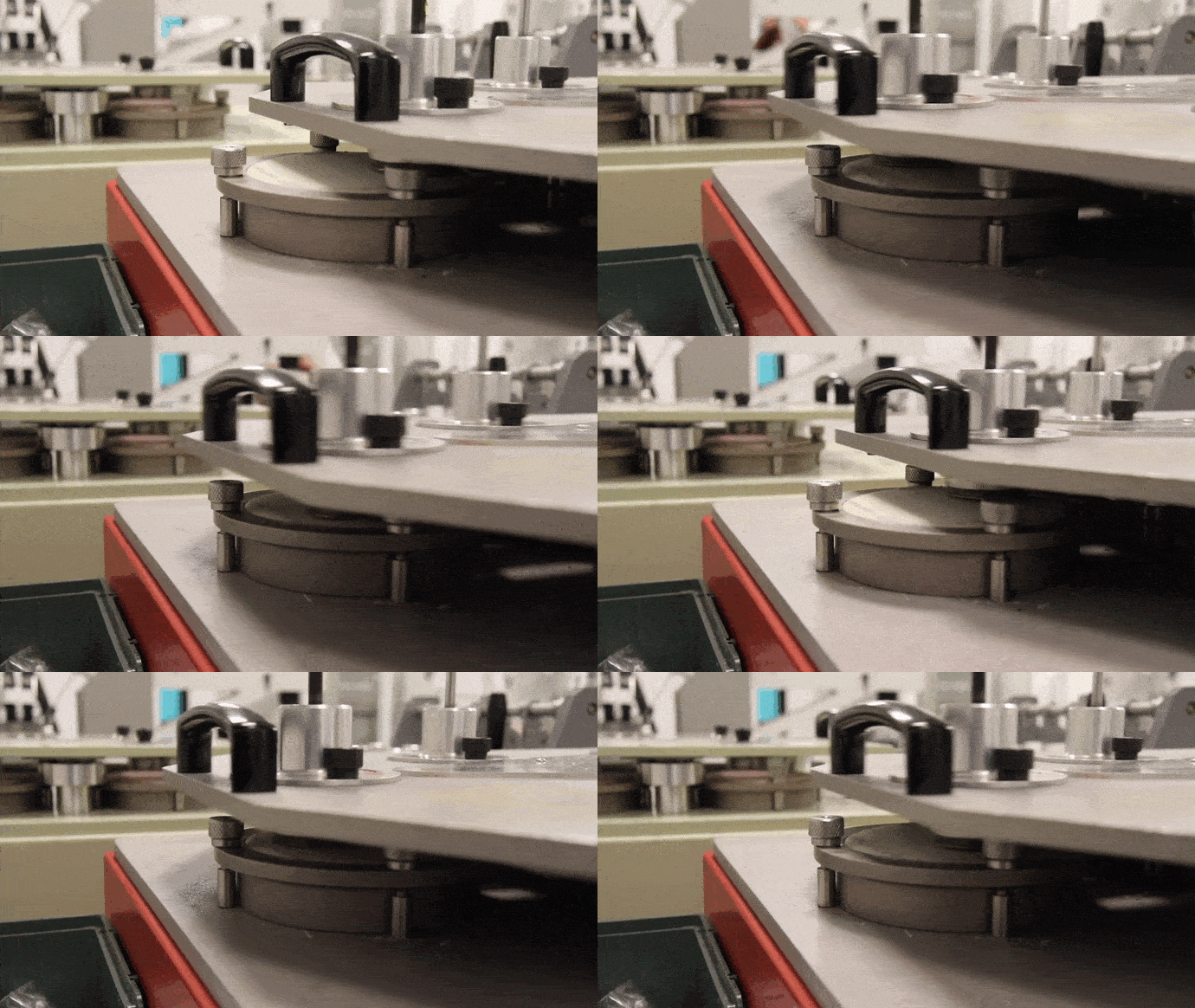




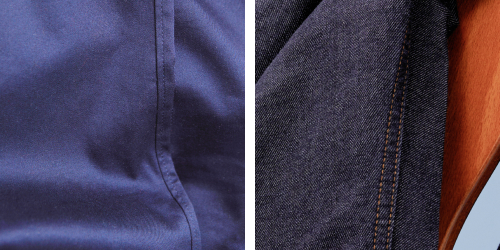


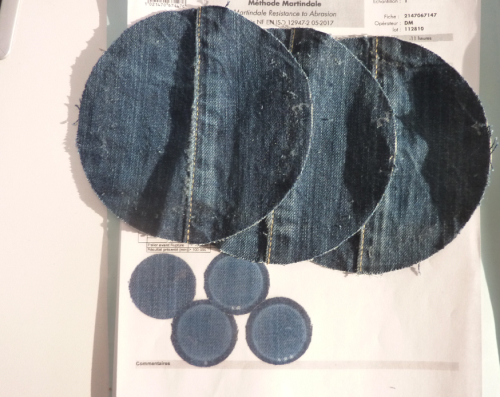


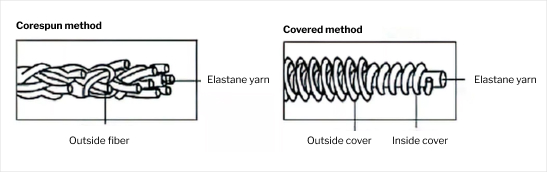


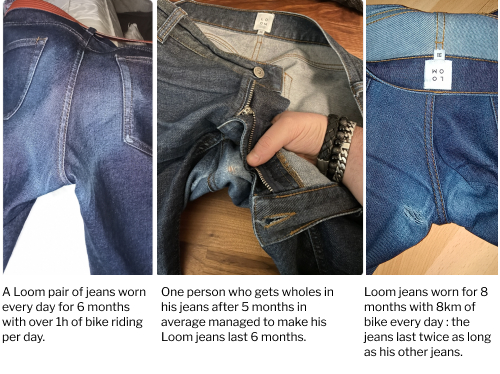
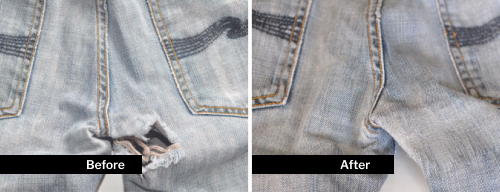


.jpg)
.jpg)
.jpg)