.jpg)

.jpg)


.jpg)














Recycled polyester, the great smokescreen
Recycled polyester, the great smokescreen


Recycled polyester is one of the main solutions fast fashion puts forward to claim it is reducing its environmental impact. In this article, we'll try to explain why this material is mostly a decoy that distracts us from the real solutions. A short investigation that takes us to China, Uganda and even Tennessee.
Chapter 1 – Polyester is a bit of a nightmare
Before we get to recycled polyester, let us introduce its “virgin” version (in other words, not recycled). And to do that, we'd like to show you the company that calls itself the biggest textile company in the world: Hengli.
If you were expecting thousands of women at sewing machines, think again. A Hengli factory in China looks more like this:

Two supertankers pouring millions of litres of oil into a mega-plant, where it goes through heavy industrial refining and steam-cracking steps until it becomes… polyester. That's right: polyester starts out as oil.
And just as oil has powered transport for decades, polyester is the fuel behind the explosive growth of the textile industry. Today it accounts for more than half of all textile fibres used worldwide1.

How do you explain such a rise?
Because polyester has always been cheaper than cotton? Like most people, that's what we assumed. But look at the figures and it turns out not to be true. Until 2010, the two materials cost roughly the same2:

The real reason polyester took off is that, for a lot of uses, it makes clothes that simply work better than cotton ones3:
- Quick-drying clothes for sport: Nike, Adidas and Decathlon know all about that
- Warmer or more waterproof clothes for the outdoors: it's no coincidence that Patagonia and The North Face were among the first to use it
- More technical everyday clothes: think Uniqlo's Heattech to keep you warm or Airism to keep you cool
- More fluid fabrics that crease less, perfect for women's dresses and tops
- Materials that hold their shape better, ideal for joggers or leggings, for instance
- Fabrics that stand up better to rubbing and washing, and are therefore used widely in workwear, upholstery and the medical sector.
- And so on.
And where does the planet fit into all this?
At first glance, nothing alarming. To assess the environmental impact of materials – and tell their customers about it – most brands rely on the Higg Index. According to this tool, polyester is one of the greenest materials in the world… greener even than organic cotton!

(click here for the source).
It's not completely absurd: in the giant polyester plants, the manufacturing process is so optimised and industrialised that, brought down to the scale of a single garment, the environmental impact may not be that high.
So is it true? Is polyester green?
Sadly, no.
First of all, the Higg Index may be the reference brands use the world over, but it offers little transparency about how it calculates things and isn't very reliable. According to a recent investigation, its assessment of polyester is based on data from a European plant, when the overwhelming majority of production happens in Asia, under environmental (and working) conditions that are probably a lot less glorious. In fact, after criticism from several media outlets and organisations, the index was officially put on hold in mid-2022 while independent auditors review its data and calculation methods.
But the main problem with the Higg Index isn't its lack of reliability: it's what it doesn't measure. Three things in particular.
1/ Making polyester also means making petrol
Back to Hengli, the Chinese polyester company. When they refine oil, they don't just get “naphtha”, the base product that will eventually become polyester. They also get a few liquids we all know: petrol, diesel, heating oil and kerosene.

And they sell all of those products. In 2019, Hengli even became the first private Chinese company allowed to sell kerosene to airlines. And every year, they sell more than 6 million tonnes of petrol and diesel – over 10% of what the whole of France consumes (!)4.
Hengli is the perfect illustration of where the oil and gas industry is heading5: what drives demand now is plastics (yes, polyester is plastic), which will account for more than half of the growth in oil demand between now and 2050. When Uganda's dictator defends the economic logic of Total's highly controversial EACOP pipeline, what does he bring up? His polyester shirt, and the market for synthetic materials.

So making synthetic materials like polyester brings in money for the oil industry. That in turn props up the production of petrol and kerosene, when fossil fuels are behind two-thirds of the world's CO2 emissions.
But polyester has another by-product that is almost as much of a headache: fast fashion.
2/ No polyester, no fast fashion
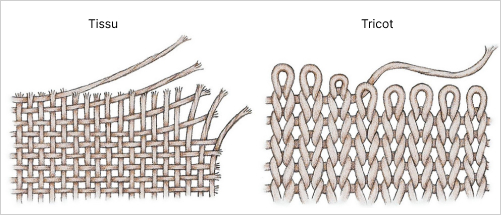
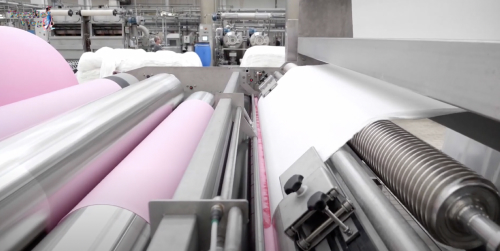
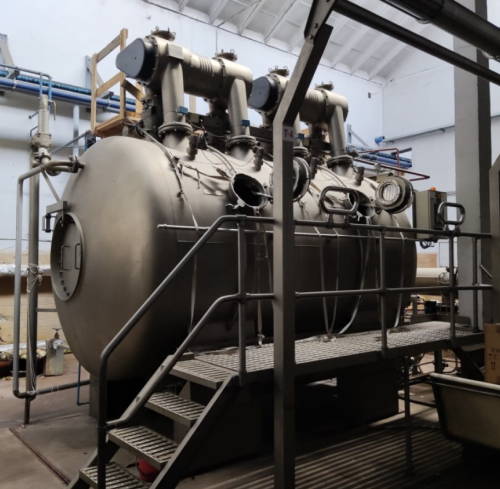
We all know about the disastrous environmental consequences of fast fashion and its 100 billion garments produced worldwide every year, mostly because of the greenhouse gases emitted while making them: spinning, weaving, dyeing, sewing…
What allowed the H&Ms and Zaras of this world to multiply was, first and foremost, rock-bottom prices (obtained by moving production to countries with poorly paid workers) and a frantic turnover of collections designed to make people buy more. As we've seen, cheap polyester is not what made fast fashion possible in the 1990s and 2000s: until 2010, its price was about the same as cotton's.
But fast fashion could never have grown so big without a glut of polyester on the market. Today, synthetics make up 64% of all textile materials. If fast fashion had to do without them – and switch to cotton, say – there almost certainly wouldn't be enough natural fibre to keep up these production levels: it would take nearly 7% of our arable land (versus 2.5% today), as much as we use to grow every fruit and vegetable on the planet. Hard to imagine with soils losing fertility and the climate in crisis.
In other words, polyester may not be what got fast fashion started, but it is what keeps it alive today. It's the fuel that keeps the fast-fashion engine running, the one thing you can't do without if you want to churn out ever more clothes.
And you can't talk about polyester without mentioning ultra fast fashion. Shein, the new giant of global fashion, makes 85% of its clothes from polyester. If this Chinese brand was able to emerge a few years ago, it is partly thanks to the recent collapse in polyester prices, itself caused by the drop in the price of its main component (ethylene) brought on by shale gas extraction in the United States. Without shale gas and dirt-cheap polyester, this ultra fast fashion might never have existed at all.

Finally, polyester's third problem has nothing to do with how it's made… but with what happens to it afterwards.
3/ Polyester and microplastics
Back to our famous Higg Index one more time: we still hadn't told you everything (no wonder it was put on hold). The index relies on a so-called “cradle-to-gate” life-cycle assessment – from raw material to factory gate – which means it leaves out how products are used and what happens at the end of their life. And for polyester, those two phases are where the serious trouble starts.
First, when you wash them or when you wear them, polyester clothes shed millions of microplastics into the environment6. The effects of these microfibres are still uncertain but potentially very dangerous for biodiversity, human health… and even global warming.
Then there's the end of life of polyester clothes, which isn't very glorious either. Once nobody wants them any more, there are only two options:
- Either the clothes get incinerated, which produces greenhouse gases. Since polyester is made from oil, this is even worse than incinerating a cotton garment (burning oil releases CO2 that has been locked underground for millions of years, whereas cotton's carbon cycle is much shorter7: cotton plants capture CO2 as they grow). Not to mention some potentially toxic fumes, in particular from antimony, a carcinogenic compound found in polyester that turns up in incinerator ash.
- Or the clothes end up in landfill or dumped in nature, particularly in Africa, which receives more than half of our used clothes. The problem is that plastic, unlike cotton or wool, doesn't biodegrade in the environment. Inevitably, these polyester garments will break down in the soil, century after century, into billions upon billions of microplastics (contrary to what you might think, the vast majority of polyester microfibres released into the environment come from end of life, not from our washing machines). As researcher Nathalie Gontard explains, plastics in landfill are a gigantic time bomb for the centuries to come.

In short: a choice between the plague and cholera.
Fast fashion brands can sense that all these problems with polyester aren't great for their image… and, in the end, not great for business either.
So they found a magic solution. Ladies and gentlemen, please welcome:

Chapter 2 – What's wrong with recycled polyester
A word of caution before we get to the heart of the matter.
We don't want to point fingers at the small and medium-sized brands that use recycled polyester today. Choosing materials is an extremely complex subject, and there is so much misinformation around that any of us can fall for it… We certainly did: at Loom, we used to proudly explain why we used recycled polyester in our swim shorts, for example. Seeing clearly through all this is almost a full-time job!
And of course, it's very awkward for an “ethical” brand not to use a material that looks green and that even fast fashion uses widely! What would its customers think?
Recycling draws on a very powerful image. Say the word and what comes to mind is nature's magic cycle: dead plants break down in the soil and, hey presto, the nutrients they release let a new plant grow. Nothing is lost, nothing is created, everything is transformed.

A recent TV report filmed in a Primark shop showed just how powerful recycled materials are as a marketing tool. A customer interviewed at the till explains:
“They tell us it's recycled cotton, so it's doubly worth it. I feel less bad about buying it because I tell myself it's good for the planet.”
On top of that, recycled polyester is barely more expensive than virgin polyester8. Which makes it the absolutely perfect material for brands: it looks green, it sells by taking the guilt out of shopping, and it doesn't cost the earth.
So naturally, almost every fast fashion brand has jumped on board: today, 8% of the clothes sold worldwide are made with recycled polyester. That's 10 billion garments sold every year.

Even fashion's worst offenders have switched to recycled polyester. At Primark, 45% of the polyester is recycled. And Shein, the brand we mentioned earlier, now swears by it.

Today, fast fashion still rests largely on virgin polyester. But tomorrow, it could well be recycled polyester.
According to a report by the NGO Changing Markets Foundation, which asked 46 major brands about their strategy on synthetic materials, recycled polyester is “their main strategy for reducing their carbon footprint”.
But is it really the right strategy?
Not at all.
First of all, industrial recycling is a long way from the “magic cycle of nature” we mentioned earlier. True, it saves having to extract and refine oil. But it also takes a fair amount of machinery: transport, sorting, washing, shredding, melting, extruding into filament… and all that equipment needs energy and materials. According to the famous Higg Index, which can hardly be accused of being anti-polyester, the carbon footprint of a very efficiently recycled polyester (from the company Repreve) is only 42% lower than its non-recycled equivalent.

42% is still not bad, right? Except that to make a garment out of recycled polyester, you then have to go through all the usual steps: spinning, weaving or knitting, dyeing, sewing, distribution… And since the raw material only accounts for about 30% of the final footprint, the carbon impact of a garment made with a very good recycled polyester is only 13% lower than its virgin-polyester equivalent9. Well, it's something… but that order of magnitude makes it hard to claim the garment is “good for the planet”, to borrow the words of the Primark customer in the report.
And that's not the end of it.
For one thing, chemically, recycled polyester is exactly the same as ordinary polyester. So when it comes to use and end of life, the problem is the same as with virgin polyester: millions of plastic microfibres released into nature, and/or greenhouse gases and toxic fumes when it's incinerated.
And perhaps the biggest problem of all: this recycled polyester… doesn't come from other polyester clothes. Nobody today has the technology to recycle polyester garments at scale, mainly because polyester is often blended with other materials (like cotton or elastane) and contains a lot of impurities (starting with the dye).
In fact, 99% of recycled polyester comes from a source that is much easier to process industrially: PET plastic bottles, which happen to be made of the same molecules as polyester. To give you an idea, 13 plastic bottles give you enough yarn to make a t-shirt.

“Well, surely it's better for those plastic bottles to end up as polyester yarn than on a beach or in an open-air dump, no?”
Excellent question, Jean-Michel.
When fast fashion brands explain that their recycled polyester comes from plastic bottles, they often keep up the illusion that they are stopping plastic bottles from polluting the environment. The main supplier of recycled polyester yarn (Unifi) even says so on its website: “we created this yarn to build a more sustainable world, where we keep billions of plastic bottles out of landfill and the oceans”.
Touching… but the truth is quite different.
If those bottles hadn't been used to make polyester, they would in fact have been used to make… more plastic bottles. The reality is that the textile industry is grabbing plastic bottles that could be recycled several times over and turning them into clothes, which in turn cannot be recycled at scale.
The plastic bottle industry is actually furious with the textile industry for pinching most of its bottles to make “recycled” polyester10. Because textile companies take so many bottles, the bottle industry can't reach its own recycling targets. So it is asking for first access to its own bottles, ahead of other industries. Nicholas Hodac, head of the European soft drinks association, put it this way recently: “Using someone else's material – as the textile industry does with PET bottles – is not circularity. […] It is downcycling.” In the past few months, the bottle industry has even started trying to build its own street collection network to make sure it gets back as many bottles as possible and keeps them out of textiles. Even the European Union said as much in its recent strategy for sustainable textiles: “Such a practice is not in line with the circular model for plastic bottles”. And a European directive will require bottles to contain at least 25% recycled plastic from 2025.

In short, the day may come when the textile industry can no longer get its hands on this stock of bottles to “recycle” into clothes… One more sign that polyester recycled from bottles is no magic answer to the textile industry's environmental problem. If anything, it works as a smokescreen that delays the wake-up call… and distracts us from the real solutions.
So what are they? How do we get a textile industry that can clothe the planet without destroying it at the same time?
Chapter 3 – The solution: reduction
First, could we imagine closed-loop recycling of polyester, using polyester from old clothes?
For now, it barely exists: today, only 0.18% of clothes are made from materials recycled from other clothes. And according to a 2021 report by the NGO Changing Markets Foundation, not one of the 46 major brands surveyed had set itself the goal of developing closed-loop recycling.
Still, there are a number of projects of this kind that give cause for hope. And – we're allowed a little national pride – France isn't badly placed here. The company Carbios claims it can recycle 90% of the polyester in clothes using a so-called “enzymatic” process and is currently building a pilot plant in Meurthe-et-Moselle, in north-eastern France. And the American company Eastman is investing a billion dollars to build, by 2025, the world's largest “chemical” polyester recycling plant near Le Havre, in Normandy (it will mainly take PET packaging, but Eastman says it can recycle textile polyester too).

But would closed-loop polyester recycling be enough to clean up the textile industry's act?
Unfortunately not.
First, there is still a lot of uncertainty about whether these projects can recycle textiles at scale, in terms of both cost and energy. For instance, the public consultation file for the giant Eastman plant tells us it hopes to recycle less than 3% of the volumes put on the market in France10. More to the point, that target is fairly theoretical, since Eastman admits that “the purity and design of textiles is a challenge” and would start with… “100% polyester seat belts”. We're still a long way from recycling Shein t-shirts or H&M dresses.
But let's picture an ideal world where polyester recycling is close to perfect. Let's imagine that:
- half of all textile polyester comes from other polyester clothes (as a reminder, it's less than 1% today)
- chemical or enzymatic recycling is ultra-efficient and gives recycled polyester a climate impact 70% lower than virgin (which is very, very optimistic)11
Under these ideal conditions, since the material only accounts for 30% of the impact (compared with making the garment itself), the reduction in climate impact across all polyester clothing production would come to… 10%13.
10%? That's barely more than the growth in worldwide sales of polyester clothing forecast for next year.
In other words, in terms of climate impact, if we pulled off the technological and industrial feat of rolling out garment-to-garment polyester recycling plants across the world, it would be exactly as if we had frozen the growth of polyester clothing for… one year. That is the first reason recycled polyester is a smokescreen: the word “recycled” gives us the illusion that we're solving the textile industry's pollution problem, when we're nowhere near the right order of magnitude.
In short, unless closed-loop recycling comes with a drastic cut in the amount of polyester clothing we consume, it will be a drop in the ocean.
This is actually a good moment to remember the good old three Rs: to cut the environmental impact of clothes, before recycling, you should first reuse – and, better still, reduce.

So what does that mean in practice?
First, reuse.
Most of our clothes can have a second life, provided we look after them and repair them as much as we can. If needles (the sewing kind) scare you, thousands of alteration shops all over France are waiting for your clothes.
But there's another form of reuse, halfway between recycling and upcycling, that we may soon be able to count on: plants that automatically sort our old clothes by composition and colour, then tear them into fibre to spin new yarn that doesn't need dyeing again (which skips the dyeing stage, a huge energy consumer). That's the project run by CETI, a textile research centre near Lille, in northern France, together with several French mills. Admittedly, the yarns obtained so far are less perfect than those made from virgin material, but the initiative deserves support.
And finally (above all), reduction! When it comes to cutting fashion's environmental impact, everyone has a part to play.
What we can do as a brand:
- Polyester makes up half of the world's textile fibres, and the share grows year after year. Sure, it's handy for quick-drying sportswear… but do we really need it to make dresses or t-shirts? Ideally, synthetic materials should be used in the smallest possible proportions, and only when there really is no alternative.
- For clothes that do need synthetics, we can keep using recycled polyester (which is still a tiny bit less bad than the virgin version). But we mustn't lose sight of the orders of magnitude, which means not making a big deal of this material's supposed virtues: through a halo effect, customers might come away thinking the garment is “good for the planet”.
- Focus on what really matters: not producing on the other side of the world, not launching a new collection every 2 days, and so on.
What the state can do:
- Give the bottle industry first call on its own plastic, as many NGOs are asking. Without access to bottle-based recycled polyester, the textile industry could no longer hide behind this solution and would have to ask itself some real questions about reducing its environmental impact.
- Penalise virgin polyester (and every other fossil-based material) in upcoming regulations, especially the environmental labelling scheme about to be rolled out in France and then across Europe. That is far from a done deal, because the European environmental labelling scheme is coordinated by the organisation behind the Higg Index – the very one that rates polyester as one of the greenest materials on the market.
- Penalise fast fashion's business practices, which keep fuelling overconsumption. Alongside hundreds of other brands, that's what we're fighting for through the En Mode Climat coalition.
What you can do:
- Boycott fast fashion, which uses enormous amounts of polyester. The bigger it gets, the more it pollutes… and the more it crushes the brands trying to do better. No wonder the wave of shop closures in France comes hand in hand with record profits for the big fast fashion chains.
- Favour natural materials, especially from low-impact and/or local farming: there are plenty of cases where you can easily do without polyester or other synthetics. And for anything worn next to the skin, they will always beat polyester because they resist odours better (underwear, t-shirts, shirts and so on).
We'd all love to believe the answer to the environmental crisis lies in one simple technical invention: a giant CO2 vacuum cleaner so we can keep burning fossil fuels, hydrogen planes so we can keep flying to New York for the weekend… and recycled polyester so we can keep buying more and more clothes. The real solutions to the textile problem are both simpler and harder for the clothing giants to swallow: first, they have to give up selling ever more. And for you, it means buying fewer clothes and pampering the ones you already own. The fight for the planet may well start in front of our washing machines…
And what about synthetics at Loom?
We try to use as many natural materials as possible, but we do sometimes add a little synthetic material when it significantly extends the life of our clothes.
Elastane: we put a small amount of elastane in our cotton trousers, our underwear and the ribbing of our cotton sweaters and sweatshirts, so they keep their shape over time.
Polyamide: we use polyamide to reinforce our socks, our merino t-shirt and our backpack.
Polyester: we use polyester in our swim shorts (because we can't see what could replace it), a little in our joggers (so they keep their shape) and in our chinos, in the form of elastomultiester (to stop the knees bagging).
Who are we to say this?
You're reading La Mode à l'Envers, a blog run by the clothing brand Loom. The textile industry is hanging by a thread, and it's the planet that's footing the bill. So whatever we manage to understand about this industry, we try to explain here. Because making clothes that last is good, but lifting the lid, sharing and inspiring is even more powerful.
We never advertise: if you like what we write and want more, subscribe to our newsletter by clicking here. We promise: one email a month at most.
Notes
1 In France, the textiles collected at end of life show a smaller share of polyester (only 19%). According to Refashion, two main reasons can explain the gap: “global textile production is not only for clothing (a multitude of technical uses, in construction or sports goods for example, absorb a lot of synthetic textiles); and synthetic clothes are probably collected less because they wear out more slowly or are seen as lower value (and therefore thrown out with household rubbish)”.
2 Admittedly, cotton loses a little more during spinning because of impurities and fibres that are too short, but the difference in loss compared with polyester is around 8%, so an impact of less than 1% on the price of the garment. Not enough to explain the explosion in polyester use.
3 Not in every case: cotton is better suited to clothes worn close to the body like t-shirts and underwear, or to clothes you want less shiny like shirts or jeans, and so on. Not forgetting other natural materials, like wool, which is better for warm clothes.
4 Every year, France consumes 46 million tonnes of fuel.
5 Admittedly, Hengli is a bit of a special case. Most of the time, it's conventional refineries that sell naphtha to polyester plants: so polyester is first and foremost a co-product of petrol (not the other way round).
6 The same goes for cellulosic fibres like cotton, but cotton fibres biodegrade more easily in the environment (in soil, though not necessarily in the ocean, where studies seem to show that dyed cotton fibres biodegrade poorly).
7 Nor does it mean the energy from incinerating cotton clothes should count as renewable: a lot of energy went into making them.
8 The price of recycled polyester pellets is actually lower than that of virgin pellets. But brands using recycled polyester have told us it is still slightly more expensive to buy, no doubt because production volumes are lower than for virgin polyester, so economies of scale are smaller.
9 42% × 30% = 13%
10 Only 32% of bottles are recycled in a closed loop; the rest is downcycled, notably into textiles.
11 The public consultation file mentions “20,000 tonnes of textile waste by 2028”.
12 There are still few life-cycle assessments of “fibre-to-fibre” polyester… But, for example, the first studies of enzymatic recycling, like this one, show a worse environmental balance than virgin polyester. This review of chemical recycling isn't very encouraging either.
13 Environmental gain = % of clothes recycled × % attributable to raw materials × climate gain from recycling = 50% × 30% × 70% = 10%


