.jpg)

.jpg)

.jpg)










Coal in the cotton. Why fashion has to produce less
Coal in the cotton. Why fashion has to produce less


Your 100% cotton t-shirt? It’s probably 100% coal as well. In this article we’ll show why energy is the key to cutting the textile industry’s environmental impact, and why the strategies fashion brands are currently pursuing fall hopelessly short. Several climate experts have read this article over, but if a mistake jumps out at you, let us know!
A riddle: what does the graph below show?

Nightclub attendance over the last 24 months? Sales of cropped trousers since 1990? The popularity of François Fillon (a French politician) over the same period?
It’s the greenhouse gas emissions curve we have to follow if we want any hope of staying under two degrees of global warming and keeping the planet more or less liveable by the end of the century (and, incidentally, of honouring the 2015 Paris Agreement on climate).

In other words, we have to divide our emissions by 3 in 30 years. That’s a lot. And above all, if we fail, it’s going to hurt. Very, very badly:

The textile industry accounts for between 4 and 8% of the planet’s greenhouse gas emissions: if it wants to pull its weight, it has to divide its emissions by at least three, within a single generation (that’s a slightly simplified way of looking at it, but it will be our working assumption for this article).
And at first glance, clothing brands are all fired up to meet the challenge.
The brands’ strategy for saving the planet
At the last G7 summit, a global coalition of textile companies came together under the name Fashion Pact. Among other things, they signed a series of commitments to cut their CO2 emissions. Good news? Look closely and you’ll see that these commitments essentially rest on two kinds of action:
1/ They choose so-called sustainable materials: lyocell, recycled cotton, linen, recycled polyester… on the assumption that they emit less CO2.

2/ They cut the emissions from their own operations, in particular by switching to renewable energy or switching to LED bulbs in their offices and shops.

So what do you think: will these two actions divide the fashion industry’s emissions by three within a generation?
That would be lovely. But no.

Because most of the textile industry’s emissions come neither from the materials used nor from the lighting in offices and shops.
To understand where textiles’ greenhouse gases come from, we need a bit of physics (promise: it’s easy to follow even if you haven’t touched a Bunsen burner since your school days).
The rule of the machines
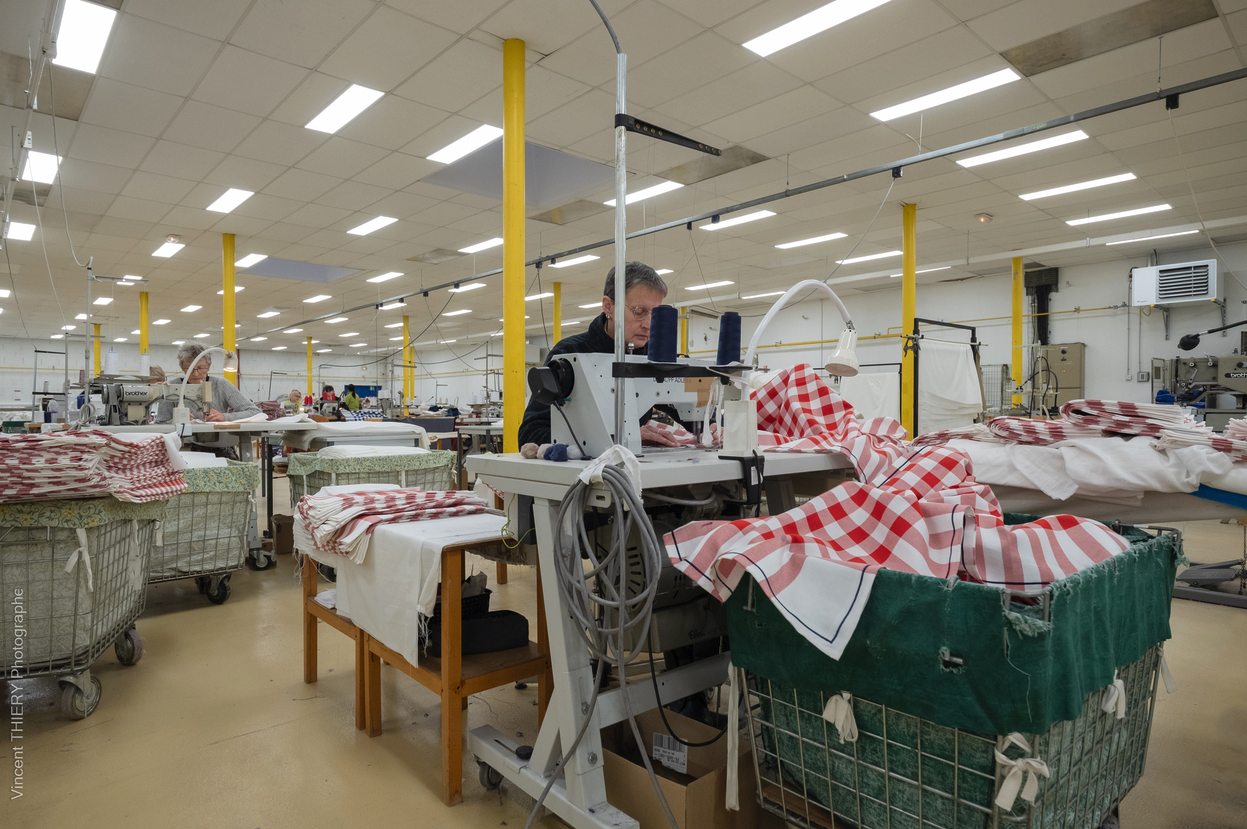
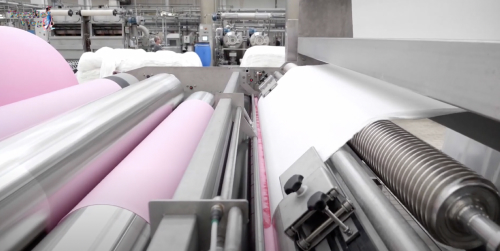
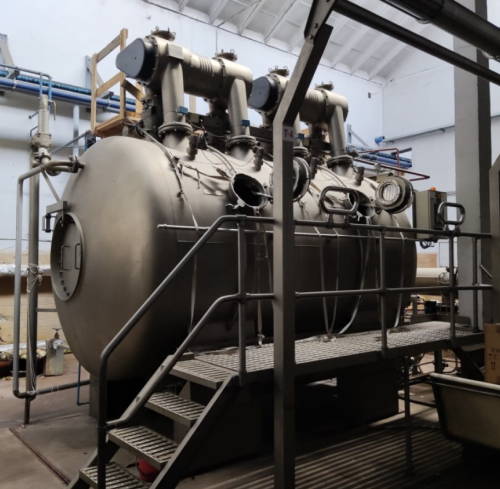
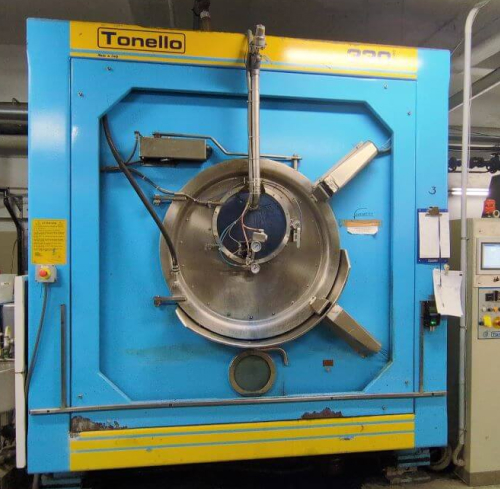
Most of the textile industry’s greenhouse gas emissions come from something you never see: the energy consumed by the machines that turn raw material (cotton, linen, Tencel or polyester) into clothes.
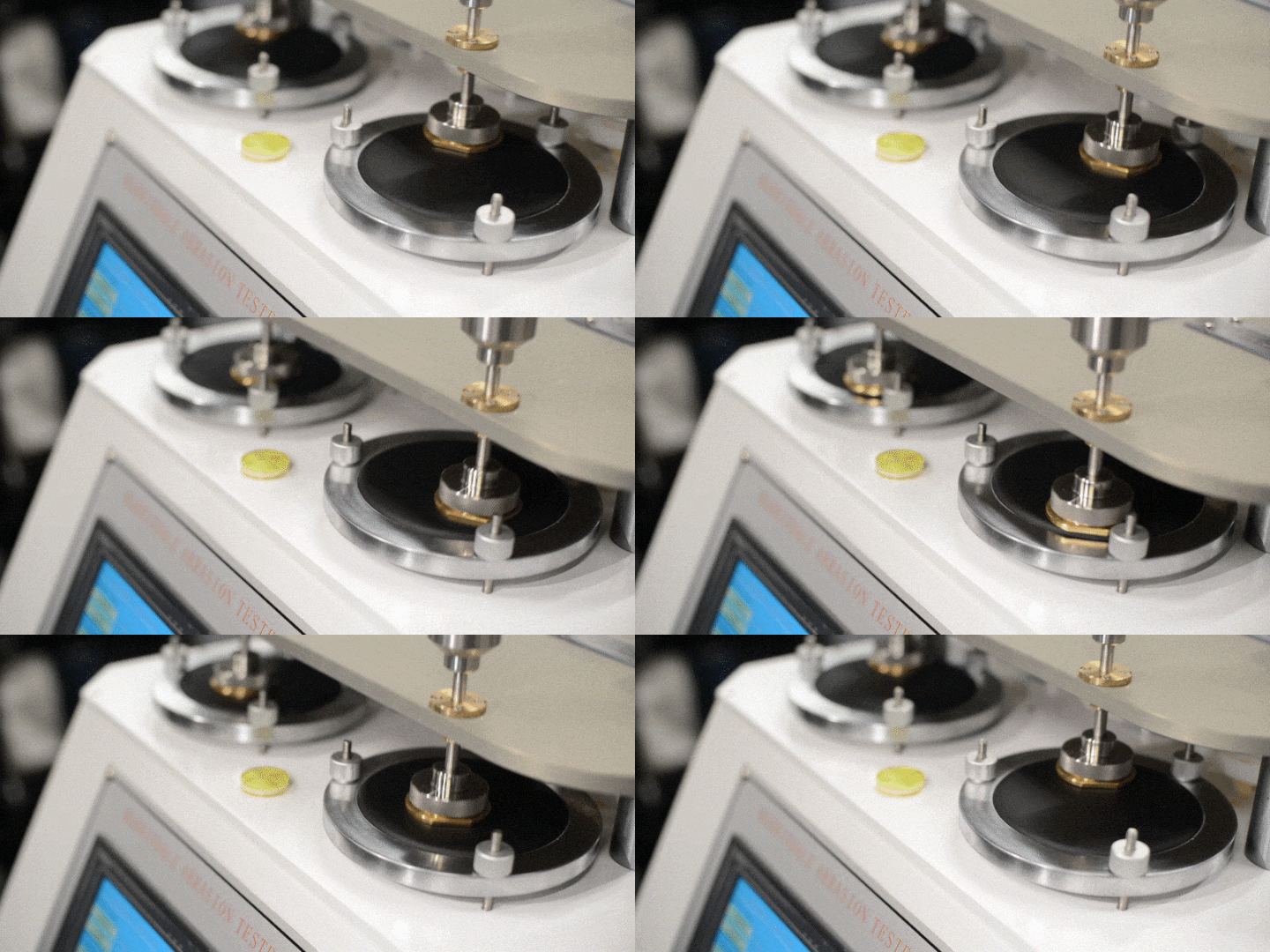
Time for a bit of “factory porn”:


And so on, and so on.
All these enormous machines use a lot – really a lot – of electricity. And they’re often located in Asia, where electricity comes from coal- or gas-fired power stations: fossil fuels that release greenhouse gases when they burn. So in the end, it accounts for a big chunk of the CO2 a garment emits:

By focusing their efforts on raw materials or their shop network, brands are fighting the wrong battle: that is absolutely not how they’ll divide their CO2 emissions by three in 30 years. In an ultra-ultra-optimistic scenario, where we assume that sustainable raw materials are produced with zero CO2 emissions (which isn’t the case) and that production volumes stop growing (which isn’t the case either), here is the best CO2 emissions trajectory we could hope for:

In short, the only real way to avoid disaster is to get textile machines to cut their emissions drastically. How?
First option – run these machines on “cleaner” energy
Wind turbines, solar panels… The trouble is that over the last 30 years, ever since we started getting worked up about the climate, the share of fossil fuels burned to generate electricity has barely moved…

In short, our clothes are still, as ever, made with coal and gas. There is still one reason to be optimistic about the future: the cost of renewables has fallen so much that in the last few years they have started to be competitive with fossil fuels. But to get costs that low, you have to keep a good share of fossil or nuclear power so that the electricity keeps flowing without interruption (yes, there’s no sun or wind 24/7). So as for hoping that fossil fuel use will be divided by three in the next 30 years…
Second option – build more efficient machines that use less energy.
It’s true that there are some promising leads, particularly in dyeing. We can now build machines that dye clothes with far less water, which avoids heating huge volumes of it to high temperatures and so uses far less energy.
What about the other machines? That looks a lot harder. To divide machine emissions by 3 in 30 years, you would have to raise their energy efficiency by 300%… which has practically no chance of happening. To give you an idea, the energy efficiency of petrol car engines has improved by 16% in 30 years. For planes, it’s roughly the same. And for spinning mills or looms, which presumably get far less R&D investment, it’s hard to believe we could do much better… Not to mention that we can’t replace the entire fleet of existing machines with a snap of the fingers.
And then (we probably should have started here), throughout history...
Improving energy efficiency has almost NEVER reduced energy consumption the way it was supposed to.
Sometimes it has even increased it. This is what’s known as the rebound effect: making machines more efficient brings product prices down and encourages people to buy more. The effect is there everywhere, all the time (and yet environmental policies manage to forget it almost always).
A few historical examples of rebound effects:
- In transport: engines became more efficient, so each kilometre got cheaper, so we travel more often. Result: oil consumption per person keeps on rising.
- In digital technology: the cost of data storage and the price of devices came down, and digital technology now eats up almost 10% of the world’s electricity.
- In the textile industry itself: the reason we buy so many clothes today is, first and foremost, that thousands of machines replaced manual labour and so brought the price of clothes crashing down.

So… what last option do we have left to divide CO2 emissions by three in 30 years?
Divide the volume of clothes we consume by three
Yes, you read that right: if brands don’t want to sacrifice the living world, they have to sell us three times fewer clothes than they do today.
And that is… exactly the opposite of what they’re doing.

How brands’ current strategy makes overproduction worse
When brands hammer home that they use more “sustainable” materials, and do nothing else, it makes the problem worse (whether they realise it or not). By presenting themselves as “green” while only working on secondary issues, brands lull their customers’ eco-anxiety to sleep so that they keep on buying – or even buy more.
A panel of ten ready-to-wear brands recently reported that “eco-design” had significantly increased their sales, by +7% to +18% (while also cutting production costs). That’s right: we consume more when our negative emotions are soothed away. In this study, for example, researchers showed that people used 20% more wrapping paper when told the offcuts would be recycled… You can see it in brands’ communication too – green arguments are alibis for encouraging people to buy more:


A quick aside: why recycling is (sometimes) smoke and mirrors
Some brands put forward recycling or the “circular” economy as the answer to environmental problems, for instance by installing recycling bins in their shops.
Recycling does have advantages, admittedly, such as making it possible to produce materials locally or to use less virgin material. But when it comes to cutting greenhouse gases, recycling helps very little. And this for three reasons:
1/ Today, only 1% of our clothes are “recycled”, meaning turned into new clothes. Clothes in good condition do get resold in second-hand shops, but that’s only 6% of volumes. The rest? Either they’re shipped to Africa (where many simply end up swelling open-air dumps), or they’re “downcycled” into rags or insulation.
2/ Let’s say we improve recycling technology enough to make far more new clothes out of old ones. Would that cut our greenhouse gas emissions? Hardly at all. Recycling saves material, but not really energy. A garment made from recycled fibres still has to go through the same industrial process to be made: spinning – dyeing – knitting/weaving – sewing. Result: even if we assume we manage to multiply the volume of recycled clothes by 40 (so up to 40%, which is wildly optimistic), it would save only 5.9% of carbon emissions compared with today (and if you’re keeping up, the goal is to divide by 3, in other words to cut by 66%…).
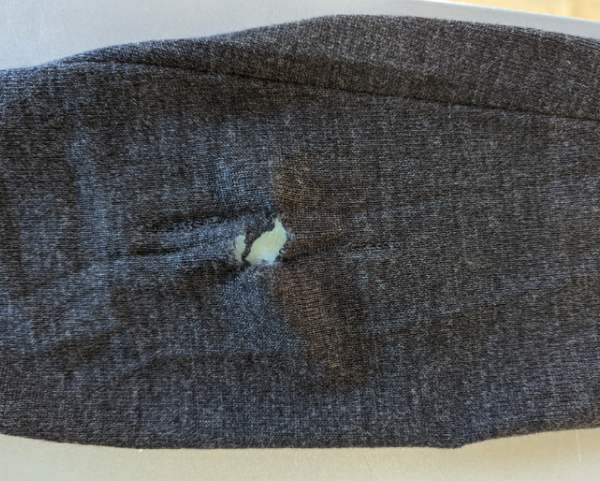
3/ And even that small drop in carbon emissions assumes that clothes made from recycled fibres will be as good as the others, which unfortunately isn’t always the case. With natural fibres like cotton, recycled fibres are shorter, so the clothes are lower quality than those made with virgin fibres: they pill more, lose their shape faster, and so on. So for the same amount of wear… you’ll have to make more of them.
Beyond consumers, this greenwashing paralyses citizen and political action. Since it looks as though brands are dealing with the problem, we tell ourselves the situation is under control.

In fact, most of what brands are doing today – developing new sustainable materials, promising to recycle clothes, fitting low-energy bulbs in shops – suggests that a technological fix for the climate problem will turn up. They’re stuck in a “green growth” mindset that stops them tackling the real problem: how do we get the textile industry out of its overconsumption model? This smokescreen is costing us precious time when we urgently need to act.
So what should we, the brands, be doing?
What brands have to do
To bring down the volume of clothes produced each year, we have to go after the direct causes of this overconsumption.
The first thing to do is to stop centring our communication on symbolic measures with little environmental benefit that might well encourage customers to buy more: recycled polybags, kraft paper packaging, sustainable materials, collection bins for used clothes in shops, and so on.
Does that mean these secondary measures are bad? That we should use more polyester and give up linen? Of course not. We should keep making progress on eco-design, but knowing that it isn’t enough. We, the brands, need to focus first on the following three things:
- Improve the quality of clothes. Falling quality shortens the life of clothes and forces consumers to replace them more often.
- Bring production back home. By fuelling the race to the lowest price, offshoring makes overconsumption and overproduction worse. Bringing production back to France or Portugal, on the other hand, cuts greenhouse gas emissions drastically, because the energy used there emits little CO2.
- Above all – above all – stop pushing people to consume: stop lulling people’s eco-anxiety with talk of “carbon-neutral”, “sustainable” or “positive-impact” clothes (none of which exist), slow down the pace at which collections are renewed, limit the frequency of sales and promotions, advertise less, stop online retargeting, stop going on about limited stock and deadlines, call a halt to limited editions, collabs and so on.
So yes, under these conditions, companies will end up making fewer clothes. And even if they sell them a little dearer (the price of quality and local production), they’ll probably make less revenue. Is that a problem? For their shareholders, clearly. For the people who work there? Maybe in the short term. But in the long run, it’s excellent news for jobs. Over the last 30 years, while the volume of clothes sold has exploded, the number of jobs in the French textile industry has collapsed because of offshoring, from 425,000 to just 100,000. A fall that far outweighs the number of jobs created by clothing retail (+50,000 between 1996 and 2010). Tomorrow, if we gradually manage to reindustrialise the country, it could create hundreds of thousands of local jobs.

How do we get brands to change? As we explained in this article or this TED talk, we collectively have to stop dreaming only of growth, and build a culture of “better” to replace the culture of “more”. But we’re not naive: we can’t bet our future on a great awakening inside companies. Besides, we know plenty of great people at big fashion brands who would like to change things but can’t manage it.
The problem is that today there’s a “polluter’s bonus” – in other words, an economic advantage to making things badly and making more of them. Take a brand that has offshored to Bangladesh, to factories running on coal-fired power and dumping their toxic waste in the rivers (not a very nice factory, then). It won’t have to pay any of the hidden costs of its behaviour: not the long-term cost of global warming, not the clean-up of the rivers, not the unemployment benefits in France for the people left without a job. Whereas a brand that makes the same products in France, creates local jobs and buys only renewable energy will pay 10 times more for its clothes and will probably sell 10 times fewer. Being a responsible company often means making a lot of effort that, in the end, puts you at a real disadvantage against your competitors. A bit like the clean riders in the Tour de France: they train harder… to go slower.
So, as in the Tour, we need to ask ourselves who we want to let win. And then change the rules of the game.
Changing the law
We’re probably a bit idealistic, but on the legislative side, there are several things that we think would go in the right direction for dividing the volume of clothes sold by 3 by 2050 (or, on a shorter horizon, cutting the volume by 30% within 10 years)
[Article update, January 2022] Since this article was written in early 2021, a lot of ground has been covered in this push to change the laws governing the textile industry. We helped set up En Mode Climat, a coalition of over 300 textile players (brands, but also factories, organisations, media outlets…) brought together to lobby – for once, for good – in the fight against global warming. With En Mode Climat, we’re trying to push regulation in the right direction, particularly on environmental labelling and on a bonus-malus scheme that penalises fast fashion and rewards the most responsible brands. More information on the En Mode Climat website.
It gets a bit technical at times, so we’ve put all our proposals in the box below, which you can read if you want to dig deeper.
Proposals for changing the law on textiles
It’s crucial to set the terms of the debate right as soon as possible: in a few months’ time the government will amend the Anti-Waste and Circular Economy law as it applies to the textile industry (via the future specifications for the textile EPR scheme, under which brands pay for the end of life of their products). An opportunity to force brands to take real environmental measures: a bonus-malus built into the retail price, environmental labelling, a reuse obligation, and so on.
A - Put up trade barriers against clothes made in poor human and/or environmental conditions.
It doesn’t seem right to us that it’s currently legal to import into France clothes made with forced labour, on the other side of the world, using electricity from coal-fired power stations. Here’s what could be done to change the game:
- Set up a border adjustment mechanism (a carbon tax on imports, for example) so that a garment like that can’t enter France without being heavily taxed.
- Set up textile import quotas, like the Multi-Fibre Arrangement that existed before the WTO dismantled it in 2005. Given what’s at stake (the survival of us all), it doesn’t seem inconceivable to us to bring back a coordinated, cooperative form of protectionism at international level.
- Make sure the duty of vigilance law is actually enforced: it allows financial penalties against multinationals that breach human and environmental rights. France was a world pioneer when it passed this law in 2017, but it has yet to be applied in earnest: during the recent textile scandal over the forced labour of Uyghurs in China, the government made do with a reminder of the rules to the brands concerned.

B - Force companies to be more transparent
- Production conditions. Why isn’t it compulsory to show the country (or countries) of production on labels and on brands’ websites?
- Compulsory environmental labelling with an A-to-E rating for every product. This is currently under discussion at French and European level. Loom has been included in the working groups, but we’re not sure our “lobbying” is working. Yet it’s essential that this environmental label takes into account how long clothes last, both in terms of their quality and in terms of incentives to consume (we could, for example, give a malus to brands that renew their collections too fast).
C - Change the eco-contribution “tax” on clothes.
Today, when a brand puts a garment on the market, it pays a tax that can be reduced if the garment is judged sturdier or made from recycled materials. Great on paper… But we would need to:
- Raise the amount: today this tax is around 1 cent per garment. How can such a tiny sum encourage brands to improve quality? As long as it doesn’t offset the extra cost of responsible production, the “polluter’s bonus” will keep laying down the law.
- Change how it’s calculated: the share of fossil fuels used should be built into the malus system, even though that’s technically complicated because the body that manages this tax focuses on the product’s end of life (which is, in fact, the whole problem). That would penalise brands that make their clothes in Asian countries using fossil fuels, and favour brands that produce closer to home, such as in France or Portugal, where energy is low-carbon (see this study by the Union des Industries Textiles, the French textile industry federation).
D - Penalise greenwashing.
To do that, the ARPP (France’s advertising self-regulation body) must no longer be run exclusively by companies, but must also include public bodies and/or NGOs in its governance. In the same way, “extended producer responsibility” schemes (such as Eco TLC / Refashion for fashion) must no longer be self-regulated by the companies themselves. As long as these bodies are made up only of the sector’s brands (and no public bodies or NGOs), their commitments will never be truly binding.E- Steer public funding tools (state-guaranteed loans, loans from the public investment bank BPI, the research tax credit…) so that they go only to companies that meet certain criteria (quality of clothes, incentives to consume, European manufacturing…). Is it right that some brands that manufacture on the other side of the world quickly obtained a state-guaranteed Covid loan while some French textile manufacturers are still waiting for theirs?F- Support the repair and refurbishment of used clothes. Plenty of clothes could be repaired instead of simply thrown away. The Crédit Impôt Collection (a tax credit worth a hefty €45 million that funds the development of new products) could be turned into a reuse tax credit to fund clothes repair. That’s a big potential source of local jobs.
Why this is good news
At this point, you may be thinking that what we’re promising is a rather sad world, where we go without buying, where companies disappear, where we all dress the same in black, navy and grey.
It’s precisely the opposite.
Today, we have no idea what conditions our clothes are made in, and we’re outraged by the textile industry’s endless scandals, from the Uyghurs to Rana Plaza. Tomorrow, we could recreate hundreds of thousands of decent jobs in our regions and know where our clothes come from.
Today, a handful of giant global brands are smothering all the others in the race to the lowest price, and flattening clothing tastes the world over. Tomorrow, they could make way for thousands of brands – more local, more thoughtful, more creative – that create less misery and inequality.
Today, we spend our Saturday afternoons buying ever more clothes when our wardrobes are already overflowing, in high streets lined with the same shops over and over, whether you’re in Saint-Malo, Brive, Paris or Nancy – or any other French town. Tomorrow, we could rediscover the pleasure of buying thoughtfully. Of wearing clothes that are better-looking and more hard-wearing. Of sewing a button back on (or having it done) instead of throwing a shirt away. Of discovering a shop you’d never have seen anywhere else.
Over to you
If you work in textiles
Time is short: in a few months the government will amend the Anti-Waste and Circular Economy law for the textile industry, and it could force brands to act. For now, with the Fashion Pact we talked about above, many brands aren’t pushing in the right direction. So it’s very important that the government understands what’s at stake and hears these proposals.
If we’re on our own, they won’t listen. But if they feel there are hundreds of us, they might just prick up their ears. So if you too think the law needs to change to put an end to overconsumption, sign up here so we can build a coalition of textile players and take this issue to the government.
If you’re a citizen
Well, you’ve guessed it: if textile production has to be divided by 3, every one of us is going to have to cut our clothes shopping by the same amount (that’s non-negotiable – sorry, Cristina Cordula, France’s favourite TV stylist). But beyond individual actions, you have other powers. Brands try to reach you on social media to sell you their products, so you can talk back to them. Urge them to bring production home, call them out when you feel they’re centring their actions on symbolic measures with little environmental benefit, or pushing too hard for consumption (we’ve set up an Instagram account on the subject). Brands should be ashamed of pushing people to consume and proud of doing things right. And as long as the law doesn’t force them to, social pressure has to be the engine of change.
And if you’ve got any energy left, you can also take the fashion “informers” to task (rating apps, media, ethical fashion blogs, directories, Instagram accounts that list ethical brands and so on): these players have a big influence on individuals and brands alike, and it’s just as crucial that they open their eyes to the criteria that really count.
Together, we’ll change the rules of the game.
Written by Guillaume Declair
Some reading that helped us write this article, in case you want to dig deeper
- The book Recyclage le Grand Enfumage (“Recycling, the great smokescreen”) by Flore Berlingen
- The book Retour sur Terre : 35 propositions (“Back to Earth: 35 proposals”) by a collective of authors including Dominique Bourg, Philippe Desbrosses and Pablo Servigne
- A few articles from Jean-Marc Jancovici’s blog (in French): the Kaya identity or the energy of machines (or a video of his talk if you can’t be bothered to read the articles)
- The excellent website Carbon Brief on global warming
- Reports for understanding the textile industry’s carbon impact: the Quantis report Measuring Fashion and the McKinsey report Fashion on Climate
- The work of Negawatt on the best way to achieve the energy transition to a low-carbon society
- A quirk of timing: a study by a researcher at the Cycleco research institute, published on 24 February 2021, a week after our article, arrives at exactly the figures we calculated for this piece: 69% of clothes’ CO2 emissions come from the industrial manufacturing phase. That figure was obtained thanks to 20 French textile companies that took part by supplying data from their factories on 17 products. Another report, from the World Resources Institute, published in November 2021 – also after our article – likewise attributes 76% of emissions to the industrial phase (with good transparency about the assumptions and calculation methods).
Who are we to say this?
You’re reading La Mode à l’Envers, a blog run by the clothing brand Loom. The textile industry is in a sorry state, and the planet is footing the bill. So whatever we manage to understand about this industry, we try to explain here. Because making clothes that last is good, but revealing, sharing and inspiring is even more powerful.
We never advertise: if you like what we write and want more, subscribe to our newsletter by clicking here. We promise: we’ll write to you once a month at most.


