.jpg)

.jpg)

.jpg)

















Buying fewer clothes is good for the economy (on one condition)
Buying fewer clothes is good for the economy (on one condition)


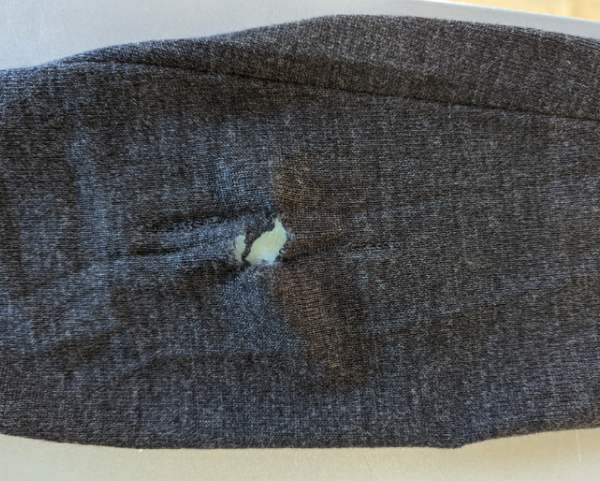
A video made by ADEME (the French government’s environment agency) has caused quite a stir over the past few weeks: in it, a “de-salesman” talks a customer out of buying a polo shirt, pointing out that the one he’s already wearing is perfectly fine.
The ad sparked outrage both in the business world (the MEDEF, France’s main employers’ federation, called for it to be pulled immediately) and among some politicians (Bruno Le Maire, the finance minister, called it “regrettable”). The main criticism: the ad could put clothing retailers in a tight spot at a time when the textile sector is going through a crisis and badly needs sales – December is a make-or-break month for shops. It was also accused of looking down on a profession that does its best to do its job: giving advice in order, ultimately, to sell.
To make up our own minds, we decided to dig into the question. So, is selling fewer clothes bad for clothing shops? Short answer: no, provided production comes back to France or Europe. Long answer: read on.
1. We have never bought so many clothes
Before getting to the heart of the matter, let’s set out a few orders of magnitude on how many new clothes are bought every year. In France, without even counting bed linen, towels and shoes, 2.7 billion garments were put on the market in 20221. That’s more than boxes of six eggs.

Once you take out unsold stock2, that works out at an average of 40 new garments per person in France every year3. That’s a lot: in the 1980s, it was about half that4. Were people badly dressed back then? We’ll let you be the judge, but they did have something to put on their backs.

2. For the planet, we need to buy less
Consuming clothes on such a massive scale has environmental consequences. We’ve already described them in several articles: greenhouse gas emissions, destruction of biodiversity, microplastics… If you don’t have time to read them, remember one thing: to produce is to pollute.
Could we cut that pollution significantly and quickly, while keeping consumption at the same level, by relying on technical innovation? It’s pretty unlikely:
- The reductions that technical innovation can deliver are too small. Take “recycling”, for example, which brands often wave around as the ultimate solution: it would cut the textile sector’s greenhouse gas emissions and water consumption by only 5 or 6%, and even that would take enormous effort5.
- These innovations aren’t rolling out fast enough. For example, many brands want to “decarbonise” their factories, in other words run them on green energy rather than gas, coal or oil… A great intention, but look at Bangladesh (France’s second-largest clothing supplier after China): the share of renewables in its electricity production is negligible and barely moving (see this article if you want to dig into cutting CO2 emissions in textiles).

Some technical innovations can help, but they can also act as a smokescreen that stops us seeing the elephant in the room: to produce is to pollute (again). So the fastest and most effective way to reduce fashion’s pollution really is to make fewer clothes.
But what the avalanche of reactions to the “de-salesman” ad suggests is this: even if buying fewer clothes were necessary from an environmental point of view, it would be a disaster from an economic one. We would risk pushing hundreds of clothing companies over the edge and out of business. In other words, the ad has reopened a kind of “end of the world vs. end of the month” debate, this time applied to companies.
So is that really true? Would buying fewer clothes inevitably cause an economic disaster?
3. For the economy, we need to buy less and make more locally
Before we talk about the economic health of clothing companies, let’s start with the health of the country as a whole.
The risks of overconsumption for the French economy
Since most textile factories are in Asia, every time we buy a garment, money leaves France.

In 2021, with a deficit of over €12 billion, textiles were our third-biggest loss-making industry, on its own responsible for more than 20% of the overall trade deficit excluding energy6. And France’s gaping trade deficits have consequences. To pay for them, we have to borrow from other countries. There’s more detail in this report, but to put it (very) simply, it’s like borrowing money from the bank to eat out every day instead of cooking at home.
Now, borrowing isn’t necessarily a bad thing: it makes sense if it’s to buy rare metals to invest in the energy transition, or machinery to bring our pharmaceutical industry back home. But if it’s to ship in billions of low-cost garments, it simply means living beyond our means. And that can’t go on forever7. So all these clothes imported from abroad are money we won’t be able to invest in things that are actually useful to our economy.
Then there’s the tax revenue the country misses out on, with all those factories moved abroad. Fewer companies in France means less tax collected, and in the end less money to pay for schools and hospitals.
In short, this overconsumption of imported clothing is risky for the French economy as a whole. But if we look at the clothing sector itself, wouldn’t buying less put retailers that are already struggling in even more danger?
The problem with French textiles isn’t buying less, it’s low cost
Yes, 2022 and 2023 were catastrophic for some French brands. You may remember the bankruptcies of Camaïeu, Kookaï, San Marina, Jennyfer and Pimkie… It is clearly a very hard period to get through.
But what’s behind it? Is it because the French, on the whole, have started buying far fewer clothes because of inflation and falling purchasing power?
That doesn’t really seem to be the case. We don’t have official figures for 2023 yet, but in 2022 the number of garments produced kept on rising (+2%8). And what we can see is that some brands are doing rather well. Kiabi grew its sales by 10% in 2022, and the foreign fast fashion chains are breaking every record, whether Uniqlo, H&M, Zara or Primark9. Not forgetting, of course, the ultra fast fashion newcomers like Shein and Temu.
In other words, what’s hurting these chains isn’t that the French have become more frugal with clothes: it’s that inflation has pushed shoppers towards low-cost chains10. And it really is the cheap chains that now capture most of French clothing spending: 7 out of 10 garments sold in France are now low cost11. It’s striking when you look at the top 10 best-selling brands in France:

OK, but even if the market is dominated by these low-cost chains, French or foreign, that must still mean a lot of retail jobs, right? If the French really did start buying fewer clothes over the next few years, wouldn’t that risk creating unemployment?
Far from it. Over the past 50 years, the very rapid rise in the number of garments sold hasn’t created jobs in clothing retail. Quite the opposite.
Between 1971 and today, while the volume of clothes consumed has more than doubled, 30,000 jobs have disappeared from clothing retail13. We have never bought so many clothes, and we have never had so few jobs in shops. Is online shopping to blame? Partly, but not as much as you’d think. Look at the figures: retail jobs in clothing had already fallen sharply before the internet took off14.
The real culprit behind the loss of clothing retail jobs in France is low cost. The relative price of clothes (compared with income) has halved in 30 years. So shops may well sell more clothes, but they don’t earn more from them15. Roughly speaking, selling clothes used to keep a lot of small shops going; today, cheap clothes are sold in bigger stores that shift huge quantities with fewer staff.
And shops aren’t the only place where low cost has wiped out jobs. It has destroyed a huge number elsewhere in textiles too:
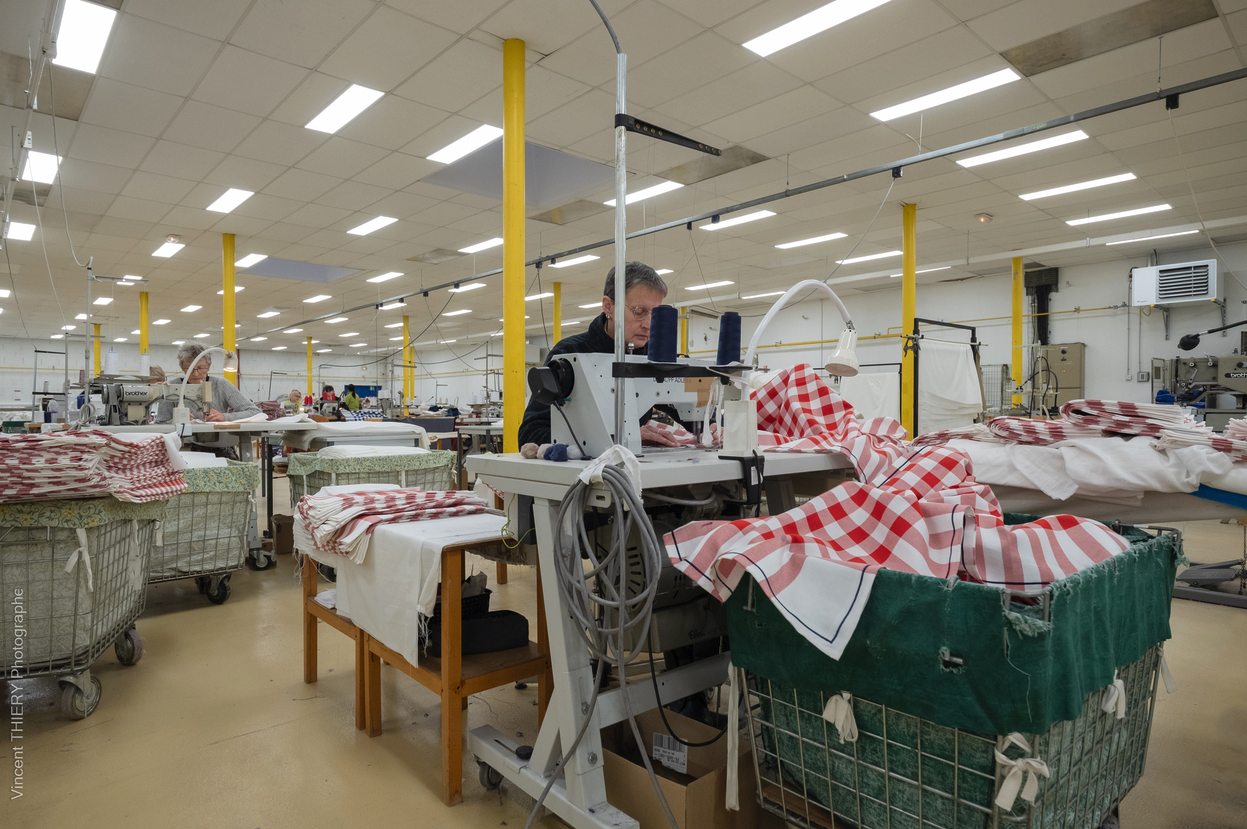
- In factories: as fewer and fewer of these clothes are made in France, the number of jobs in the textile industry has been divided by three in 30 years16.
- In alteration workshops and cobblers’ shops: since the French now buy far more new clothes, they have fewer of them repaired. To give you an idea, the number of cobblers in France has gone from 45,000 in the 1950s17… to just 3,500 today18.
- And then there are all the indirect jobs lost in the old textile regions: when a factory closes, the bakery, the café, the bank and the post office close too. In hard-hit textile areas such as the Nord, the Aube or the Vosges (in northern and eastern France), unemployment remains far higher than in the rest of the country19.

***** A short aside *****
But low-cost chains are a good thing, surely: they let poorer people dress themselves, don’t they?
Yes, but no. It’s true that cheap clothes boost purchasing power and make it easier for some struggling households in France to buy new clothes. But take a step back and you realise it’s a poisoned gift:
Working-class people are the first victims of low cost: the offshoring of the textile industry since the 1980s has destroyed a huge number of jobs, as explained above. Some of those former factory jobs (making our clothes here) have turned into jobs in logistics and transport (importing our clothes from abroad), but there are fewer of them, and they are more precarious and worse paid.
Clothes are so absurdly cheap and the pressure to consume so strong (new collections, promotions…) that even people on low incomes can end up buying more than they had budgeted for (like the woman in this documentary who is “often counting every euro”).
Offshoring means lost tax revenue for the country, with all those factories moved abroad. Fewer companies in France means less tax collected, and in the end less money to fund education and healthcare. And public services are the wealth of those who have none.
Poorer people are the first to suffer the long-term consequences of overconsumption, especially those of climate change
Most low-cost sales are not made by the poorest: if 7 out of 10 garments sold in France are cheap ones, it’s because the customers of low-cost chains go well beyond the poorest households. So the argument that low-cost models should be supported in their name is seriously skewed.
***** End of aside *****
If we bring the industry home, we can buy less and still have healthy companies
To create wealth and jobs in textiles again, we need to go back to… how things used to be: making fewer clothes, but making them closer to home, in France or in Europe.
That would create jobs:
- In factories: to give you an idea, the textile industry in Italy still employs 464,000 people, compared with just 105,000 in France21.
- In clothing shops, since higher-value garments would allow retailers to earn a better living;
- In alteration workshops and cobblers’ shops: fewer new clothes means more clothes getting repaired;
- Not forgetting indirect jobs: when a factory sets up somewhere, it brings work to the other factories around it and to local shops22.
And as a bonus, it would mean not wrecking our planet and not making clothes on the other side of the world in shameful conditions. Remember that in terms of purchasing power, working in textiles in Bangladesh is like working more than 60 hours a week in France23 for around €391 a month24 (even after the recent pay rises won through mass protests in the country). How can anyone live decently on that?
It’s understandable that the video upset some clothing retailers, who felt that in the short term, a message telling people to buy less could hurt them even more. But let’s not pick the wrong enemy: the real threat to the textile sector isn’t buying less, it’s low cost. The absurdly low prices in fashion endanger our environment and make it impossible to pay manufacturers and shops properly. Buying less, on the other hand, can be a source of hope, as long as “buy less” comes with “buy better”: clothes made closer to home, sold at inevitably higher prices, but providing a decent income for everyone.
What the government can be blamed for, when it comes to this video, is stopping at an awareness campaign aimed at the general public, when the problem needs tackling at the root, with laws that encourage buying less and producing locally. For example: penalising fast fashion brands that make clothes on poverty wages and push customers to buy ever more (which is what we, along with many other clothing brands, are calling for through the En Mode Climat movement).
In the end, what the outcry over a video that simply encourages people to buy less reveals is a belief that “restraint” and “prosperity” must be at odds. But the textile example shows that this opposition isn’t backed by the numbers: if we bring production home, we can have both.
Finally, by turning a blind eye to the environmental consequences of what they produce, companies are sawing off the branch they’re sitting on. In the long run, they will need energy to run their machines, resources to feed them and healthy people to work in them… in short, the very preconditions that the ecological crisis is destroying bit by bit. The economy doesn’t float in mid-air: there will never be healthy companies on a burnt-out planet.
To go further:
- Read the excellent book La Sobriété Gagnante by Benjamin Brice, which shows that consuming less should be seen not as a constraint but as an opportunity for our economy. Combined with an ambitious policy of bringing industrial activity back home, it can help us reduce our environmental footprint, our deficits and our social inequalities all at once.
- Watch this debate we took part in, which covers the main arguments of this article.
Who are we to say this?
You’re reading La Mode à l’Envers, a blog run by the clothing brand Loom. The textile industry is coming apart at the seams, and the planet is footing the bill. So whatever we manage to understand about this industry, we try to explain here. Because making clothes that last is good, but revealing, sharing and inspiring is even more powerful.
We never run ads: if you like what we write and want more, subscribe to our newsletter by clicking here. We promise: we’ll write to you once a month at most.
Notes
1 Source: Refashion 2022 activity report.
2 3.3 billion * 83% clothing / 67.8 million inhabitants * 99% = 40 garments per person. Only 1% of textiles go unsold. See the 2021 Ademe report: “Étude des gisements et des causes des invendus non alimentaires et de leurs voies d’écoulement” (study of unsold non-food goods): gross unsold stock represents 4.1% of turnover in the clothing and footwear sector. 65% of that unsold stock is then sold on to discounters, 20% is donated to charities, 10% is recycled or repaired and 5% is destroyed. So of the items declared “unsold”, at most 20% can be assumed to end up destroyed or “downcycled” (if we assume that some donations to charities end up that way). In the end, destroyed unsold stock therefore represents less than 1% of sales (20% x 4.1% = 0.8%).
3 If you add shoes and household linen, it comes to almost 50 textile items per person in France.
4 In 1984, clothing consumption in France was 1.3 billion items, or 23 garments per inhabitant. Source: 1984 INSEE survey of 7,500 households (INSEE is the French national statistics office).
5 Quantis, Measuring Fashion, 2018: reaching 40% recycled fibres would cut greenhouse gas emissions by 5.9% and water consumption by 4.5%.
7 France’s net international investment position (how much France owes the rest of the world) stands at -€800 billion, or 32% of GDP. France is getting close to the ceiling of 35% of GDP set by European agreements. That figure is only a convention: exceeding it wouldn’t be dramatic in itself, but it shows there are limits you shouldn’t cross if you want a healthy economy. Note that in the early 2000s, France was still a net creditor (in other words, it had a positive net international investment position). Source.
8 Source: Refashion 2022 activity report.
9 We don’t know the details of their figures for the French market, but there is no reason to think they aren’t growing there too.
10 Some experts also point out that these brands missed the digital turn or didn’t invest enough in their “branding”. That may play a part too, but probably less than the shift towards cheaper prices in a period of inflation. Take Leclerc, the supermarket chain: being nothing special at branding or e-commerce doesn’t stop it being the second-biggest clothing seller in France...
11 Source: Kantar Refashion study, November 2022.
12 Source: Kantar panel (12,500 people).
13 INSEE sources, in full-time equivalents, employees + self-employed. For 1971, we rely on the annual business survey, which puts the figure at 161,000 in clothing and 32,620 in footwear. For current jobs, we rely on the 2009 retail outlets survey, which puts the figure at 134,608 in clothing and 27,914 in footwear.
14 The INSEE retail outlets survey that shows the job losses in retail dates from 2009, when online clothing sales were still a small share of the market. You could also blame supermarkets for destroying clothing retail jobs, but they don’t account for that big a share of clothing sales: in 2011, 17% of clothing sales were made in supermarkets, according to INSEE.
15 Over the past 30 years, clothing prices have stayed fairly stable in absolute terms (between 1990 and 2020, clothing prices rose by only 15%, according to INSEE), but average incomes in France have more than doubled (gross discretionary income per person rose by 92% between 1990 and 2020, according to INSEE, source). So for a retailer to reach an income comparable to 30 years ago, they have to sell almost twice as many clothes.
16 The number of jobs in the textile industry, including leather and footwear, has been divided by three in 30 years, falling from 325,000 to 100,000. Source INSEE: The textile industry in France: globalised production, except for luxury goods and technical textiles.
17 Source: R. Shapiro (sociologist), Cordonnier Profil Métier, 1991.
18 3,462 businesses registered in the RNM (the French trades register) under activity code 95.23Z, Ademe 2022 study “Fonds réemploi réutilisation réparation de la filière TLC”, assuming one job per business.
19 Unemployment rate, Q3 2021, according to INSEE: 10.0% in the Nord, 10.2% in the Aube, 8.5% in the Vosges vs. 7.9% in mainland France.
20 Source INSEE 2020: 29.7% unemployment among 15-64 year olds in Roubaix. And with the closure of Camaïeu, which had its head office in Roubaix, misfortune keeps piling up on a city that is more than ever a victim of low-cost textiles.
21 Source: Eurostat.
22 It is generally accepted that one industrial job generates two to three indirect jobs at other industrial companies, plus induced jobs in services and shops across the surrounding area. Source: Anaïs Voy-Gillis, reindustrialisation specialist.
23 The Garment Worker Diaries initiative reports that between December 2021 and December 2022, Bangladeshi garment workers worked an average of 248 hours a month, or 62 hours a week (source).
24 The minimum wage in Bangladesh has just been raised to 12,500 taka after the recent protests. But according to the Asia Floor Wage Alliance, a living wage there is 53,104 taka, so the current minimum wage is 24% of a living wage. Since a living wage in France is €1,630 (source), it’s as if someone in France were paid €391 a month. Source: Clean Clothes Campaign.


