.jpg)

.jpg)


.jpg)










How fast fashion is choking the second-hand market
How fast fashion is choking the second-hand market


Now that Vinted has become part of everyday life and brands are launching their own second-hand sites, it’s tempting to celebrate. Could this be the start of a new era for fashion, one of circular economy and less pollution? Sadly, the success of these sites hides a much darker reality: most of the players in the second-hand sector, the ones handling the clothes you drop into collection bins, are struggling. They are finding fewer and fewer outlets for them, and so no longer have a viable business model. In this article, we dig into the roots of the problem.
I. How fast fashion is destroying the second-hand economy
A) A French ecosystem in trouble
To understand the world of second-hand clothing, let’s follow the journey of an old t-shirt.

Rather than throwing it away (or selling it on), you decide to give it to a charity that accepts donations, or to drop it into a collection bin (well done: only 30% of people do the same).

Once collected, your t-shirt lands in a large sorting centre, where experienced sorters decide its fate by eye and by touch, depending on its condition, its composition and its potential resale price.

From there, several things can happen:
Option 1: The cream (5%)
Your t-shirt is in great shape and can be resold at a good price in a second-hand shop. It’s part of what the trade calls the “cream” (remember that word, we’ll come back to it), in other words the 5% of collected clothes with the most value.
Option 2: The bottom of the barrel (45%)
Your t-shirt is in poor condition. It will either be “downcycled” (in other words, turned into rags or insulation) or incinerated to produce energy.

Option 3: The soft middle (50%)
Your t-shirt is just a normal t-shirt: in good enough condition for a second life, but nothing special either. So it gets compressed into a big bale of clothes and sold to a foreign importer.

Hang on. So the clothes we donate don’t go to people in need?
Well, it depends who you give them to:
- Social-economy reuse organisations (for example Le Relais, which runs almost half of France’s 47,000 collection points). Here, your donation serves a social project: sorting and reselling the clothes creates jobs for people getting back into work, and the income funds their solidarity programmes.
- Charities helping people in need (for example Secours Populaire, the Red Cross or Emmaüs): a small share of your donations may stock charity shops, where the most disadvantaged can receive clothes for free (through “solidarity wardrobes”).
- Anyone else: then no, your old clothes won’t be helping the poor. They are feeding an ordinary commercial business1.
So no: most clothes will not be “given to the poor”, quite simply because the need is largely covered by existing donations. That said, if you give clothes of some value to charities, you are taking part in a system of solidarity: the “richer” the “cream” these charities collect, the more profitable they are, and the more people in need they can help.
That’s how it works in theory. Except that…

Today, the second-hand sector in France is on its knees. Some collection, sorting and recycling operators are losing money and starting to close down one after another.
What happened?
First, with the growth of platforms like Vinted, people tend to sell whatever has financial value and donate whatever has less. The “cream” left over for charities is getting thinner, which weakens their finances.

But the real blow to the second-hand business model is the rise of fast fashion and low cost: the value of the “cream” has shrunk structurally as Shein, Primark, Leclerc (a French supermarket chain) and the like have gained market share. Partly because the quality of clothes is going down, but mostly because the prices these chains charge for new clothes are so low that charities struggle to make any money reselling them. And the entire business model of collectors and sorters rests on reselling that “cream”. The cheaper the clothes, the less viable the second-hand sector. No wonder, then, that charities like Emmaüs are calling for regulation of the fast fashion and low-cost model.
There is a third, more circumstantial explanation for the second-hand crisis: export outlets are clogged. The African countries that traditionally bought our second-hand clothes are now turning to Chinese second-hand instead, and France no longer quite knows what to do with the millions of garments left on its hands.
But the second-hand crisis in France is only the tip of the iceberg: the sector is going through a global crisis, both economic and environmental.
Remember the t-shirt you dropped into the bin: half the time, it is sold to a foreign importer. But where exactly is the “abroad” your t-shirt gets sent to?
B) The struggles of the second-hand trade in Africa
In more than half of cases2, second-hand clothes end up in Africa, because (for now) buying Western second-hand there is cheaper than buying new.
And which African country? For your t-shirt specifically, that’s hard to know: after being sorted and re-sorted in several countries, the trail of French clothes goes cold. But if we look at all the clothes collected worldwide, here are the main African countries3 where they are likely to land:

Once a garment reaches Africa, what becomes of it? To find out, let’s look at what happens in Ghana, the African country where the end of life of clothing has been studied most closely, thanks to The Or Foundation, an NGO very active on the ground.
The garment is unloaded at the port of Accra, the capital, wedged inside a bale of second-hand clothes, itself crammed into a container holding up to 400 of them.
The clothing importer is not a charity but a for-profit business: it sells the bale “blind” to a local trader known as a “retailer”, for around €180. This retailer (often a woman) then tries to sell the clothes one by one from a stall in the gigantic Kantamanto second-hand market.


In 60% of cases, the garment will be put up for sale, sometimes after a quick wash or a going-over with an iron. Otherwise, it may quite simply be… thrown away.
Why such waste?
If a garment gets exported to Africa, it’s because it is in fairly good condition: an estimated 95% of the clothes in these bales are “wearable”.
Yes, but… there are a thousand reasons why a “wearable” garment might not be “sellable”: maybe the seams have twisted a little, maybe there are already plenty of that style on the market, maybe it’s too warm for the climate, maybe the cut, the colour or the style is something nobody here likes, or maybe it needs washing and ironing but that just isn’t worth the effort.
If there were few clothes available in Ghana, far fewer would surely be thrown away. But with the flood of fast fashion cast-offs, so many pieces arrive every day that any given garment is more and more likely to go unsold… which leaves retailers in a critical financial position.
And if it is thrown away, what becomes of it?
Ghana does have official landfill sites, but they were quickly overwhelmed by the volume of clothes coming in. With nowhere to put the surplus, it is burnt or left in open-air dumps.

An abandoned garment can also be washed into a gutter by the rain, end up on the beach and start to decompose, with dramatic consequences: microplastics released, damage to marine life, the health of local people, the city’s economy…

To sum up:
- cheap new clothes flood Western countries
- their value is too low for the local second-hand market, so they are sold abroad
- there are so many of them that most go unsold in Africa
- with no infrastructure to deal with them, they end up piling up in the environment
One clarification: the t-shirt you dropped into a bin in France is unlikely to end up on a beach in Ghana. That country mainly receives second-hand clothes from the English-speaking world. There are textile pollution problems in the countries France exports to as well (see the Cotonou lagoon, in Benin), though probably on a smaller scale than in Ghana. But nothing protects these countries from one day being swamped by the same textile pollution and the same economic crisis.
So how do we change this system?
II. The ideas that sound good but won’t save second-hand
Before looking at ways to turn this system the right way up, let’s start with the ideas that sound good but aren’t: they don’t solve the problem, and may even make it worse… yet they are the ones that keep coming up in public debate.
A) Bad idea number 1: Stop exporting second-hand clothes overnight
This is usually the first idea people come up with when they see these mountains of textile waste: Western countries should simply stop exporting their cast-offs, or African countries should ban them from entering. In reality, it’s a very bad idea.
First, halting exports overnight would wipe out a whole section of the economy, leaving tens of thousands of people in Africa with nothing to live on.
But above all, it would create another problem: “We are 100% certain that if second-hand exports stopped tomorrow, they would be entirely replaced by new fast fashion, which would be even worse”, say the people running The Or Foundation. In Kantamanto market, historically reserved for second-hand, stalls selling new fast fashion clothes are multiplying. One of the few things holding back a massive influx of cheap new clothes into Africa today is the dominance of second-hand, which is still cheaper.
That said, in the medium term, we do need to export fewer clothes and manage their second life better at home.
B) Bad idea number 2: Sort better before exporting
The pollution of African beaches by second-hand clothes is often boiled down to a question of “poor sorting” in France. As we saw above, the problem is not that exported clothes aren’t sorted carefully enough: the reasons a garment gets discarded in an African market are so many and so varied that “sorting better before exporting” is impossible. The real problem is that there is no longer enough value in the clothes collected to keep every link in the chain in business.
Blaming the people who sort clothes for the consequences of the fast fashion boom is unfair… but it does conveniently draw attention away from the real source of the problem. When the bath is overflowing, blaming the people with the mop is a way of not noticing that the tap is on full.
C) Bad idea number 3: Recycle everything
It may seem obvious at first: rather than exporting, why not recycle in France and turn our old clothes into new ones?
Unfortunately, the economics of recycling are very tricky: fibres recycled from old clothes are generally more expensive and of lower quality than their virgin equivalents, and the recycling industry remains fragile. Witness the recent troubles of Renewcell (even with H&M behind it), Carbios and Soex. The result: worldwide today, less than 1% of old clothes are turned into new ones.
We can of course fall back on “downcycling”, for example turning old clothes into rags or insulation. But even then, it isn’t easy for local downcycling plants to find buyers: their rags and insulation can quickly end up costing more than virgin equivalents made on the other side of the world. To keep their business model afloat and encourage them to grow, investment and subsidies are needed.
It’s better than nothing, and supporting such plants is vital. But if we want to reduce the environmental impact of textiles, downcycling should be an option only for clothes too damaged to be worn. We should be doing everything we can to make sure that clothes that are still wearable get worn again, rather than turned into rags. And there is only one way to do that: rein in fast fashion so that it stops competing with second-hand.
To go back to the bath metaphor, betting everything on recycling is like putting all our money into treatment plants for the water spilling over the edge… instead of turning off the tap, or at least turning it down. Wouldn’t it make more sense to turn clothes into rags only once they have been worn for years, to the point of falling apart?
There is a long road ahead to get there, but change is far from impossible.
III. A user’s guide to a truly circular textile economy
A) Make the money follow the clothes
As long as we keep sending so many clothes to Africa, there is no avoiding a large share of them becoming waste. So the infrastructure to deal with them needs to be built locally: recycling plants, landfill sites, working sewers, wastewater treatment, incinerators. But there is a money problem: on one side, local people depend on this economy; on the other, the states are not rich enough to treat the waste.

The lack of money also creates critical safety problems. In January 2025, Kantamanto market burned to the ground, for want of an effective fire prevention and response system. Another danger: most of the goods are carried by the kayayei - women “head porters” - who thread their way through the market’s narrow, crowded aisles with loads of up to 55kg balanced on their heads. This hard, dangerous work could be replaced by trolleys… if there were enough money to widen the aisles.

In short, these countries need money to deal with our cast-offs. And as it happens, there is already a mechanism that (in theory) funds the end of life of clothing: EPR, or Extended Producer Responsibility.
EPR is a system that makes companies responsible for the end of life of the products they sell: basically, it’s the polluter-pays principle in action. If a brand puts a garment on sale on the French market, it has to pay a few cents to an “eco-organisation”: ReFashion. With the money collected, this body gives financial support to sorting operators, funds a repair bonus for clothes taken to an alterations shop, runs campaigns to raise consumer awareness, and so on.
The problem: the foreign countries that receive our old clothes never see a cent of that money, because it is spent exclusively within France.
And yet, if we are talking about “Extended” Producer Responsibility, wouldn’t it be only natural for those who deal with most of our textile waste to get the means to build the infrastructure they need, so that clothes stop ending up in their rivers and on their beaches?
In other words, we should make sure that EPR money follows the clothes when they leave France. This “worldwide EPR”, or Global EPR, is a recurring demand from the NGOs and countries that depend on the second-hand trade.
B) Rein in fast fashion… and make it pay
Being fairer to other countries matters. But what we would really like, in the long run, is a second-hand economy that works in France, without shipping so many clothes to the other side of the world.
To understand how to get there, we need to rewind a little. Why did a textile EPR scheme have to be created in the first place, in other words why did brands have to be asked to pay for the end of life of their clothes?
Historically, the second life of clothes never needed subsidising: when clothes were still scarce and worth more, people repaired them and wore them until they fell apart, or handed them down within the family. And when the wealthy parted with their clothes, buyers were easy to find. In the Middle Ages, that was the job of the old-clothes dealers, the “fripiers”: they not only resold clothes but also repaired, cleaned and restored them. The business worked wonderfully: in the 19th century, the Carreau du Temple market in Paris had more than 1,500 of them.
It was from the 1980s and 90s, with the arrival of low-cost and fast fashion brands, that the second-hand business model in France stopped working. So in 2008 the famous “EPR scheme” had to be created: the state asked brands to prop up the second-hand economy financially.
On paper, it’s a great system.
The catch is that every brand pays the same eco-contribution, whatever its business model: around 5 cents per garment, an amount set to rise in the coming years to keep up with new needs. That’s unfair: fast fashion and low-cost brands are the ones destroying the profitability of the second-hand sector, so they should be the ones bearing the cost, through higher eco-contributions. That would honour the polluter-pays principle the scheme was built on, and push these brands to rethink the way they produce and sell.
How do we get there?
First, the governance of the EPR scheme needs an overhaul. As we saw above, it is run by an eco-organisation, Refashion. Its remit is set by the public authorities, but in practice it is funded, steered and controlled… by the companies that put the most clothes on the market. Under those conditions, there is little chance of Refashion asking low-cost and fast fashion brands for a bigger eco-contribution. For this body to act in the general interest first, its independence needs strengthening, for instance by creating an independent regulator, as recommended in this recent report by the Inspection Générale des Finances (the French finance ministry’s audit body).
But above all, it will take real political courage to significantly raise the eco-contributions fast fashion pays… And fortunately, that is starting to happen. Notably with the so-called “anti-fast fashion” law, passed unanimously by the National Assembly (the French lower house) in March 2024, which introduces a bonus-malus system into the EPR scheme of up to €10 per garment.
The law has still not been examined by the Senate, and there is a real risk of seeing it emptied of its substance. Hardly surprising: low cost and fast fashion are lobbying hard, going as far as hiring former ministers and leaders of MEDEF (the French employers’ federation). Fortunately, many players in French fashion, the second-hand ecosystem and NGOs are fighting to get it passed.
Conclusion
In the textile industry, whichever problem you look at (pollution, climate change, working conditions, deindustrialisation or unemployment), you always end up at the same source: the fast fashion and low-cost model.
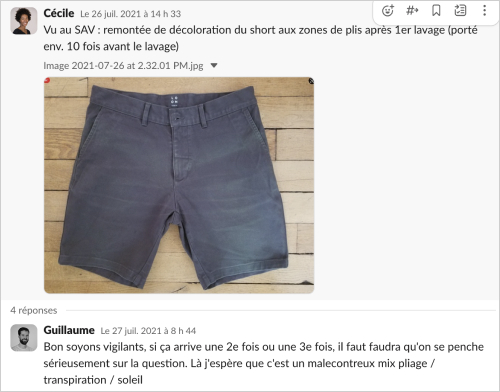
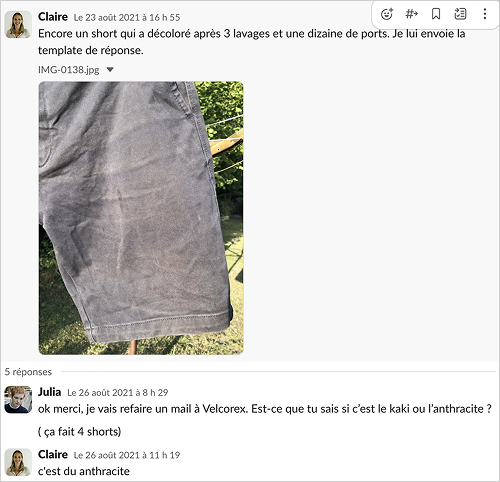
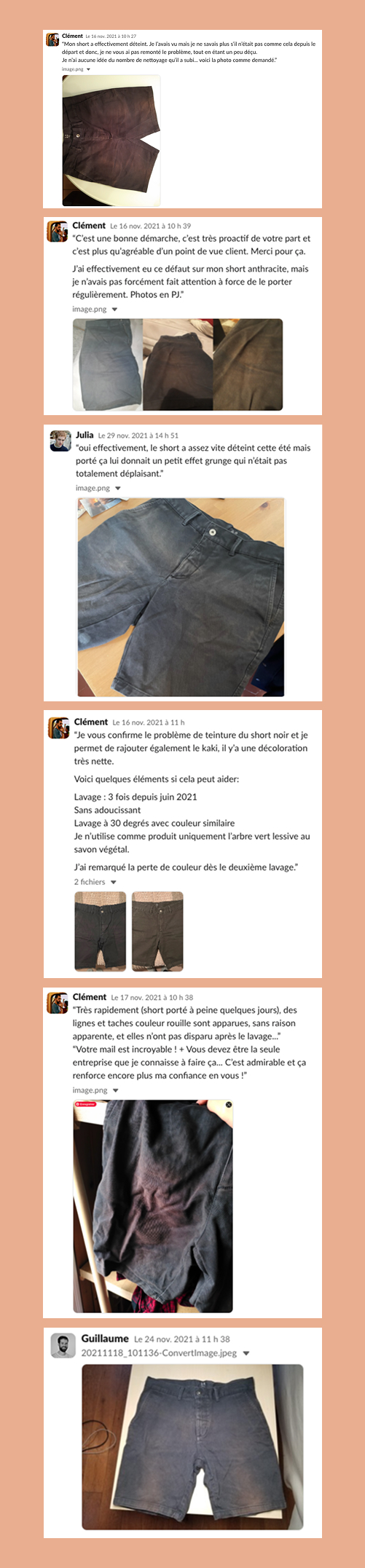
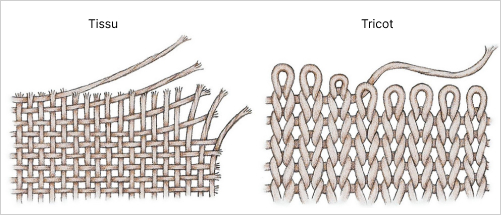
And yet the end of life of our clothes could be a lot cleaner if there were no more (or far less) fast fashion and low cost. If our clothes were worth something again, we would relearn how to look after them and how to repair them (or have them repaired): we would re-dye faded shorts, re-knit the broken seams of our sweaters, cover the holes in our sweatshirts with pretty embroidery…
Once worn threadbare, our clothes would become rags, insulation or cushion stuffing. And if we decided to part with them while they were still in good shape, they could easily be resold in local second-hand shops, because they would be worth enough to keep everyone in the chain in business: collectors, repairers and shopkeepers.
In short, an economy that cuts waste, creates jobs locally, spreads wealth to every link in the chain, builds know-how and sovereignty… as visions of the future go, that one is rather cheering, isn’t it?
P.S. We need you
France is working on a method for environmental labelling of textiles that has one great merit: it penalises fast fashion’s incentives to overconsume and rewards more responsible business practices. But there is a risk that Europe will throw the text out and impose a less favourable method. Help us defend the French method by signing this online petition!
Notes
1 In some cases, collected clothes are exported abroad without being sorted: this is known as “original” export. The main countries France exports to are, in order: Tunisia / Belgium / the United Arab Emirates / Pakistan (source). There, the clothes are sorted and graded: the “cream” is re-imported into France (or other Western countries) to be sold in second-hand shops of the Kiloshop type. So why the round trip? It is (as usual) a question of money: in Pakistan, labour is far cheaper. In the end, “original” export offshores the sorting stage to low-cost countries. And there are quite a few companies of this kind: they account for nearly half of French clothing exports (Source: Refashion 2022 report: “Nearly half of these flows are not tracked by Refashion because they are exported by non-contracted operators”). To dig deeper, watch the documentary Very Bad Fripes.
2 To be more precise: second-hand clothes are sometimes first sorted in centres in other countries, such as Belgium or Pakistan, which then send them on to Africa. But in the end, more than 50% of French exports finish up in Africa. Source: our reworking of customs figures.
3 Analysis based on world trade statistics (source).


