Why we launched a pair of jeans that doesn’t fade
Why we launched a pair of jeans that doesn’t fade

In this article, we tell you how our disillusionment with the “patina” of raw jeans led us to develop a pair of jeans that doesn’t fade. Fair warning: this story will take you on almost as many trips as a pair of fast fashion jeans — from Hollywood to Shanghai, then from Italy to Egypt.
The “patina” of jeans vs. reality
Even though it has the particular habit of fading, jeans are the best-selling trousers in the world.
If we love this aesthetic of denim changing colour over time and with wear so much, it’s probably because Levi’s and Hollywood have been selling it to us for nearly 80 years now.
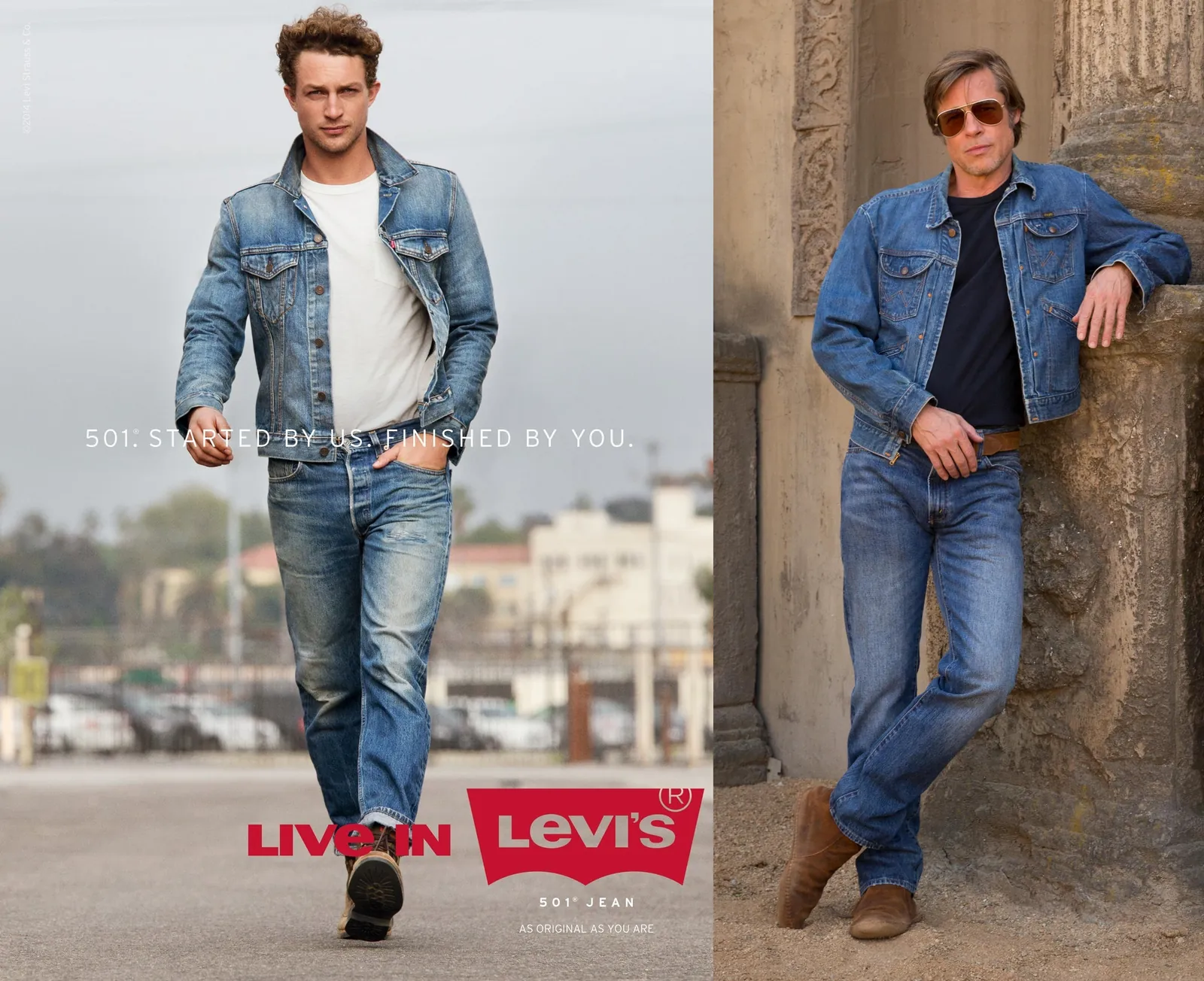
And it’s true that a faded pair of jeans can be very beautiful: the fade marks tell the story of the person wearing them.
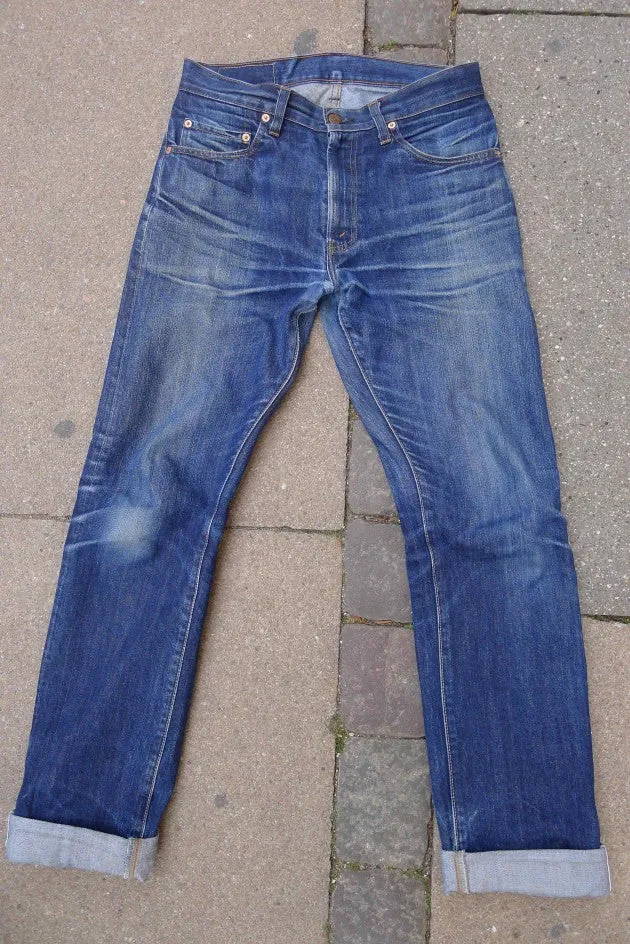
You could say it’s a garment that develops a patina: you can see it ageing and you find it even more beautiful that way.
Except that, in real life, the fading of jeans can be less glamorous. Here are the kinds of problems we get in customer service at Loom.
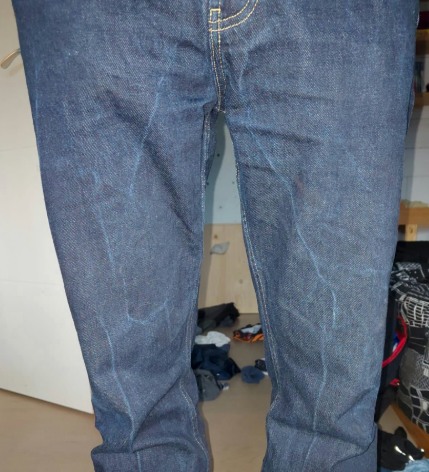
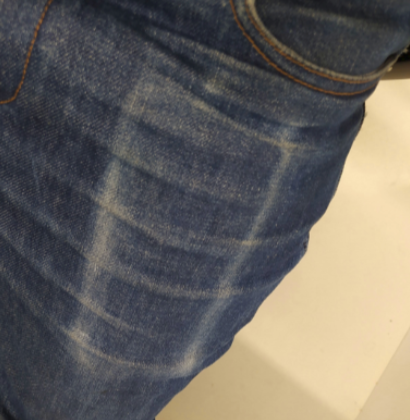
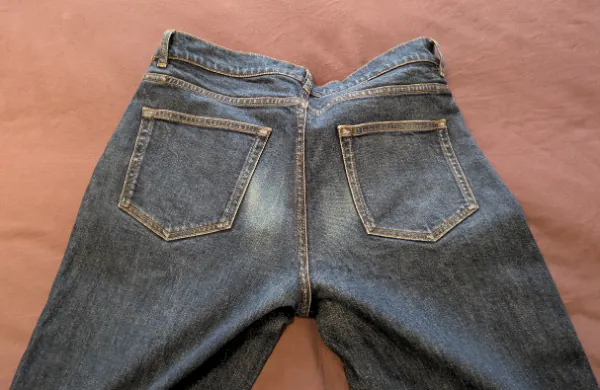
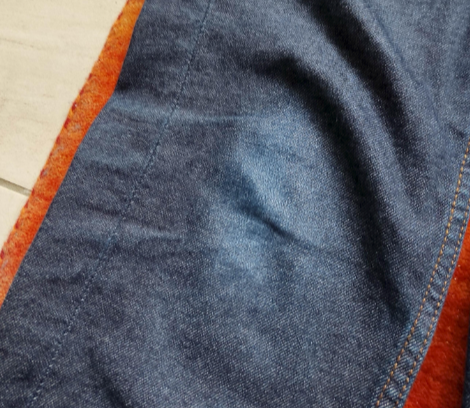
Hard to talk about a patina that makes the garment more beautiful in these cases: generally, our customers are put off because they feel their jeans have become ugly and/or can no longer be worn in a slightly formal setting.
To be completely honest, we could have seen it coming (lol). Before building our first pair of jeans a few years ago, we ran a little survey. And to the question “what’s the problem with your jeans?”, about 20% of respondents had already mentioned fading problems: “the dye doesn’t hold well”, “the colour goes too fast”, “the fabric fades”, and so on.

Back then, since we were still lulled by the myth of jeans that develop a patina (and hadn’t yet received all the photos above), we hadn’t really seen it as a problem to solve. 6 years later, we decided to launch (as well) a pair of jeans that doesn’t fade.
But before we explain how we did it, we need to take a little technical detour and explain to you why jeans fade unlike other trousers (yes: you’ve surely noticed that the colour holds much better on your chinos than on your jeans).
Indigo dye vs. reactive dyes
First, a little technical explanation. A (blue) pair of jeans is a fabric with vertical blue threads (the “warp”) and horizontal white threads (the “weft”).
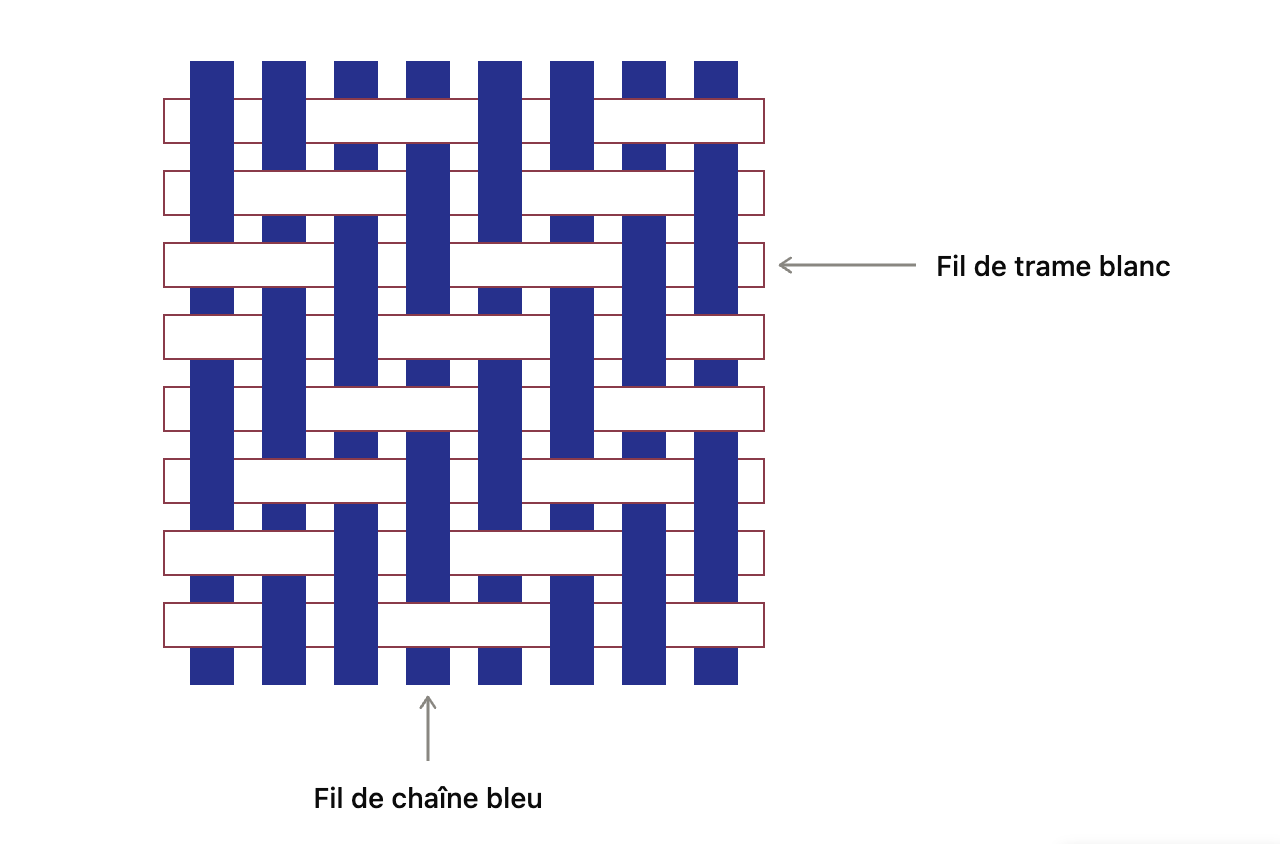
These blue threads are dyed with a rather special dye: indigo, which has the particular feature of not being able to bond chemically with the cellulose of the cotton. So for a dye house, it’s very difficult to make this dye penetrate to the core of the thread. It would require much longer and more concentrated baths, far too expensive on an industrial scale. The blue threads are therefore only dyed on the surface.
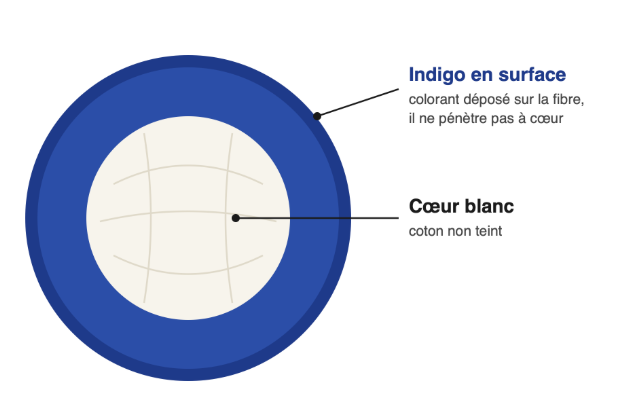
So why do jeans fade?
- First, the rubbing that happens during washes and while wearing the jeans eventually reveals the white core inside the threads.
- On top of that, with each wash, the indigo dye migrates from the blue threads to the white ones, which take on a slightly bluish tint.
That’s the mechanism behind the “patina”. It wasn’t necessarily intentional in the first place: it’s mostly a consequence of indigo’s technical characteristics.
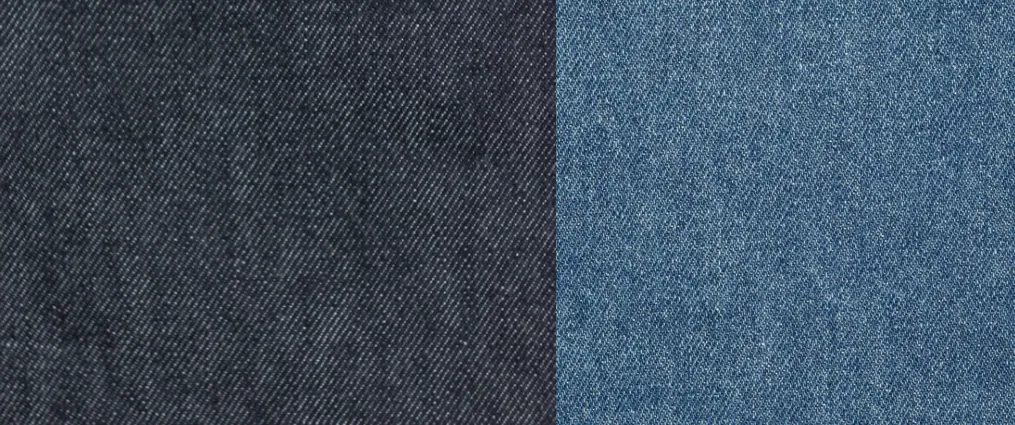
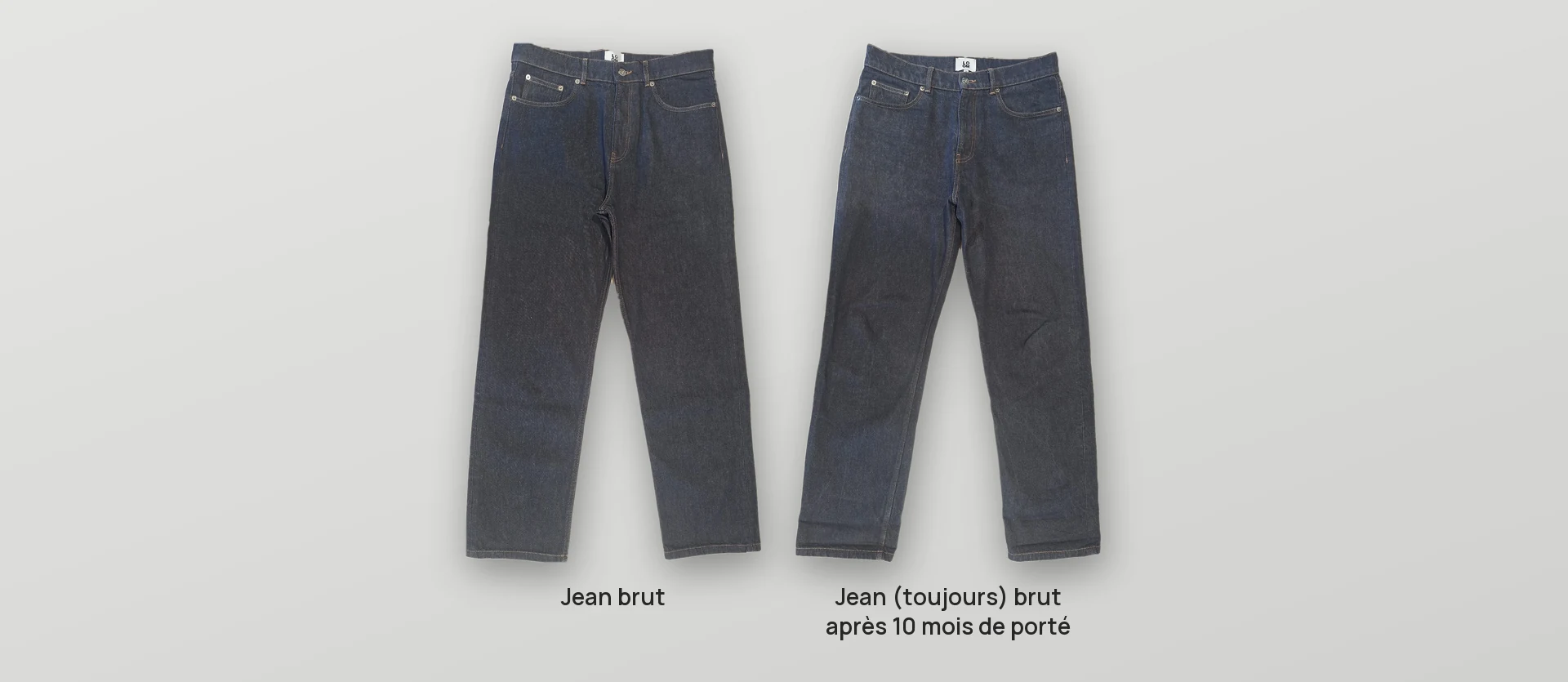
On the right: a faded denim. You can’t really tell the white thread from the blue thread anymore.
So if we want a pair of jeans that doesn’t fade over time, we have to choose a dye that bonds chemically with the cotton’s cellulose, so it penetrates all the way to the core of the thread. Good news: this has existed since the 1950s — they’re called reactive dyes. And they’re used on most cotton fabrics today.
Except, of course, on jeans. Maybe because the Hollywood aesthetic of faded jeans has sunk too deep into our minds? Maybe because indigo dyeing plants required huge investments and need to be made profitable? Maybe because reactive dyes are slightly more expensive than indigo? It’s probably a mix of all these reasons.
Which made it far from easy for us to develop jeans dyed with reactive dyes: we had to find a denim weaver able to dye with these dyes, even though they’re all specialised in indigo dyeing.
Luckily, we got a little helping hand, from far away: that of Chinese consumers.
China, the land of clothes that don’t fade
While the Hollywood aesthetic of patinaed and faded jeans has deeply shaped Western consumers, that’s far less true in China. On the contrary: the Chinese are wary of fabrics that bleed colour. And the country’s history helps explain why.
In the 1930s, the German chemical company IG Farben was looking for outlets for a very colourfast blue dye called “indanthrene”: it ran massive advertising campaigns to push its adoption in China. In Shanghai, the blue cotton dress became the uniform of female students and modern women, and the indanthrene blue fabric that doesn’t bleed became almost the “national fabric”.
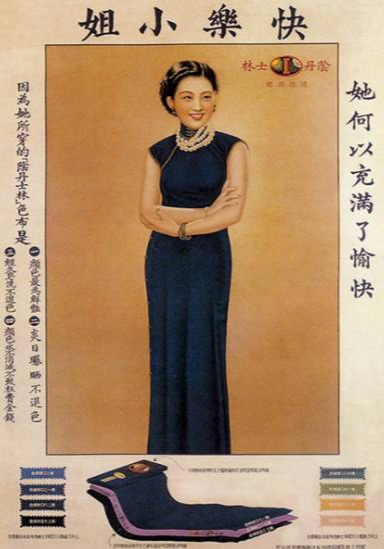
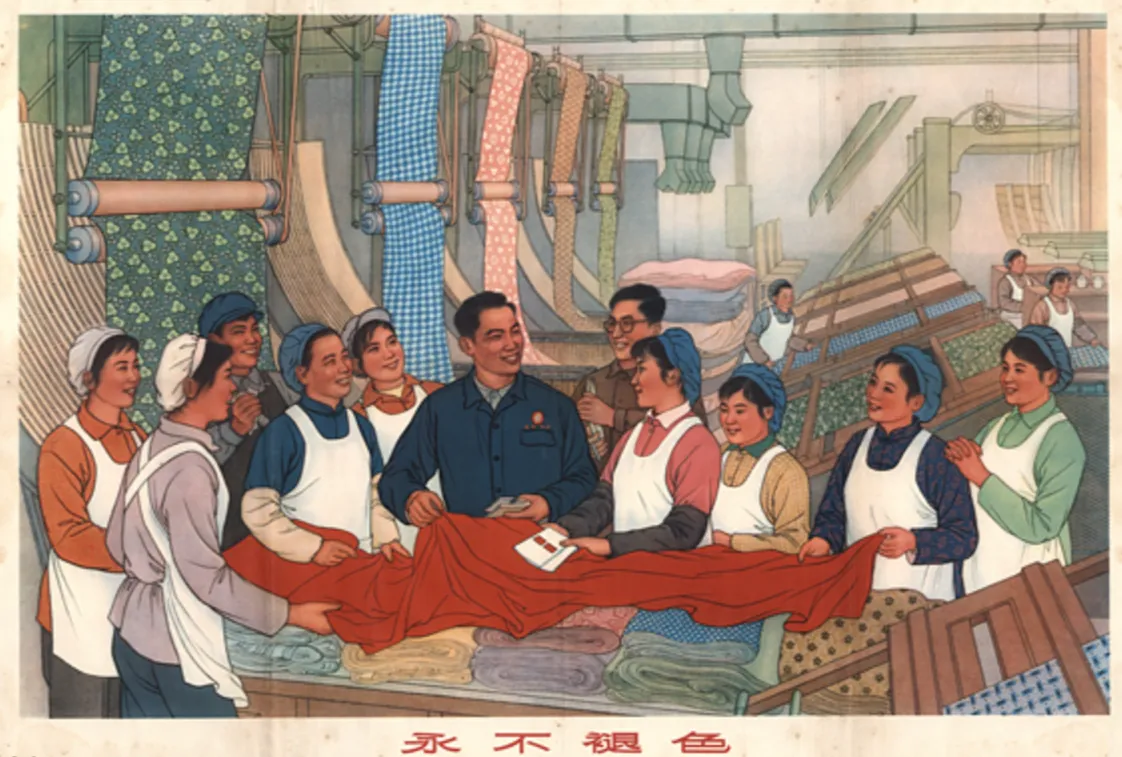
It didn’t stop with the arrival of communism — quite the opposite. In the 1950s, the textile industry was placed under state control, which imposed strict constraints on factories to avoid shortages. For example, in the late 1950s, dyeworks rolled out core dyeing of fabrics to get rid of the “long-standing white core defect” (exactly the phenomenon that gives jeans their patina). An obsession you can even read in propaganda posters.
This demand for colourfastness didn’t disappear when the country opened up to capitalism: since 2003, a Chinese standard has even banned the sale of clothes that fade too much from rubbing. In other words, a pair of jeans in beautiful Japanese fabric, which turns your fingers or your sofa a bit blue, would probably be banned from sale in China.
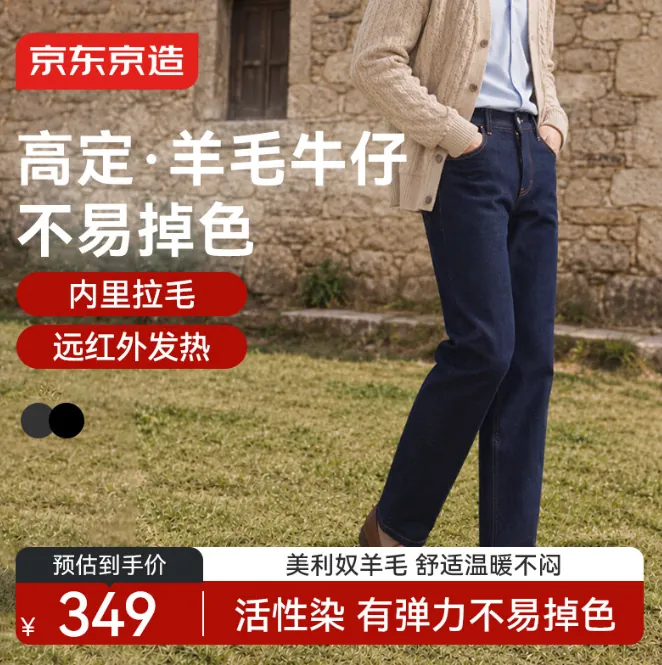
In recent years, the absence of fading has even become a selling point for Chinese jeans brands. On the Taobao or JD sites (the Chinese Amazons), you often read promises for jeans like bù yì tuì sè (“doesn’t fade easily”) or bù diào sè (“doesn’t bleed colour”).
Our first prototype
Why are we telling you all this? Because a year ago, the Italian factory Candiani (our main denim fabric supplier) launched a “stay blue” jeans fabric, meaning one dyed with reactive dyes for… the Asian market.
When we found out, we immediately asked them for a few metres of this fabric to put together a prototype. And the result delighted us.
First, the colour is very beautiful, and it looks very “jean”. And that’s not as simple as it seems, because there’s no reactive dye that reproduces exactly the same light spectrum as indigo. Indigo is a dark, slightly purplish blue (the famous “red cast” that denim fans look for). So you have to create a blend of reactive dyes that gets as close as possible to indigo, including a bit of red dye to reproduce its typical undertones. With one extra constraint on top: finding reactive dyes that all have roughly the same fastness to washing and light, so the colour of the jeans doesn’t “shift” over time.
And then the fabric itself is beautiful: its threads feature “slubs”, that is, slight thickenings here and there that give it texture and character.
Now the question is how well these jeans will hold up over time: will the raw indigo stay nice and raw? Are there any other problems we haven’t anticipated?
To answer these questions, the ultimate test is to wear and wash the garment a lot. And that’s something we’re used to doing at Loom.
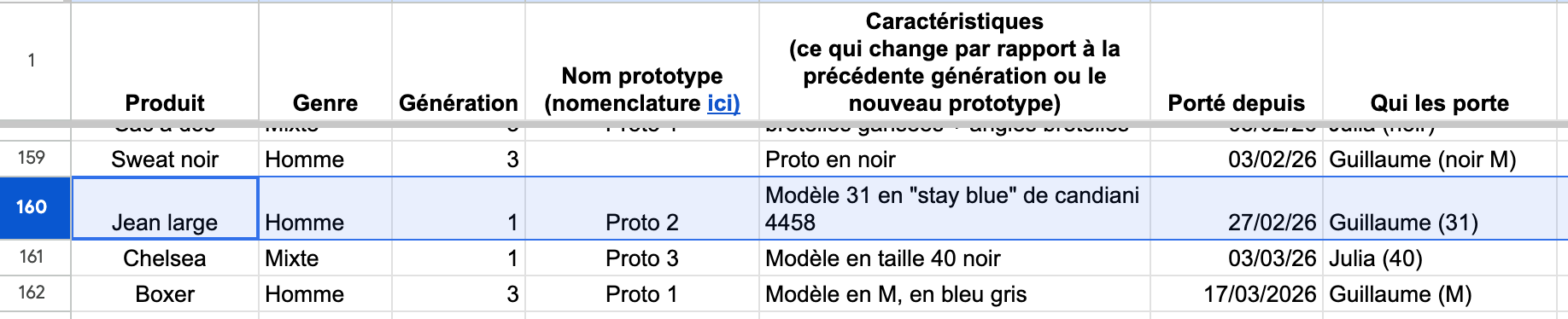
The result: after months of wearing them often and washing them any old way (at 60°C, right side out, with a full machine – a stunt you shouldn’t try at home):
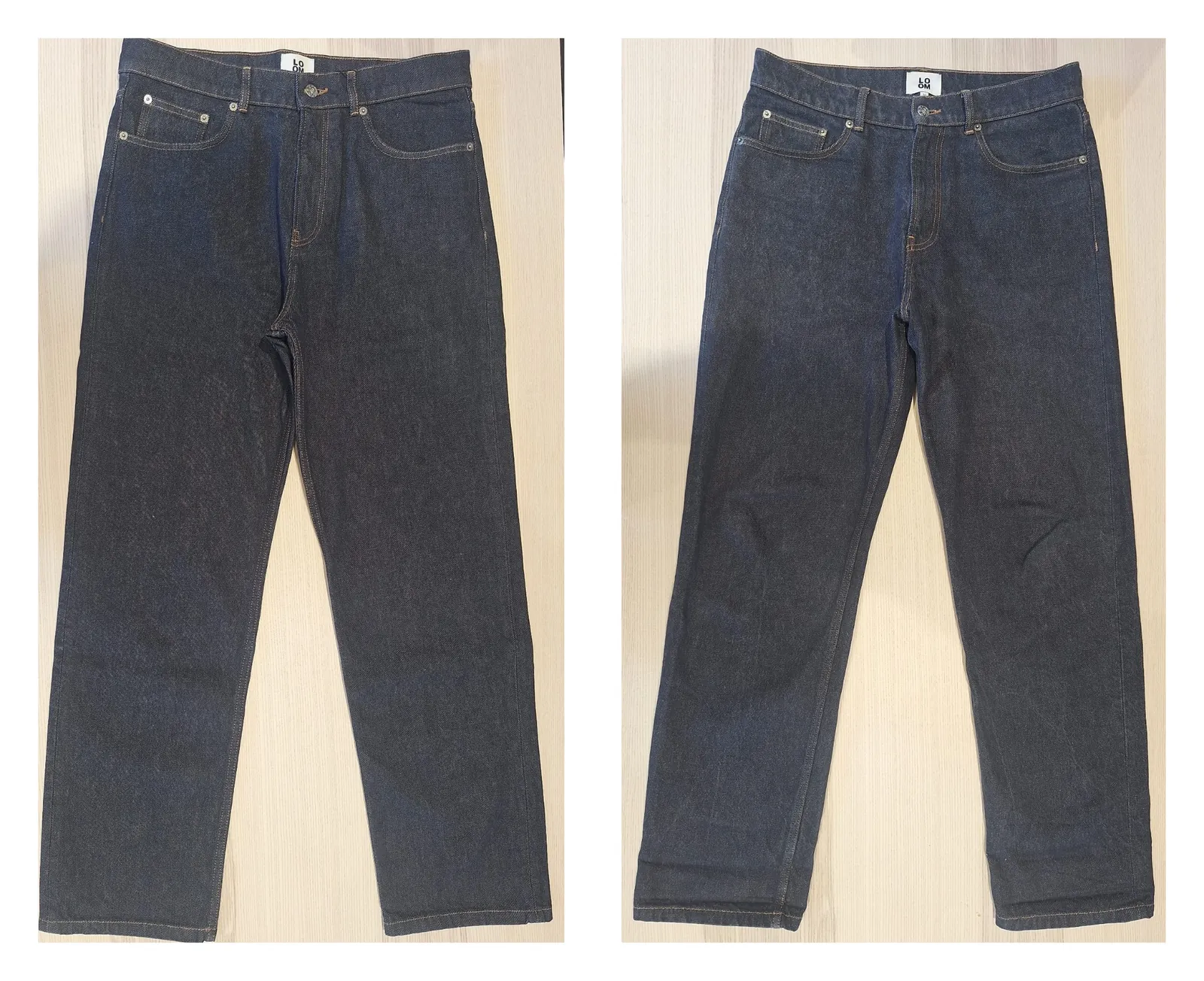
The colour retention, and the quality of the jeans in general, are astonishing. So we decided to launch production. Alas, life isn’t always a smooth ride.
Time to compromise
When we wrote to Candiani to order the fabric, we got some bad news: they told us that their Italian partner who did the reactive dyeing had closed down. On top of that, times are tough for Italian factories and the price of the dye had gone up a lot: they were thinking about stopping production of this “stay blue” denim fabric.
We wrote them an email begging them to keep offering it, explaining that we reckoned we’d sell quite a few and that our jeans might even inspire other brands to develop their own stay blue jeans using their fabric. They then replied that the only way to keep offering this fabric was to produce it in a big factory that knows how to make reactive-dyed denim… in Egypt. This big factory has the advantage of being more financially solid: it isn’t at risk of shutting its doors in the coming months.
For us, there was a first loss to come to terms with: of course, our jeans will still be made in Portugal, but this inability to have our denim woven and dyed in Europe is a worrying sign for the future of our continent’s industry.
Another thing we had to give up: the cotton. For this first production run, the fabric won’t be made with GOTS-certified organic cotton but with so-called “regenerative” cotton, a somewhat bullshit certification. If you think it’s not that big a deal, you can read or re-read this article: the question of organic cotton is no small matter when it comes to its impact on the environment and health.
Despite all this, we decided to order the fabric. First, giving up organic cotton is, we hope, only temporary: if our jeans sell well and the fabric lives up to its promise, we’ll be able to order larger quantities of fabric and reach the production minimums to switch to organic cotton. And when it comes to production in Egypt, we have to be clear-eyed: the closure of European factories like this Italian dyeing house is a groundswell that we won’t be able to hold back with our orders alone. And who knows, maybe one day, if “stay blue” catches on in France, Candiani will decide to set up a reactive denim dyeing unit in Italy.
What our first “stay blue” jeans look like
For this first production run of “stay blue” denim, we’re launching a new cut in the men’s range: the wide-leg jeans.
It’s a roomier cut than our straight jeans, but not baggy either (and pretty stylish, if you want our completely unbiased opinion).
And above all it’s a cut that works really well with this stay blue fabric: 100% cotton (no elastane) and thick (14 ¾ oz). No need for elastane or a lightweight fabric when there’s enough room for your legs. Available only in raw indigo (since that’s mainly the colour that causes fading problems).
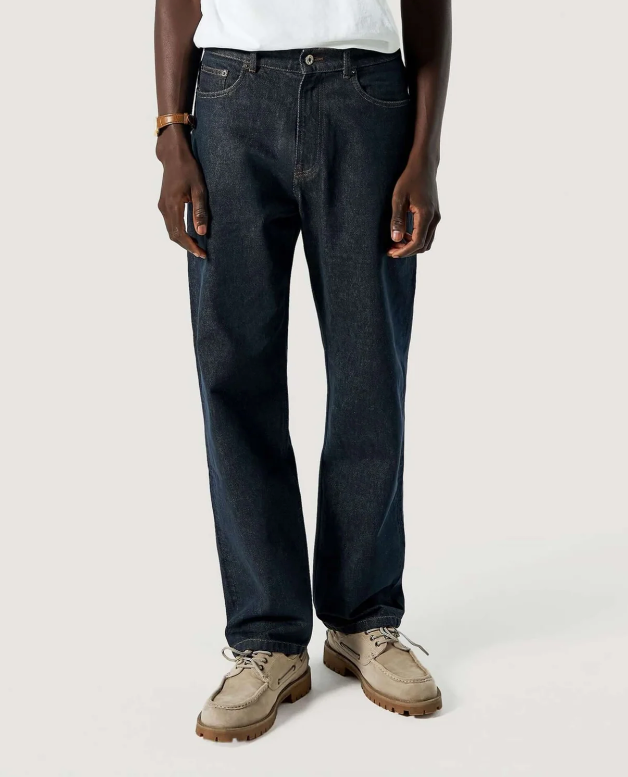
A word of caution, we don’t want to over-promise: no dye lasts forever. Washing, UV rays and rubbing all wear away at the dye. In five years, the jeans probably won’t be as blue as on day one, but you’ll always be able to re-dye them for around ten euros (our tutorial here).
And what next?
We’re waiting for feedback from people who buy these wide-leg jeans, after several months (years, even?) of wear. If all goes well, we’ll be able to add the “stay blue” colour to our straight jeans range (in place of the raw indigo), and maybe even to our women’s wide-leg jeans (coming soon), and switch this fabric to organic cotton. In short, for now we’re waiting and listening to you.